NextEra and Dominion announce $67 billion merger, reshaping nuclear ownership
A $67 billion all-stock merger would put more U.S. nuclear capacity under one roof and give NextEra a bigger regulated base for life extensions and future fleet decisions.
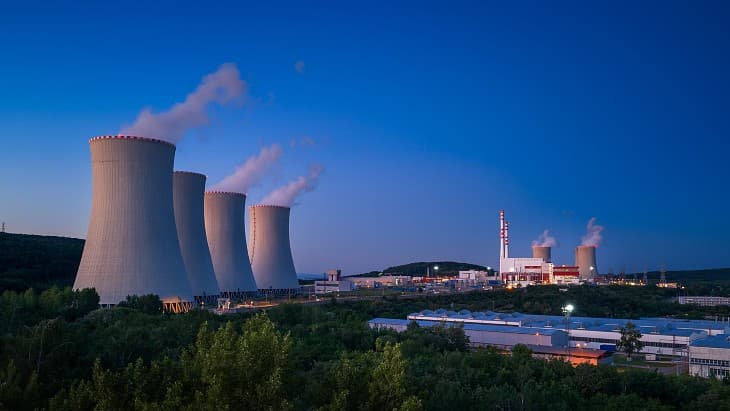
A $67 billion utility merger would put more U.S. nuclear capacity under one corporate roof, turning NextEra Energy into a still larger force in a power market now defined by data-center load, regulated scale and the long game around reactor life. The combined company would serve about 10 million customer accounts and, if approved, would become the world’s largest regulated electric utility by market capitalization while also becoming the country’s second-largest generator of nuclear power.
NextEra and Dominion Energy said the deal is an all-stock, tax-free transaction. Dominion shareholders would receive 0.8138 NextEra shares for each Dominion share they own at closing, with NextEra investors owning about 74.5% of the combined company and Dominion investors about 25.5%. The companies placed the announced equity value at about $66.8 billion, while some deal materials described a roughly $420 billion enterprise value and about $249 billion in market capitalization. The merged utility would be more than 80% regulated, and the companies said they expect the deal to be immediately accretive to adjusted earnings per share at close, with 9%-plus adjusted EPS growth through 2032 supported by expected 11% annual growth in regulatory capital employed.

The nuclear story sits inside that structure. NextEra already owns Point Beach in Wisconsin, Seabrook in New Hampshire and St. Lucie in Florida, and its recent filings show a company leaning hard into long-duration nuclear assets. The U.S. Nuclear Regulatory Commission authorized Point Beach to operate for another 20 years in September 2025, then authorized St. Lucie to operate for another 20 years in April 2026. In December 2025, NextEra also said Point Beach would continue supplying WPPI Energy into the 2050s under a new agreement. That pattern matters because a larger regulated balance sheet could make life extensions, maintenance campaigns and future uprate decisions easier to finance, while also putting more nuclear decisions inside a far more centralized corporate structure.

The merger also comes with a political and customer-facing pitch. The companies said Dominion customers in Virginia, North Carolina and South Carolina would receive $2.25 billion in bill credits spread over two years after close. They said the combined company would keep Dominion utility brands in those states, operate under the NextEra name and ticker NEE, and maintain dual headquarters in Florida and Virginia plus an operational headquarters in South Carolina. The deal still needs shareholder approval and review from federal and state regulators, including the Nuclear Regulatory Commission and utility authorities.

That is where the nuclear strategy becomes visible. What looks like a utility mega-merger on paper is really a question of whether more of the country’s reactor fleet ends up backed by a deeper regulated capital base, or boxed in by more intense scrutiny from Richmond to Washington. Clean Virginia is already pushing for rigorous review and binding customer protections, and the next 12 to 18 months will show whether this deal makes nuclear investment more likely, more centralized or simply more politically constrained.
This article was produced by Prism’s automated news system from verified source data, official records, and press releases, then run through automated quality and moderation checks before publishing. The system is built and supervised by the people who set the standards it runs under. Read our full AI policy.
Did this article answer your question?