NRC extends Georgia’s Hatch nuclear plant licenses to 2058
Hatch won 20 more years of operation in under 12 months, preserving 1.8 gigawatts and pushing both units toward possible 80-year lifetimes.
_76490.jpg&w=1920&q=75)
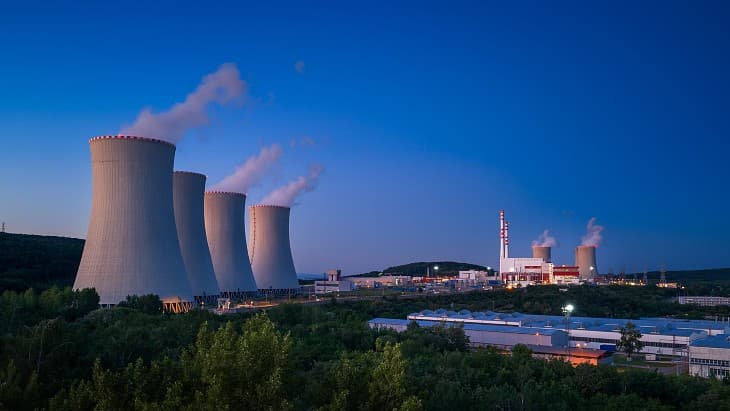
Georgia’s Hatch nuclear plant just cleared a regulatory milestone that reaches well beyond one site: both boiling-water reactors can now run long enough to approach 80 years of possible operation. The U.S. Nuclear Regulatory Commission finished the renewal in under 12 months, a pace that sets a sharp precedent for other aging reactors looking for the same long extension.
The agency said June 12 that Unit 1 is now licensed through August 2054 and Unit 2 through June 2058, adding 20 more years of carbon-free electricity generation and preserving 1.8 gigawatts of grid capacity. That matters in plain terms: it keeps a large, steady block of power on Georgia’s system instead of forcing utilities to replace it with new supply on a tighter timetable. Subsequent license renewal is the NRC’s framework for extending reactor operation from 60 to 80 years, and the agency said the Hatch review used a streamlined process built on lessons from earlier renewals without backing off safety standards. NRC Director of the Office of Nuclear Reactor Regulation Anna Bradford put it plainly: “The NRC continues to demonstrate we can reach timely decisions while maintaining our strict safety oversight.”

Hatch’s own operating history explains why the decision carries weight. Unit 1 began commercial operation in December 1975 and Unit 2 followed in September 1979, making the plant Georgia’s first nuclear power station and one of the state’s longest-running industrial assets. The site is co-owned by Georgia Power, Oglethorpe Power Corporation, the Municipal Electric Authority of Georgia and Dalton Utilities, and Southern Nuclear operates it. Georgia Power says Hatch sits on a 2,244-acre site on the Altamaha River in Appling and Toombs counties, supports more than 900 workers and has already been extended once before, in 2002, when the original 40-year licenses were lengthened by 20 years.

The plant has also been steadily modernized, with Southern Nuclear pointing to replacement cooling towers at Unit 2, transformers, plant service water pumps and feedwater heaters, along with work to remove single-point vulnerabilities. Georgia Power has said the company and its co-owners have paid nearly $250 million in taxes for Hatch since the project began, underscoring the economic reach of keeping the station online. For a reactor fleet that is getting older across the country, Hatch shows the new benchmark clearly: if operators keep investing and the NRC sees a sound safety case, 20 more years is no longer the ceiling.
This article was produced by Prism’s automated news system from verified source data, official records, and press releases, then run through automated quality and moderation checks before publishing. The system is built and supervised by the people who set the standards it runs under. Read our full AI policy.
Did this article answer your question?