NRC Names New General Counsel, Reactor Research Chief Amid Licensing Surge
NRC Chairman Ho K. Nieh tapped Supreme Court clerk-turned-lawyer Matt Pociask as General Counsel as advanced reactor dockets pile up under Executive Order 14300.
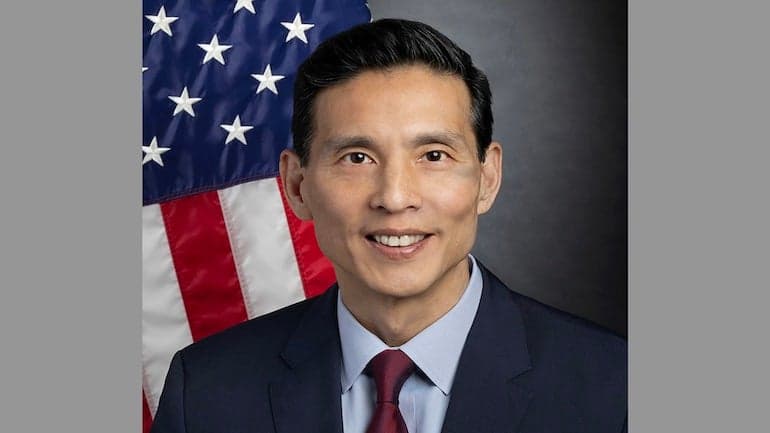
NRC Chairman Ho K. Nieh ended 14 months of interim legal leadership on April 1, installing Matt Pociask as the agency's permanent General Counsel and tapping Michael X. Franovich to head the Office of Nuclear Reactor Research, two appointments that will shape how the commission manages its fastest-growing and most consequential licensing queue in decades.
Pociask steps into the role after serving as Principal Deputy General Counsel, meaning the transition carries institutional continuity alongside a meaningful shift in authority. His resume signals an agency preparing to defend and execute an aggressive regulatory posture: he clerked on the U.S. Supreme Court and federal courts of appeals, trained at the University of Chicago Law School, and brings a litigation and administrative law background that positions him to drive how the NRC argues adjudicatory matters, frames enforcement actions, and defends rulemaking decisions in federal court. "I want to congratulate Matt as he steps into this important role," Chairman Nieh said in the press release, underscoring the agency's focus on experienced leadership as it handles a growing and complex docket of nuclear technologies and policy initiatives.
His predecessor, David Taggart, had served as Acting General Counsel since February 2025. Rather than departing, Taggart shifts to a Special Advisor role focused on regulatory and policy integration, with a specific mandate to continue work on Executive Order 14300 implementation. That executive order, which directs reform of NRC licensing processes and has generated active Federal Register activity including a public comment period closing May 4, 2026, is now the clearest fault line in nuclear policy. Having Taggart remain as its institutional steward while Pociask absorbs the broader legal portfolio is a deliberate division of labor that keeps EO 14300 work from getting buried under day-to-day docket pressures.
Franovich's appointment, effective July 2026, puts a technically hardened operator into the research chair at a critical moment. He earned his 2023 Presidential Rank Award for executive meritorious service while serving as Deputy Office Director for Engineering in the Office of Nuclear Reactor Regulation, and his career spans resident inspection, reliability and risk analysis, project management, and direct oversight of advanced reactor licensing. Those degrees in nuclear engineering and reliability engineering are not incidental: the Office of Nuclear Reactor Research generates the analytical methods, test programs, and risk frameworks that underpin every advanced reactor review, including the Part 53 risk-informed, technology-inclusive rulemaking the NRC published in late March 2026 and the docketed construction permit for Dow and X-energy's four-unit Xe-100 high-temperature gas-cooled reactor in Seadrift, Texas.

That Xe-100 docket is exactly the kind of non-light-water application that will stress-test the frameworks Franovich's office produces. When the NRC accepted Dow's construction permit application in May 2025, it triggered a full safety and environmental review of an entirely novel reactor class. The quality of ONRR's technical guidance will determine how fast and how confidently NRC staff can complete that review without repeated requests for additional information that historically stretch timelines by years.
Together, the two appointments are a staffing signal: the NRC is building the legal firepower to withstand courtroom and regulatory challenges to its modernized licensing pathways while simultaneously deepening the technical credibility of the research office responsible for validating the methods that make those pathways work. For developers and utilities with applications already in the queue, who gets to interpret the rules and who gets to write the technical guidance are not abstract governance questions.
This article was produced by Prism’s automated news system from verified source data, official records, and press releases, then run through automated quality and moderation checks before publishing. The system is built and supervised by the people who set the standards it runs under. Read our full AI policy.
Did this article answer your question?