Oak Ridge demolishes two Manhattan Project uranium buildings in one year
Oak Ridge took down two Manhattan Project uranium buildings in one year, turning cleanup speed into a measure of how fast Y-12 can shed legacy risk.
Two former uranium buildings at Y-12 came off the books in the same year, and at Oak Ridge that kind of pace matters as much as the demolition itself. The Department of Energy’s cleanup arm said the milestone showed how quickly the site can convert wartime industrial ruins into cleared ground, with more than 20 acres of Manhattan Project and Cold War infrastructure already removed and another 20 acres in deactivation.
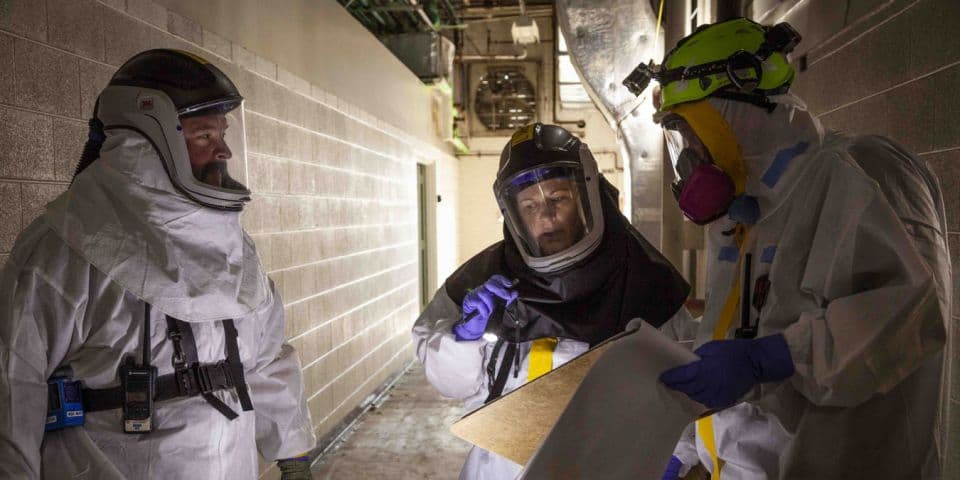
The newest structure headed for teardown was Beta-1, a 210,000-square-foot building erected in 1944 for the Manhattan Project and later converted to laboratory space for fusion-energy work. DOE said crews at the Y-12 National Security Complex had spent years getting it ready, beginning deactivation in 2020. By the time the building was lined up for demolition this summer, workers had collected more than 900 samples, pumped 17 million gallons of water, removed 3,000 feet of drainpipes and poured more than 2,500 truckloads of cement mixture to stabilize the job.

Beta-1’s basement water was a reminder of why this kind of cleanup is slow, expensive and technically fussy. DOE said more than 2 million gallons of standing water had to be removed during deactivation before demolition prep could finish, and laser scanning was used to build a detailed 3D map so crews could avoid contaminated and confined spaces. The Beta-1 Complex also includes the Fusion Energy Technology Building, the Helium Compressor Building and a steel utility transformer, and all three are slated to come down together.
Beta-1 followed Alpha-2, the 325,000-square-foot giant that DOE called Y-12’s largest-ever demolition. Work on Alpha-2 began in September 2024 after four years of preparation starting in 2020, and the project ultimately produced about 62 million pounds of debris. DOE said Alpha-2 finished six months ahead of schedule, a compression that made the rapid handoff to Beta-1 possible and gave Oak Ridge its first two-building demolition year for enrichment facilities.

That speed also marks a land-use change with real consequence. Alpha-2 covered a 2.5-acre footprint, and Beta-1 and its surrounding complex once housed four of the 11 calutron tracks used to separate uranium during the Manhattan Project. UCOR says the first of nine Y-12 calutron facilities went live in early 1943, and the same landscape later supported Cold War lithium-6 separation using mercury as a solvent. With Tim Walsh touring the Alpha-2 footprint, the Old Steam Plant and Beta-1 in April, the federal cleanup push at Oak Ridge looked less like symbolic demolition and more like a measured transfer of scarred ground toward modernization and reuse.
This article was produced by Prism’s automated news system from verified source data, official records, and press releases, then run through automated quality and moderation checks before publishing. The system is built and supervised by the people who set the standards it runs under. Read our full AI policy.
Did this article answer your question?