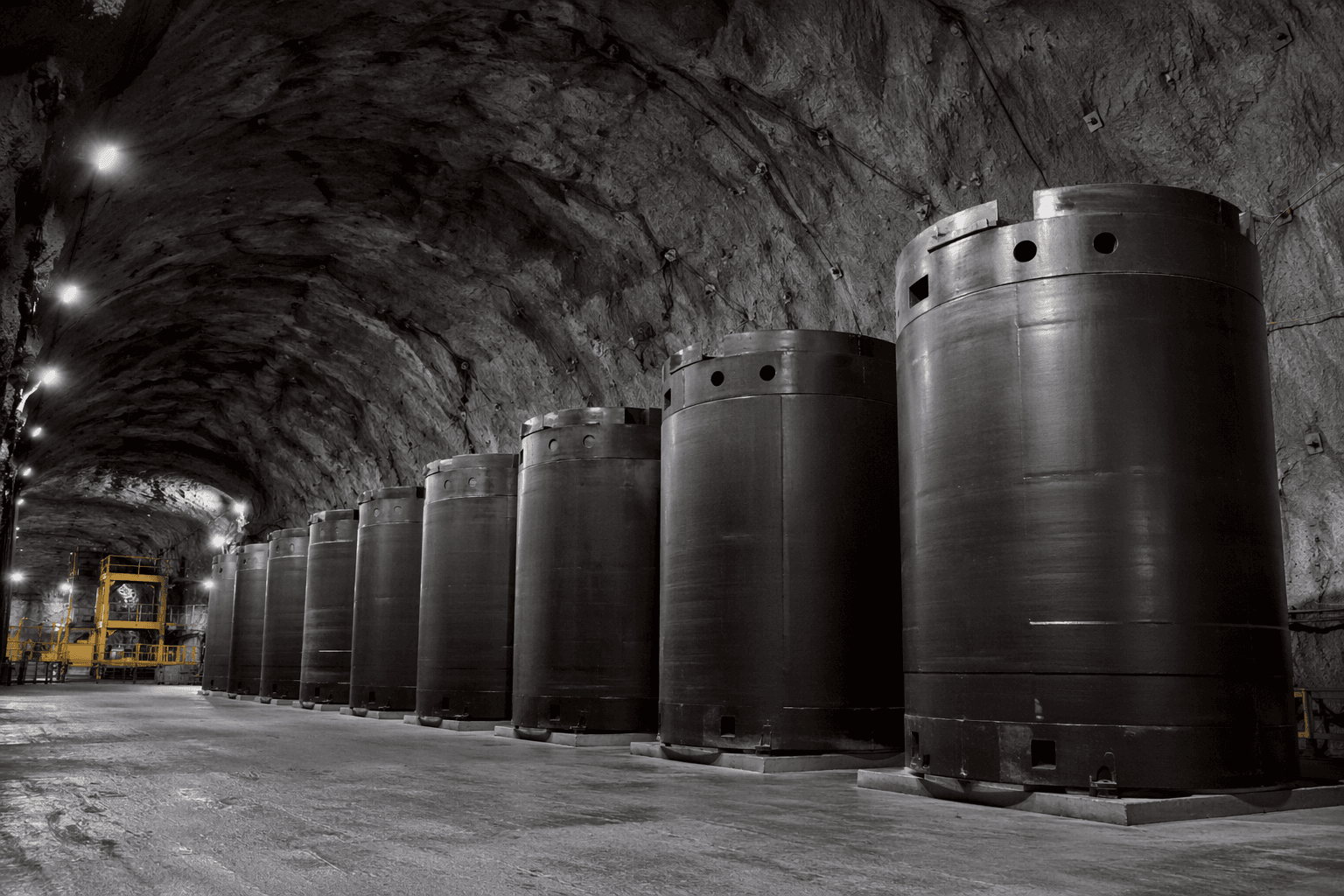
ORNL scientist probes elusive neutrinos and nuclear scattering at SNS
ORNL’s neutrino detectors are crossing from fringe scattering physics into safeguards work, with CEvNS at SNS showing how reactor-adjacent measurement can catch the faintest signals.
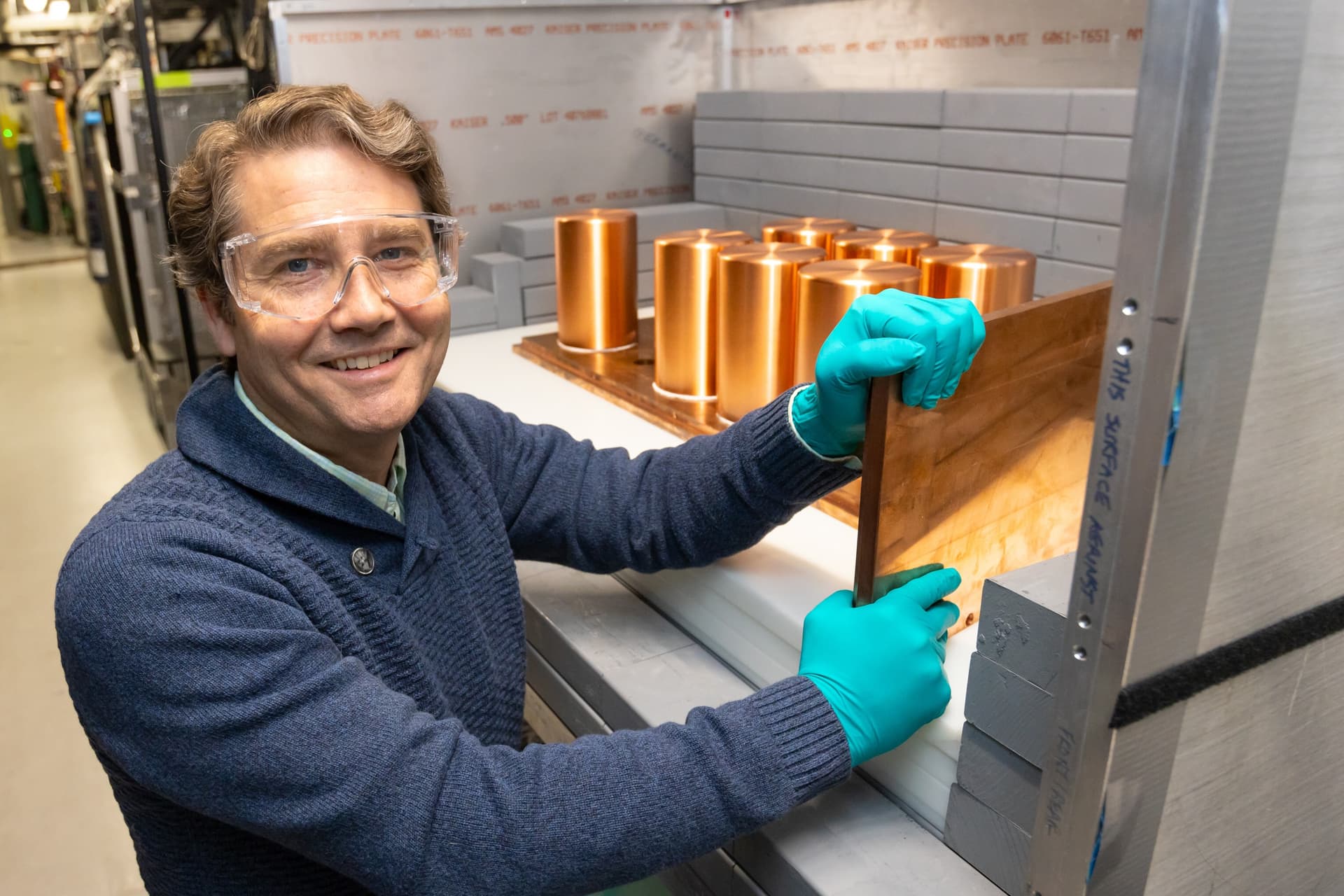
The hard part at Oak Ridge is not making a neutrino story sound big. It is showing how a particle that barely interacts at all can still change the way the lab thinks about measurement, detector design, and nuclear security. Jason Newby’s work sits exactly on that seam: at the Spallation Neutron Source, the same infrastructure that produces neutrons also produces neutrinos, giving ORNL a place to chase subtle scattering physics and test tools that could matter well beyond basic research.
The SNS advantage
ORNL calls the Spallation Neutron Source the world’s brightest accelerator-based neutrino source, and the reason is built into the machine itself. Neutrinos are a byproduct of neutron production, so the 1.4-megawatt pulsed source creates a stream of particles that researchers can study alongside the neutron program. That is what makes the site unusually valuable for neutrino work: the source is powerful, pulsed, and paired with detector space that is already organized around hard measurement problems.
Newby is a senior staff researcher in the Physics Division, leads the Neutrino Research Group, and is a founding member and deputy spokesperson of the COHERENT collaboration. ORNL’s Neutrino Alley, a 164-foot, or 50-meter, corridor, is where five detectors line up to take advantage of that setup. It is not a theatrical lab name so much as a practical description of how the experiment space works, with detectors spaced along the hall to catch signals that most instruments would miss.
Catching a scattering event that stayed hidden for decades
The signature Newby and COHERENT helped open up is coherent elastic neutrino-nucleus scattering, or CEvNS. In plain terms, it is the kind of collision that happens when a neutrino nudges an entire nucleus instead of a single particle inside it, creating a recoil so small that it took decades to observe. The process had eluded detection for 43 years after it was predicted, until COHERENT reported the first observation in 2017 at 6.7-sigma significance.
That first result came from a low-background 14.6-kilogram CsI[Na] scintillator exposed to the neutrino emissions from SNS. The collaboration has grown since then into a team of 80 researchers from 19 institutions in four nations, and later measurements at ORNL have added more detectors and more physics reach. The point was never only to collect a milestone result; it was to prove that the lab could measure a class of interactions that had lived for decades at the edge of detectability.
What the neutrino program is really asking
Newby helped establish ORNL’s neutrino program about a decade ago, and the scientific questions driving it are still the field’s biggest ones. The group wants to know whether neutrinos behave exactly the way the Standard Model says they should, what their masses are, and whether they are their own antiparticles. ORNL says answering that last question is a priority for the DOE Office of Nuclear Physics, because it connects directly to why the Universe appears to contain more matter than antimatter.
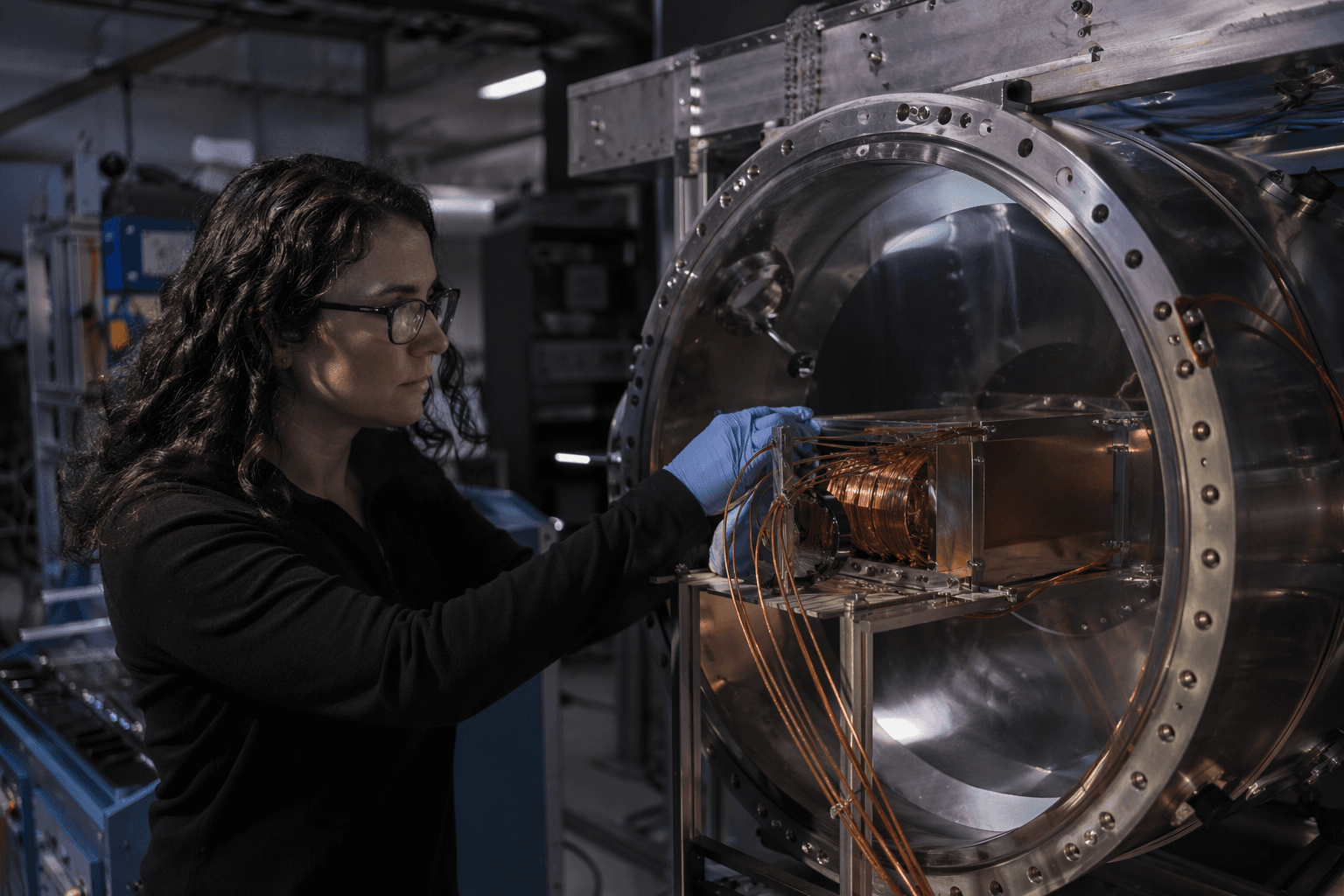
That broad physics program is not limited to SNS. ORNL says the neutrino group also participates in PROSPECT at the High Flux Isotope Reactor, giving the lab two different reactor-adjacent settings for neutrino work. The lab has also used underground detector science to pursue neutrinoless double-beta decay, a line of research that would have major implications for neutrino mass and for the matter-antimatter puzzle. Together, those efforts show how ORNL treats neutrino science as a connected measurement program rather than a single experiment.
How the detector problem spills into security work
The same measurement mindset that makes CEvNS possible is what makes Newby’s security collaborations interesting. He works with the nuclear nonproliferation community to explore neutrino instrumentation for nuclear security, which is where a basic science detector stops being just a physics instrument and starts looking like a safeguards tool. ORNL’s safeguards and security organizations develop and test measurement and detection systems for nuclear and radiological materials, and they support national-security users, so the institutional overlap is already there.
That matters because reactor-adjacent instrumentation lives or dies on the ability to make trustworthy measurements in difficult environments. A detector that can pull a weak signal out of a noisy background, time-stamp it against a pulsed source, and hold calibration over long runs is useful in more than one setting. ORNL’s neutrino work gives the lab a place to refine those habits on some of the hardest signals in physics, then carry the same discipline into applications where verification and monitoring are the point.
A lab built for both frontier physics and practical measurement
The deeper value of Newby’s program is that it uses one facility to answer two kinds of questions at once. At SNS, the neutrino detectors are proving that CEvNS can be measured cleanly, while the same laboratory ecosystem trains instruments and methods that matter to safeguards. At HFIR and in the underground detector program, ORNL keeps extending the same logic: find the faintest possible interaction, measure it well, and turn that precision into something the broader nuclear field can use.
That is why the story at SNS is bigger than a single scattering result. The lab has turned a byproduct of neutron production into a research path that links Standard Model tests, the matter-antimatter problem, and nuclear security instrumentation. At ORNL, the challenge of detecting something as elusive as a neutrino is not an endpoint. It is the first step in making a measurement system strong enough to matter everywhere else.
This article was produced by Prism’s automated news system from verified source data, official records, and press releases, then run through automated quality and moderation checks before publishing. The system is built and supervised by the people who set the standards it runs under. Read our full AI policy.
Did this article answer your question?