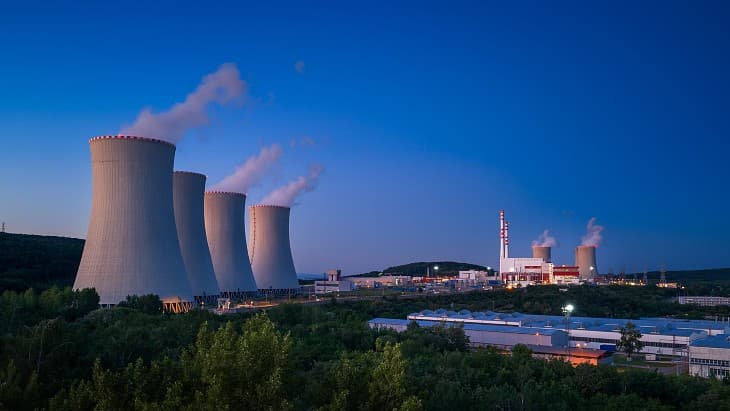
Palo Verde Unit 2 Declares Unusual Event Over Persistent Coolant Leakage
Palo Verde Unit 2 was forced to hot standby on March 19 after RCS leakage persisted past 15 minutes at 95% power, triggering the NRC's lowest emergency classification.
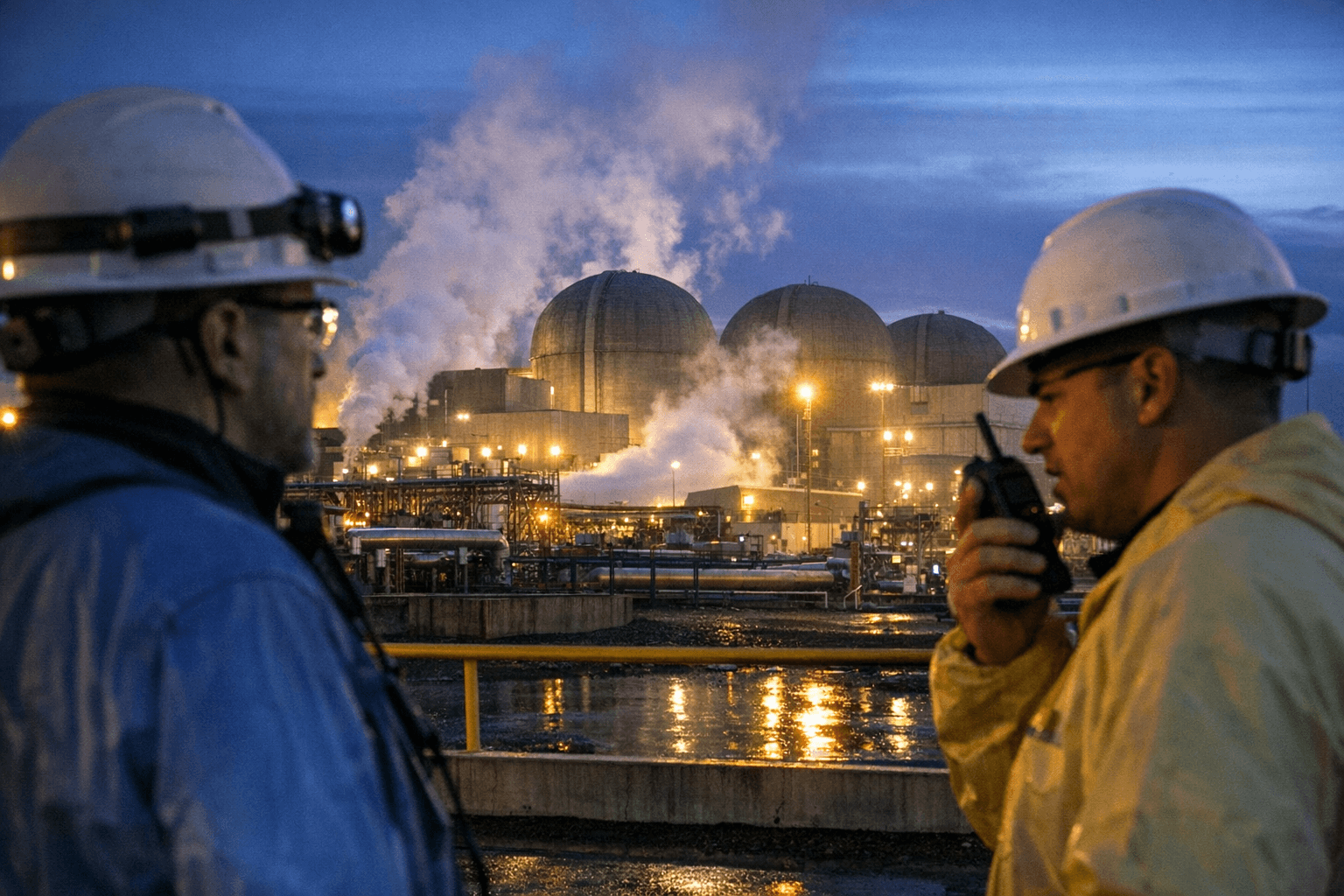
At 95% power and climbing into a Tuesday morning shift, Palo Verde Unit 2 operators declared a Notification of Unusual Event at 08:19 MST on March 19, 2026. The trigger: reactor coolant system leakage that had persisted beyond the 15-minute threshold encoded in emergency action level SU5.1. The NRC logged it as Event 58211, posted the initial notification on April 1, and the record shows Unit 2 subsequently moved to Hot Standby, with reactor power at zero.
To calibrate what that actually means, start with the NRC's four-tier emergency classification ladder. An Unusual Event sits at the bottom: above it are Alert, Site Area Emergency, and General Emergency, in ascending order of consequence. The NRC's own language specifies that at the Unusual Event level, no release of radioactive material requiring offsite response or monitoring is expected unless further degradation of safety systems occurs. No sirens. No protective action guidance to the public. Emergency agencies are notified, plant staff respond, and the NRC operations center receives the report under 10 CFR 50.72, but the approximately 4 million people living within 50 miles of the Tonopah, Arizona site would be told to do nothing, because there is nothing requiring their action.
The SU5.1 action level that drove this declaration is specifically calibrated to catch duration, not magnitude. A brief, self-clearing fluctuation in identified leakage might not cross the threshold; leakage that holds for more than 15 minutes signals a persistent condition that warrants escalating plant oversight before it can progress. At a pressurized water reactor like Unit 2, the RCS operates at roughly 2,250 psi, and the pressure boundary, piping welds, pump seals, and valve packing are all potential leak pathways. The containment structure surrounding the primary loop is the first engineered barrier against any outward migration, and at the Unusual Event level, that barrier remains intact and uncompromised.
What RCS leakage at this classification does not mean: core damage, a loss-of-coolant accident in the large-break sense, or any detectable radiological release at the site boundary. The Emergency Core Cooling System exists for a fundamentally different scenario, one several classification levels above where Unit 2 sat on March 19. The Palo Verde Technical Requirements Manual sets explicit limits on identified and unidentified RCS operational leakage; persistently exceeding or trending toward those limits is exactly the condition SU5.1 is designed to surface.
For calibration, Palo Verde declared a Notification of Unusual Event in September 2019 when drones repeatedly violated the airspace over Unit 3 on consecutive nights. That event, also at the Unusual Event tier, illustrates how broad the classification is: it captures both security intrusions and RCS trends under the same lowest-rung designation, so long as no significant offsite consequence has materialized.
The NRC's April 1 posting is an initial notification, not a final enforcement action or safety significance determination. Licensee condition reports, root cause analysis, component inspection findings, whether a weld, gasket, or seal is eventually identified as the source, and any corrective action schedule will appear in follow-on inspection reports and supplemental event updates. Those public filings, tracked through the NRC's event notification database, are where the operational story of Unit 2's March outage will ultimately be told.
This article was produced by Prism’s automated news system from verified source data, official records, and press releases, then run through automated quality and moderation checks before publishing. The system is built and supervised by the people who set the standards it runs under. Read our full AI policy.
Did this article answer your question?