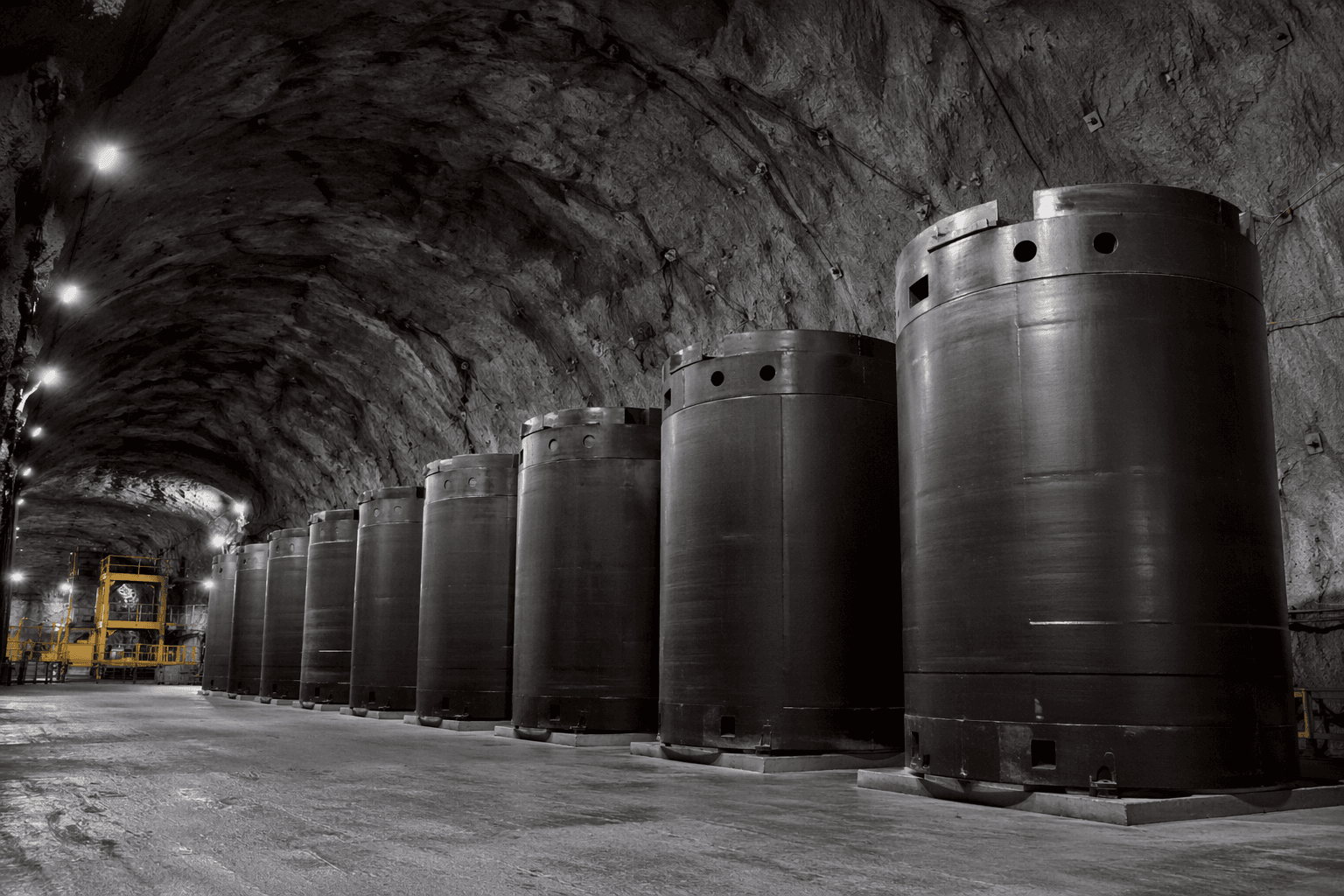
Researchers run first nuclear clock, using thorium-229 to probe dark matter
Thorium-229 has powered the first running nuclear clock, and one team already used it to hunt for ultralight dark matter.
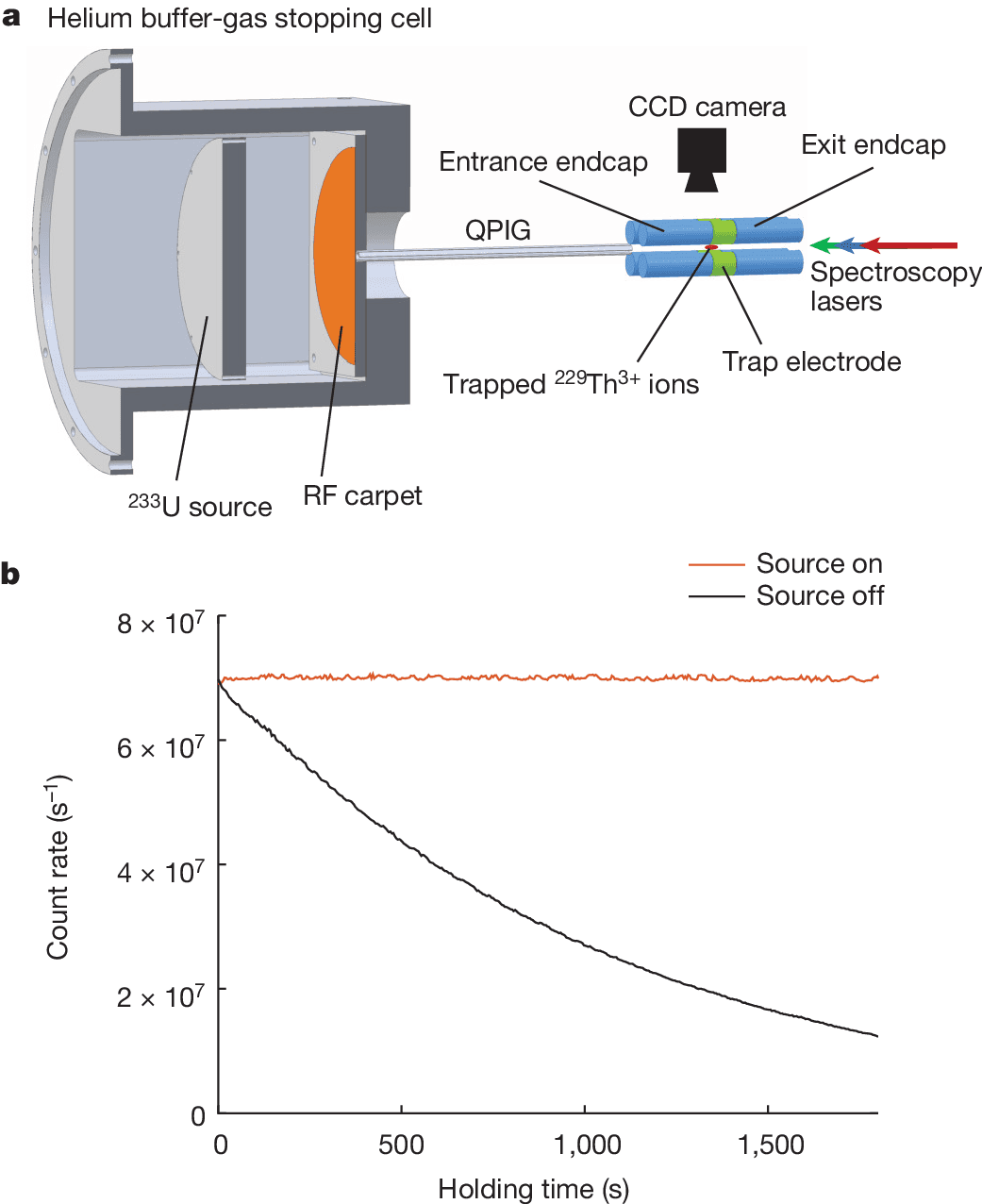
A clock built around an atomic nucleus, not the electrons orbiting it, has now been run in the lab for the first time. Researchers embedded thorium-229 in a calcium-fluoride crystal, locked a laser to the nucleus’s transition near 148 nanometers, and compared the result with a Yb+ ion clock. One of the teams then pushed the device straight toward dark matter searches, a sign that this is no longer just a theory exercise.
For everyone who relies on precision timing, the appeal is simple: atomic clocks are already extraordinarily good, but a nuclear clock could be even steadier. The nucleus sits far less exposed to outside electromagnetic noise than an electron-shell transition, so its frequency should drift less. That opens the door to sharper tests of fundamental constants, tighter limits on ultralight dark matter, and a new way to probe the strong force inside the nucleus.
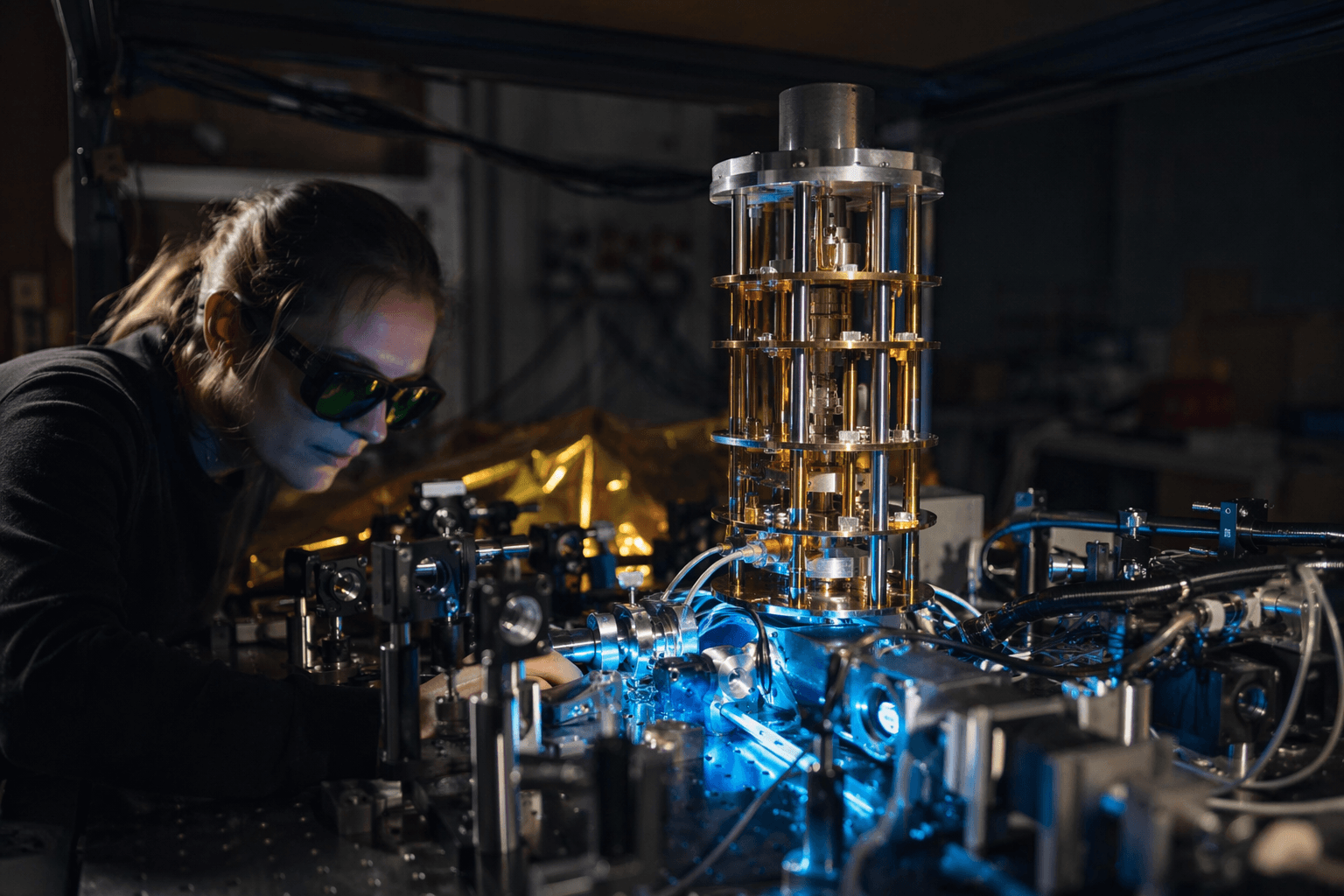
Thorium-229 matters because it is the only known isotope with a nuclear transition low enough to be driven directly by a laser. A 2016 Nature paper directly detected that transition and constrained the excitation energy to between 6.3 and 18.3 electronvolts. By 2019, the wavelength estimate had tightened to 149.7 plus or minus 3.1 nanometers. A 2021 review called the low-energy excited state, about 8 eV, a prime candidate for a nuclear clock, and that long search finally reached a working laboratory demonstration.
The engineering momentum has been building fast. In 2024, NIST reported laser spectroscopy of thorium-229 in a calcium-fluoride host crystal, and in 2025 it measured temperature sensitivity at 150 K, 229 K, and 293 K. A 2026 Nature paper reported that 229Th:CaF2 crystals held a reproducibility of 220 Hz, fractionally 1.1 x 10^-13, at 195 K over seven months. Another 2026 preprint described a room-temperature thorium-229 optical nuclear clock in a millimeter-sized CaF2 crystal, using a feedback loop, continuous comparison to a Yb+ single-ion clock, and shot-noise-limited instability of 3 x 10^-12 tau^-1/2, approaching 10^-15 over one day.
That still leaves a long road to a usable instrument. The latest results are first steps, not a finished field device, and the room-temperature clock remains a preprint rather than a mature standard. But the leap is clear: thorium-229 has moved nuclear timekeeping from speculation into the lab, and the next tick could tell physicists far more than the time.
This article was produced by Prism’s automated news system from verified source data, official records, and press releases, then run through automated quality and moderation checks before publishing. The system is built and supervised by the people who set the standards it runs under. Read our full AI policy.
Did this article answer your question?