Russia and Rwanda sign roadmap for small modular reactor cooperation
Russia and Rwanda turned a first Moscow committee meeting into a roadmap for SMR work, but the next hurdles still run through training, regulation and infrastructure.
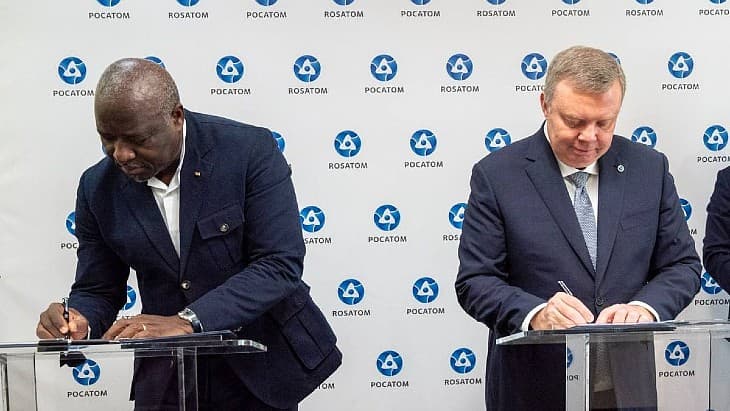
Russia and Rwanda used their first Joint Coordinating Committee meeting on nuclear-energy cooperation to sign a roadmap for small modular reactor work, turning a broad political relationship into a more defined program in Moscow on July 1, 2026. The meeting was co-chaired by Rosatom Deputy Director General Kirill Komarov and Lassina Zerbo, chairman of the Rwanda Atomic Energy Board and an adviser to Rwanda’s president.
Komarov framed the step as a shift from framework agreements into concrete work tracks, including training national personnel, building out infrastructure and advancing nuclear science and SMR projects. Zerbo said the roadmap builds on cooperation that began in 2018 and fits Rwanda’s goal of adding nuclear power to its energy mix in the early 2030s, as electricity demand rises. He also cast nuclear power as an investment in people and science as much as in hardware.
The milestone matters because it follows a longer paper trail between the two countries. Rwanda and Russia signed an intergovernmental agreement on peaceful uses of nuclear energy in December 2018, then agreed in October 2019 to build a Centre for Nuclear Science and Technology in Rwanda. Rwanda’s infrastructure ministry has described that centre as a 10 MW pool-type reactor project with supporting facilities that include a nuclear medicine center, irradiation center, radiobiology laboratory and greenhouse, alongside research and laboratory complexes.

The July 1 roadmap does not amount to construction on an SMR site. What it does show is that the Russia-Rwanda channel has moved into a more organized technical phase, with workforce development and infrastructure now named alongside reactor concepts. The hard parts that still sit ahead are the familiar ones for any newcomer to nuclear power: financing, regulation, safety and security systems, waste planning, a trained operating corps and a site-ready industrial base.
Rwanda’s own nuclear roadmap is becoming more crowded, not less. In May 2026, Holtec International and the Rwanda Atomic Energy Board signed a development agreement to advance deployment of Holtec’s SMR-300 in Rwanda, and a U.S.-Rwanda civil nuclear cooperation memorandum of understanding was signed at the same summit. That puts Russia in a field where Rwanda is actively comparing partners and technologies rather than locking itself to one vendor path.
The scale of the energy target explains the urgency. The International Atomic Energy Agency said in March 2026 that Rwanda aims for nuclear power to supply 60 percent to 70 percent of its energy mix and expects its first SMR to be operational in the early 2030s. The World Bank says electricity access in Rwanda rose from 6 percent in 2009 to 75 percent by March 2024, a jump that has not erased the need for reliable new capacity. The first committee meeting in Moscow did not put steel in the ground, but it did put a schedule and a work program around a long-running ambition.
This article was produced by Prism’s automated news system from verified source data, official records, and press releases, then run through automated quality and moderation checks before publishing. The system is built and supervised by the people who set the standards it runs under. Read our full AI policy.
Did this article answer your question?