Russia targets 2027 start for Beloyarsk BN-1200 fast reactor
Beloyarsk’s BN-1200 has moved into visible site work, but the real test is whether design review, licensing and first concrete all land by end-2027.

The BN-1200 is finally leaving the paper stage at Beloyarsk, but 2027 will only matter if the paperwork and the hardware stay in step. Site clearance is already under way, and 1.4 million cubic metres of waste soil and vegetation have been removed as the fast-reactor project moves toward a construction start target that now has real civil-engineering milestones behind it.
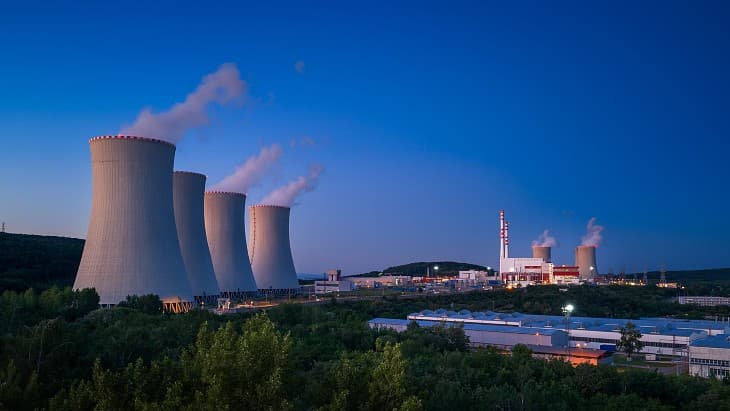
That matters because Beloyarsk is not an abstract greenfield site. The plant, in Sverdlovsk Oblast about 45 km from Yekaterinburg and 3.5 km from Zarechny, is Rosenergoatom’s oldest nuclear station in the USSR and Russia’s only plant with reactor units of different types. Unit 3 is the BN-600, which began operation in 1980, and unit 4 is the BN-800, which entered commercial operation on October 31, 2016. The BN-800 has already been used as the demonstration machine for fuel and design choices that are feeding into the larger BN-1200.

Rosatom’s schedule now gives the project a sequence that can be checked against the calendar. Alexander Shutikov said the goal is to push design documentation through state expertise by the end of 2026, secure a construction licence in spring 2027, and pour first concrete by the end of 2027. Those dates follow a long run of preparatory steps: Rosatom launched the preliminary phase in July 2024, Rosprirodnadzor approved the plans in May 2024, Rostechnadzor gave the go-ahead in April 2025, and JSC Atomenergoproekt signed a design-documentation contract with Rosenergoatom in July 2024.
The project is still carrying the weight of a longer-term timetable, too. Rosatom’s 2042 power-facilities plan still shows completion of Beloyarsk unit 5 in 2034, which makes 2027 look less like a completion date than a threshold for proving the project can keep moving. Before that point, the BN-1200 will need the design package signed off, the construction licence in hand and the site ready for the first major concrete work.
Technically, Rosenergoatom is pitching the BN-1200 as more than a scaled-up follow-on. The reactor is designed for a service life of at least 60 years and is expected to use four sodium loops instead of three, a larger in-reactor storage facility that would allow fuel assemblies to be unloaded directly into the used-fuel pool, and turbine condensers cooled by a chimney-type evaporative cooling tower. The project sits inside Rosatom’s closed fuel-cycle plan, and the BN-800 has already handled a 2024 load of fuel assemblies containing minor actinides, while Rosatom’s innovation arm said in May 2025 that two experimental fuel types were made for the future BN-1200.
For Beloyarsk, then, 2027 is not yet a reactor arrival. It is the point where a fast-reactor milestone either hardens into construction reality or slips back toward the familiar distance of a moving target.
This article was produced by Prism’s automated news system from verified source data, official records, and press releases, then run through automated quality and moderation checks before publishing. The system is built and supervised by the people who set the standards it runs under. Read our full AI policy.
Did this article answer your question?