South Korea selects first new nuclear sites since 2011, adds SMR plan
Yeongdeok and Gijang became South Korea's first new nuclear sites since 2011, clearing the way for 3.5 GW of fresh build. The Gijang pick also gives the country its first SMR siting decision.
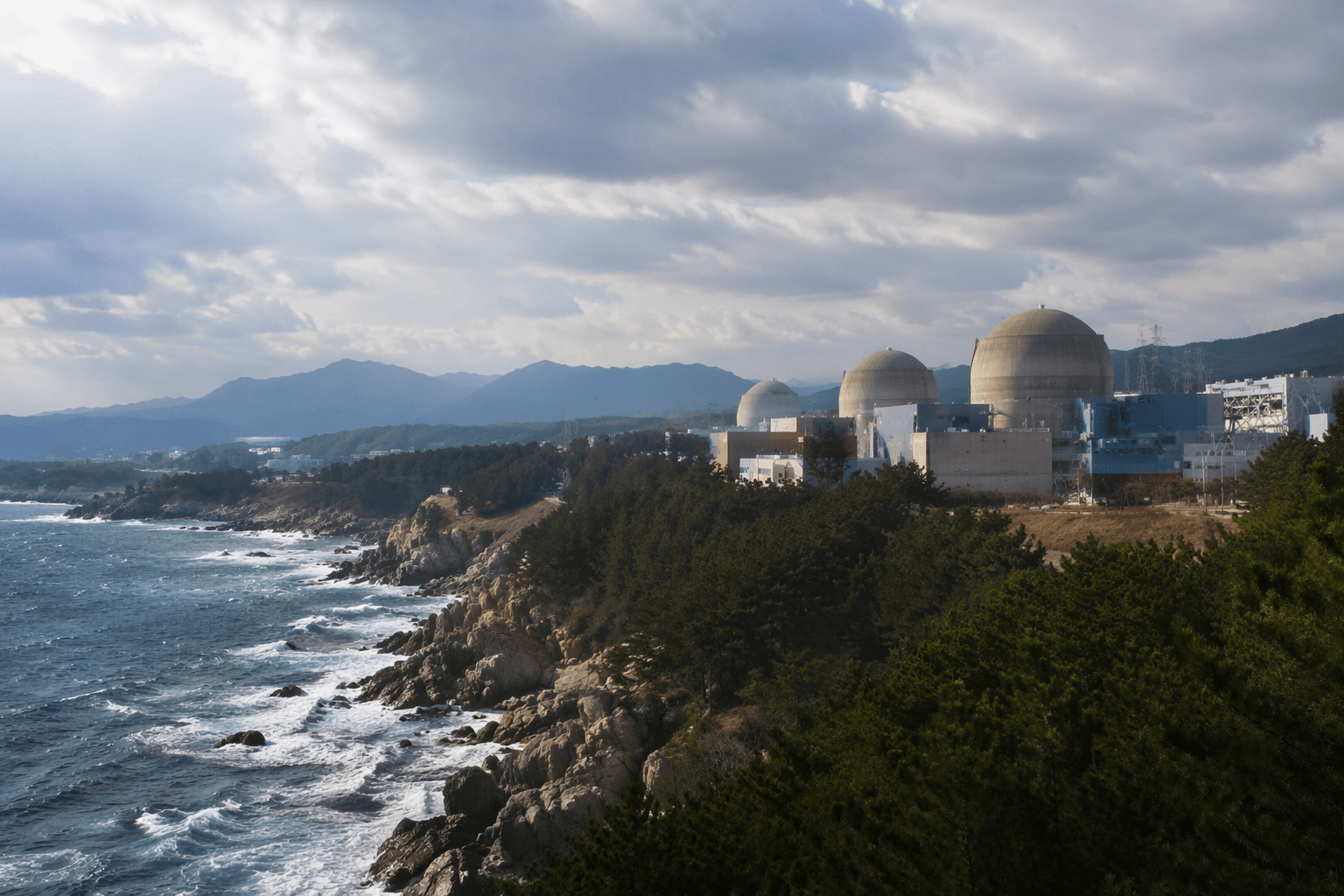
South Korea’s next reactor build finally got a map. Korea Hydro & Nuclear Power picked Yeongdeok County for two 1.4 GW APR1400 reactors and Gijang County for the country’s first small modular reactor site, the first new nuclear site selection since 2011. The move turns a long-running plan into named ground, the kind of step that starts licensing, environmental review, and years of follow-on engineering.
The selection also closes a gap left by the country’s stop-start nuclear politics. In 2011, Samcheok Daejin and Yeongdeok Cheonji were chosen as candidate sites, only to be canceled later under the Moon Jae-in administration’s phase-out policy. This time, KHNP said its New Nuclear Plant Site Selection Evaluation Committee chose Yeongdeok and Gijang after weighing environmental impact, technical fit, construction feasibility, and public acceptance, all factors that matter once a project moves from policy into permitting.
Yeongdeok’s two large units are planned to add 2.8 GW in total, with completion targeted for 2037 and 2038. Gijang’s SMR project is being described as a 0.7 GW-class plant, and reporting has framed it as South Korea’s first commercial SMR siting decision, with completion targeted for 2035 or 2035 to 2036. Together, the projects amount to about 3.5 GW, or roughly 13.4% of South Korea’s current domestic nuclear capacity of 26.05 GW. If existing reactors keep running, South Korean reporting has said the fleet could reach 32 large reactors by 2038.

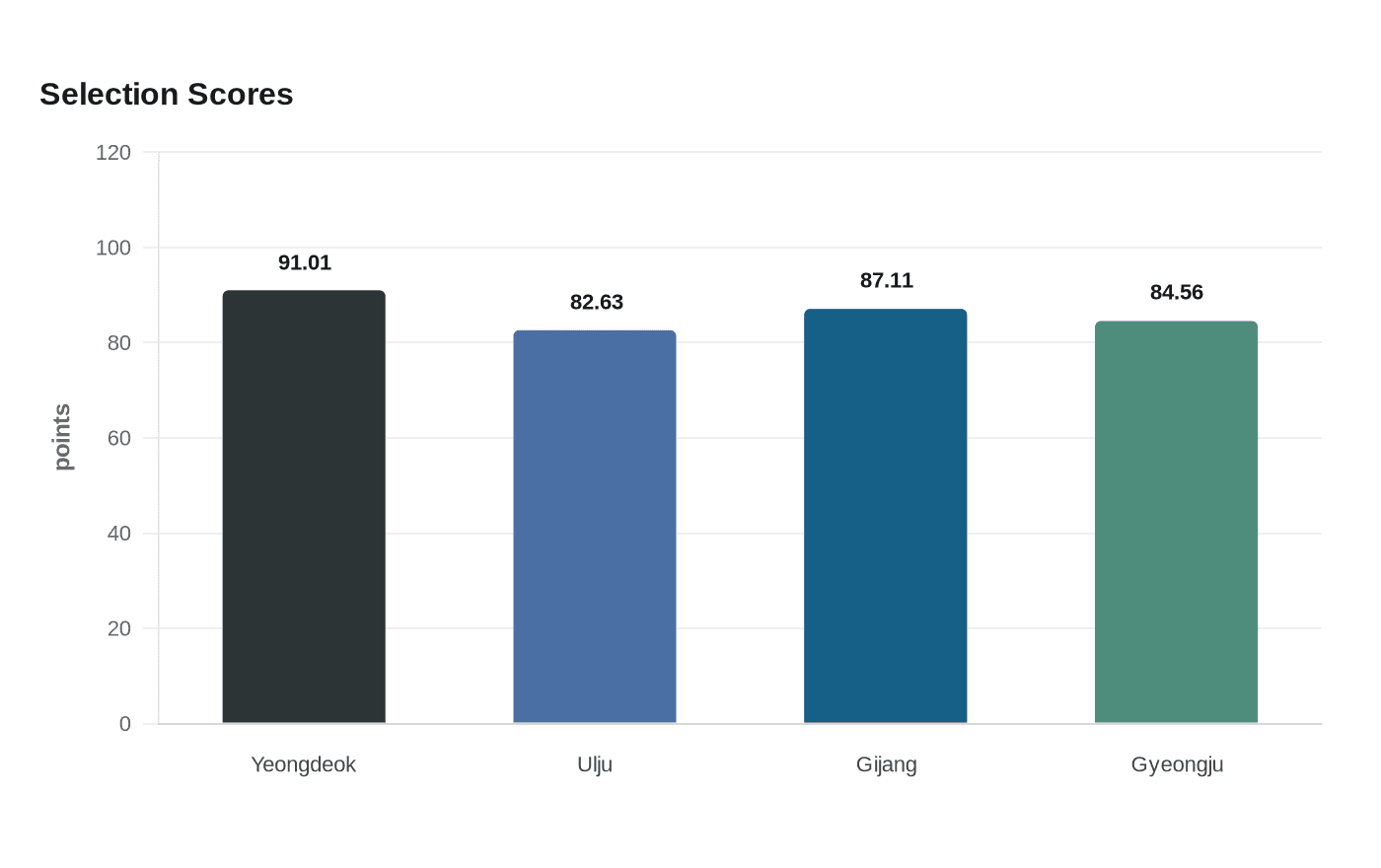
The competition was not a formality. Yeongdeok reportedly scored 91.01 in the large-reactor selection, ahead of Ulju County’s 82.63, while Gijang scored 87.11 in the SMR contest, ahead of Gyeongju’s 84.56. The geography matters too: Yeongdeok in North Gyeongsang Province carries the weight of an earlier, abandoned nuclear push, while Gijang, on the edge of Busan, gives the SMR program a visible industrial foothold.
KHNP said it plans to begin licensing procedures, including an environmental impact assessment, early next year. That is where the real test begins, because site selection is the moment a nuclear build stops being an intention and starts becoming a project with a clock on it. South Korea has now put fresh large reactors and its first SMR on the board; the next stretch will show whether this becomes the start of a domestic construction cycle again.
This article was produced by Prism’s automated news system from verified source data, official records, and press releases, then run through automated quality and moderation checks before publishing. The system is built and supervised by the people who set the standards it runs under. Read our full AI policy.
Did this article answer your question?