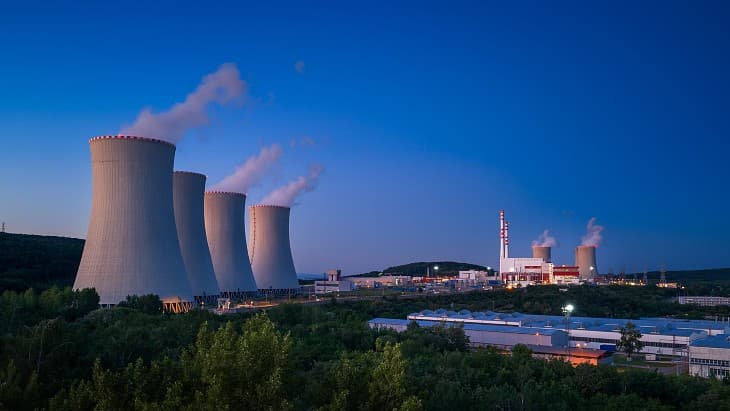
Thea Energy builds first digital twin for stellarator fusion plant
Thea Energy’s Helios digital twin aims to shrink stellarator iteration from hardware to software. The model will test a 3D coil maze before metal is cut.
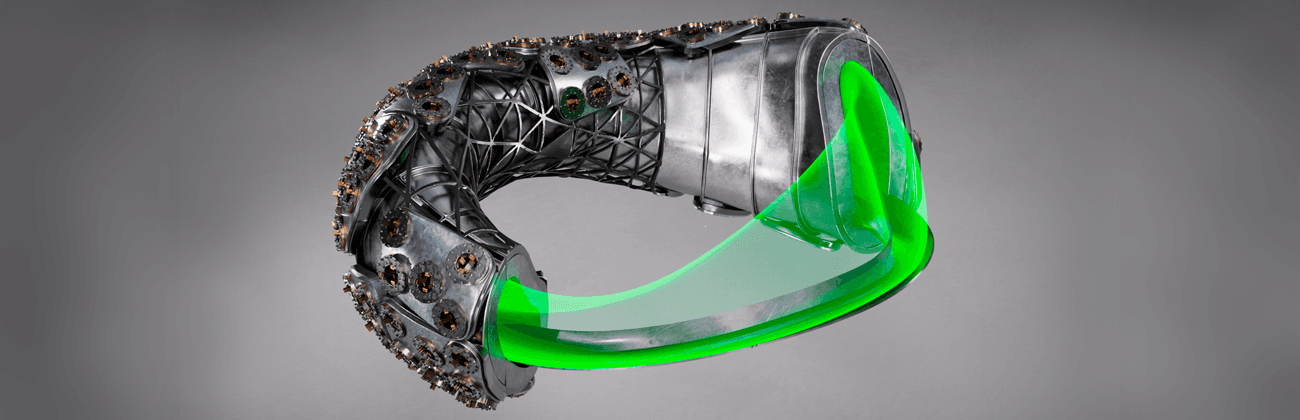
Thea Energy is trying to move one of fusion’s hardest jobs off the factory floor and into the computer: the three-dimensional design problem that makes stellarators so powerful, and so difficult, to build. Its new digital twin for the planned Helios plant is meant to let engineers probe design choices, update the model with live data, and use AI surrogate models to speed analysis before expensive hardware is installed.
The company announced the collaboration on June 8, 2026, with NVIDIA, Synopsys, Argonne National Laboratory, and Princeton Plasma Physics Laboratory. Thea said the project will create the first digital twin of a stellarator fusion power plant, a notable step for a device family built around twisted magnetic field geometry that confines plasma without the symmetry of a tokamak. That geometry can offer operational advantages, but it also creates a design and manufacturing bottleneck: every coil, support structure, and plasma-shaping decision has to work in three dimensions, where brute-force iteration is slow and costly.

That is where Helios becomes more than a name on a slide. Thea has said Helios is designed to operate continuously and deliver about 400 megawatts of net electricity to the grid, with 1.1 gigawatts of total thermal output and a major radius of 8 meters. The company has also described Helios as the most compact optimized stellarator power plant architecture it has laid out so far. If the digital twin does its job, it should accelerate the path from that concept to a physical machine by helping the team decide sooner which magnetic and structural choices are worth building.

The milestone to watch is not the software itself but the hardware it is supposed to pull forward. Thea says its Eos demonstration system is scheduled to be online by 2030, and Helios remains on track for the 2030s. Eos is intended to produce power-plant-relevant steady-state fusion that feeds Helios development, so progress on the digital twin should show up as shorter design cycles, fewer dead-end component choices, and a cleaner path through integration before the next machine is assembled.
That emphasis on virtual testing fits the broader direction at Princeton Plasma Physics Laboratory, which has described digital twins as live-updated copies of real systems that help scientists test ideas virtually and make faster decisions. Thea was founded in 2022 as a spin-out of PPPL and Princeton University, and it says its approach uses an all-planar coil stellarator with hundreds of individually controllable coils. In a field where stellarator complexity has long slowed the build-and-test loop, the real measure of this software will be simple: whether it saves time before the next piece of hardware has to prove itself.
This article was produced by Prism’s automated news system from verified source data, official records, and press releases, then run through automated quality and moderation checks before publishing. The system is built and supervised by the people who set the standards it runs under. Read our full AI policy.
Did this article answer your question?