UAE signs five-year pact to build civil nuclear workforce
The UAE is building the staffing ladder for Barakah, with a five-year pact to train at least 100 nationals for the operators, engineers and instructors the fleet will need.
_85372.jpg&w=1920&q=75)
The real test of a nuclear program begins after the ribbon-cutting, when someone has to run the plant, keep it licensed, and train the next shift. In Abu Dhabi, Emirates Nuclear Energy Company and the Department of Government Enablement signed a five-year agreement aimed at doing exactly that, building a civil nuclear workforce that can carry the UAE through Barakah’s long operating life.
The deal, announced on 14 May 2026, will qualify at least 100 UAE nationals for roles across the civil nuclear sector. The candidate pool is broader than a typical engineering intake: it includes people with high school diplomas, vocational diplomas, and postgraduate degrees. That points to a pipeline meant to feed not just reactor engineering, but operations, technical support, training, and the institutional jobs that keep a multi-unit nuclear fleet functioning over decades.
Under the agreement, DGE’s Mawaheb Talent Hub will identify candidates and host awareness workshops, assessments, and interviews. ENEC will design and fund the training programs and provide financial support for trainees. In other words, one side is responsible for finding the people, and the other is responsible for turning them into nuclear workers.

Mohamed Al Hammadi, ENEC’s managing director and chief executive, said the agreement expands the talent pipeline so the next generation of UAE nationals will be “equipped with the expertise to lead and secure our nation's carbon-free future.” That framing matters. ENEC is not describing a short-term hiring push for a single project; it is building national capability for a sector that demands operators, engineers, regulators, instructors, and managers who can work inside strict safety and quality systems.
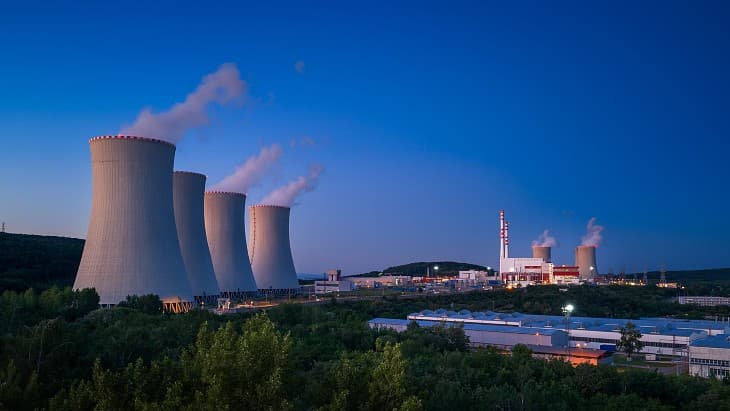
The timing fits Barakah’s shift from construction to long-haul operations. Unit 4 entered commercial operation on 5 September 2024, completing the plant’s four-unit buildout. Barakah now consists of four APR-1400 reactors, each rated at 1,400 MW, on the Arabian Gulf coast about 300 km southwest of Abu Dhabi City. The IAEA lists Unit 1 as entering commercial operation in April 2021, Unit 2 in March 2022, Unit 3 in February 2023, and Unit 4 in September 2024.
ENEC has said more than 2,000 UAE nationals contributed to Barakah’s development and operation alongside international experts, and that the plant’s 60-year operating life will continue to generate highly specialized jobs. ENEC’s Diploma in Nuclear Technology, launched in 2023 as a 24-month entry-level track, already showed how the utility was trying to grow local operators from the ground up. The new DGE pact extends that same effort, with the next question now less about building the reactors than about who will staff them for the next 60 years.
This article was produced by Prism’s automated news system from verified source data, official records, and press releases, then run through automated quality and moderation checks before publishing. The system is built and supervised by the people who set the standards it runs under. Read our full AI policy.
Did this article answer your question?