U.S. expects first new reactors to get federal loans, Wright says
Chris Wright signaled that the first five or 10 planned U.S. reactors will likely start with DOE loans, making federal credit the real gatekeeper for the next build wave.
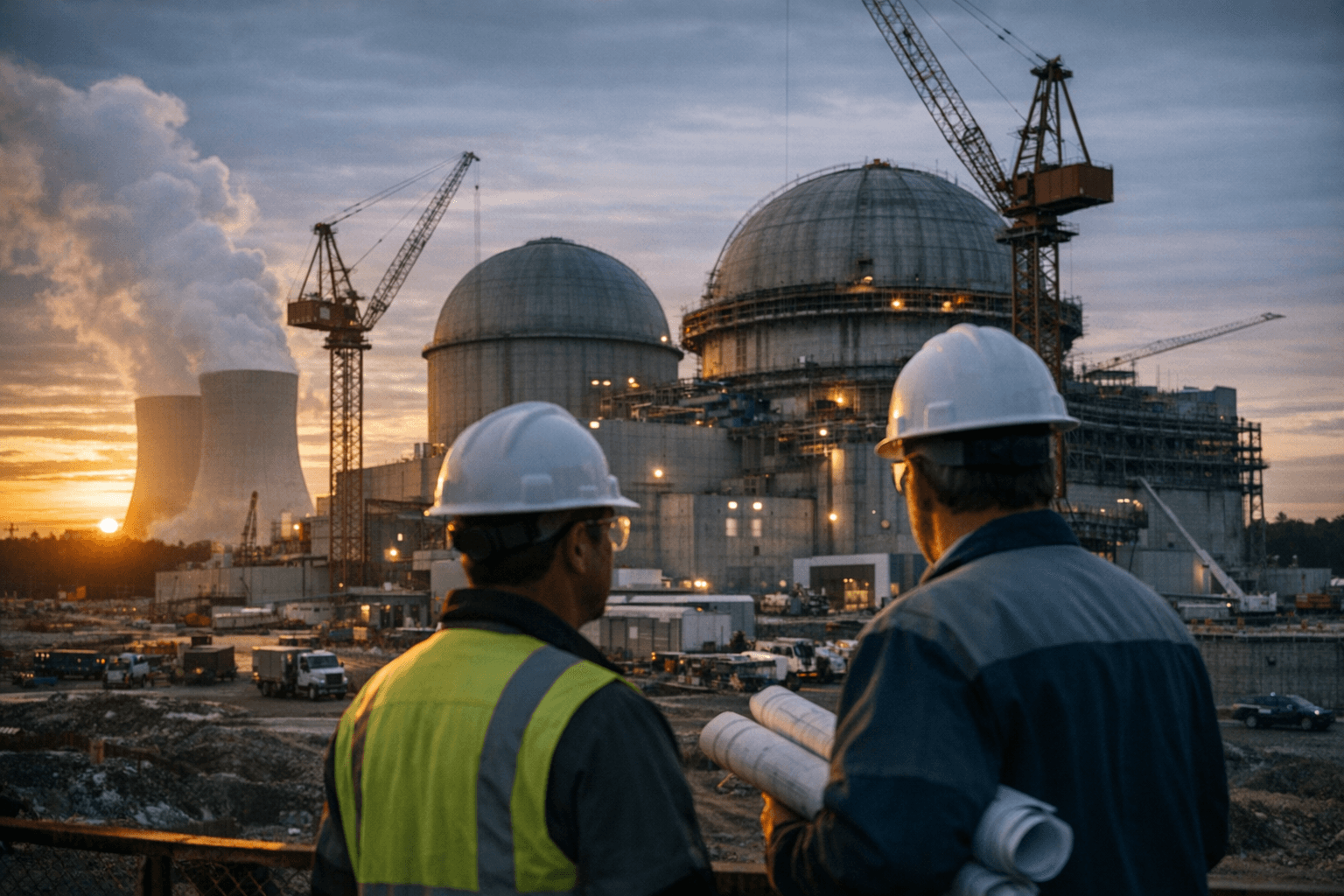
The first five or 10 planned U.S. nuclear reactors will almost certainly need federal loans, Chris Wright told lawmakers, turning the Department of Energy’s lending office into the gatekeeper for the next wave of reactor construction. The office, now operating as the Office of Energy Dominance Financing, has nearly $290 billion in lending authority, and Wright has said much of that firepower will go to nuclear power plants.
That matters because Washington is no longer talking about nuclear in the abstract. Donald Trump’s 2025 executive order called for 10 new large reactors to be under construction by 2030, while the White House also told the Energy Department to prioritize 5 gigawatts of uprates at existing reactors. There are still no approved plans for new large commercial reactors in the United States, so the first projects to win federal backing will likely be the ones farthest along in licensing, utility commitments and site readiness.
The cautionary tale is Plant Vogtle in Georgia, near Waynesboro in Burke County. Construction on the two new reactors there began in 2009. The project was originally expected to cost $14 billion and come online in 2016 and 2017, but the U.S. Energy Information Administration says the price climbed past $30 billion. Vogtle Unit 3 entered commercial operation in April 2023, followed by Unit 4 in March 2024, the first new U.S. commercial reactors to come online in decades. That history is why federal credit support now looks less like a bonus and more like a prerequisite.
The most plausible early winners are the projects with the strongest industrial backing. In October 2025, Westinghouse Electric Company, Cameco Corporation and Brookfield Asset Management announced a partnership centered on at least $80 billion of new Westinghouse AP1000 reactors in the United States. Japan has also pledged up to $332 billion in support for U.S. infrastructure, including AP1000 reactors and small modular reactors. Those kinds of capital stacks, paired with a credible path through the U.S. Nuclear Regulatory Commission, are exactly what loan officers will be watching.
The federal push is colliding with a familiar concern inside the nuclear world: execution. The Government Accountability Office said in 2025 that DOE was not on track to use all of its congressionally authorized loan authority and that its review guidance needed improvement. That makes the next few awards especially important. If Washington is going to build a first wave of new reactors, the decisive question is no longer whether the money exists. It is which projects can prove they are ready to move from promise to poured concrete first.
This article was produced by Prism’s automated news system from verified source data, official records, and press releases, then run through automated quality and moderation checks before publishing. The system is built and supervised by the people who set the standards it runs under. Read our full AI policy.
Did this article answer your question?


