Rosatom готов to defend Paks II costs as Hungary reviews project
Rosatom says it will answer Hungary’s price questions on Paks II as the project moves from licensing into visible construction.
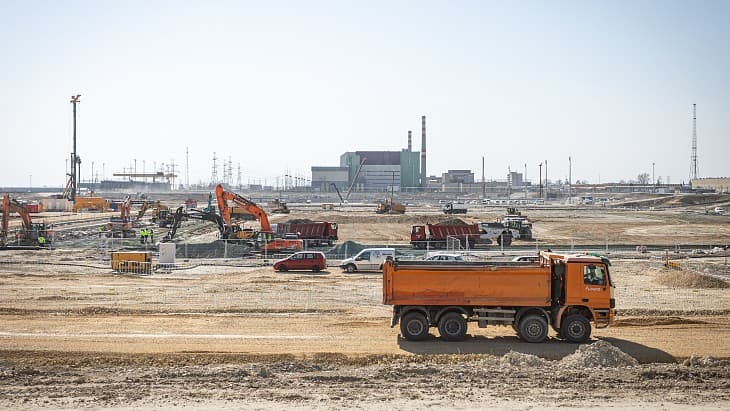
Rosatom is opening the door to a political audit of Paks II just as the project becomes harder to treat as a paper promise. Alexei Likhachev said the company was ready to answer questions from Hungary’s incoming government, including on price and other parameters, after Péter Magyar’s Tisza Party won the election and said he would review the plant’s cost.
That matters because Paks II is already past the point where debate can stay abstract. The project company said first concrete for Unit 5 was poured on 5 February 2026, and by International Atomic Energy Agency terminology the new plant is now under construction. Its chronology also says soil removal to the design level began in the Unit 6 excavation pit on 18 March 2026. The politics may be unsettled, but the site is moving.
The numbers behind the build explain why Budapest is still under pressure to keep it intact. Hungary’s parliament backed the project on 30 March 2009 by 330 votes to 6, with 10 abstentions. MVM Paks II was set up in July 2012, and Hungary and Russia signed their intergovernmental nuclear cooperation agreement in January 2014 for two Russian-designed VVER-1200 units, Paks II units 5 and 6. The financing package includes a Russian state loan of up to EUR10.0 billion to cover about 80 percent of the roughly EUR12.5 billion project.
Hungary’s nuclear regulator issued the construction licence for units 5 and 6 on 25 August 2022, giving the project a formal green light even as its legal footing stayed contested. The European Commission cleared state aid for Paks II in 2017 after Hungary made commitments, but on 11 September 2025 the Court of Justice of the European Union annulled that decision, saying the Commission should have checked whether the direct award of the reactor construction contract complied with EU public procurement rules.
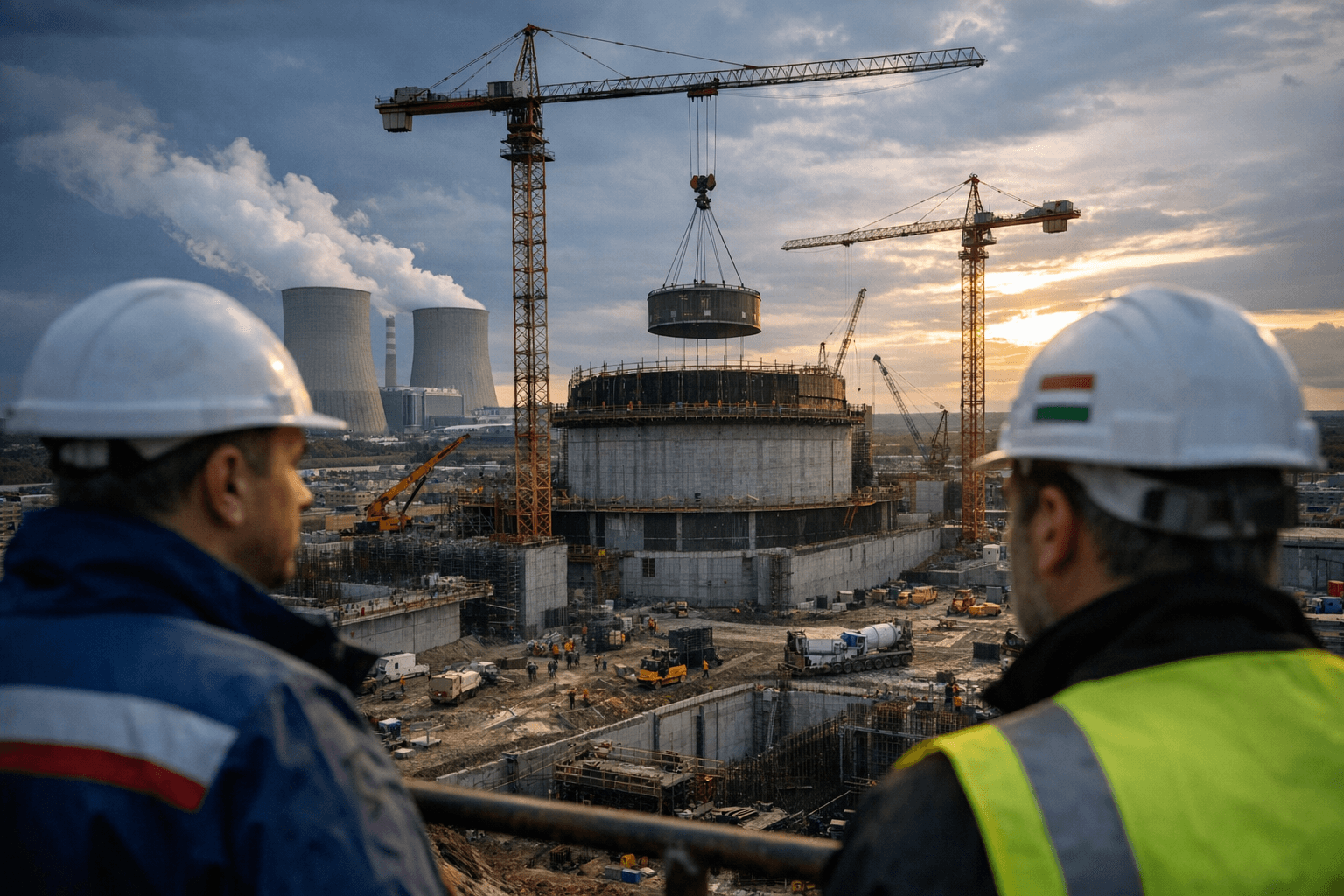
The political stakes are obvious at Paks, where the existing four VVER-440 units, commissioned in the 1980s, already supply around half of Hungary’s domestic electricity. Supporters say the new units could eventually cover about 70 percent of the country’s demand. Critics see a different story: cost overruns, procurement risk, sanctions exposure and the problem of dependence on Russian nuclear supply at a time when the project is physically advancing and legally vulnerable.
Likhachev’s willingness to face questions reads like confidence, but it also reads like defense. Once concrete is in the ground and excavation is underway, the fight over Paks II shifts from whether the project exists to whether Hungary still wants the bill that comes with it.
This article was produced by Prism’s automated news system from verified source data, official records, and press releases, then run through automated quality and moderation checks before publishing. The system is built and supervised by the people who set the standards it runs under. Read our full AI policy.
Did this article answer your question?


