US ITER completes final central solenoid deliveries for fusion milestone
US ITER delivered the last busbars and leads for ITER’s central solenoid, closing out the U.S. magnet scope on a component that will drive plasma current.
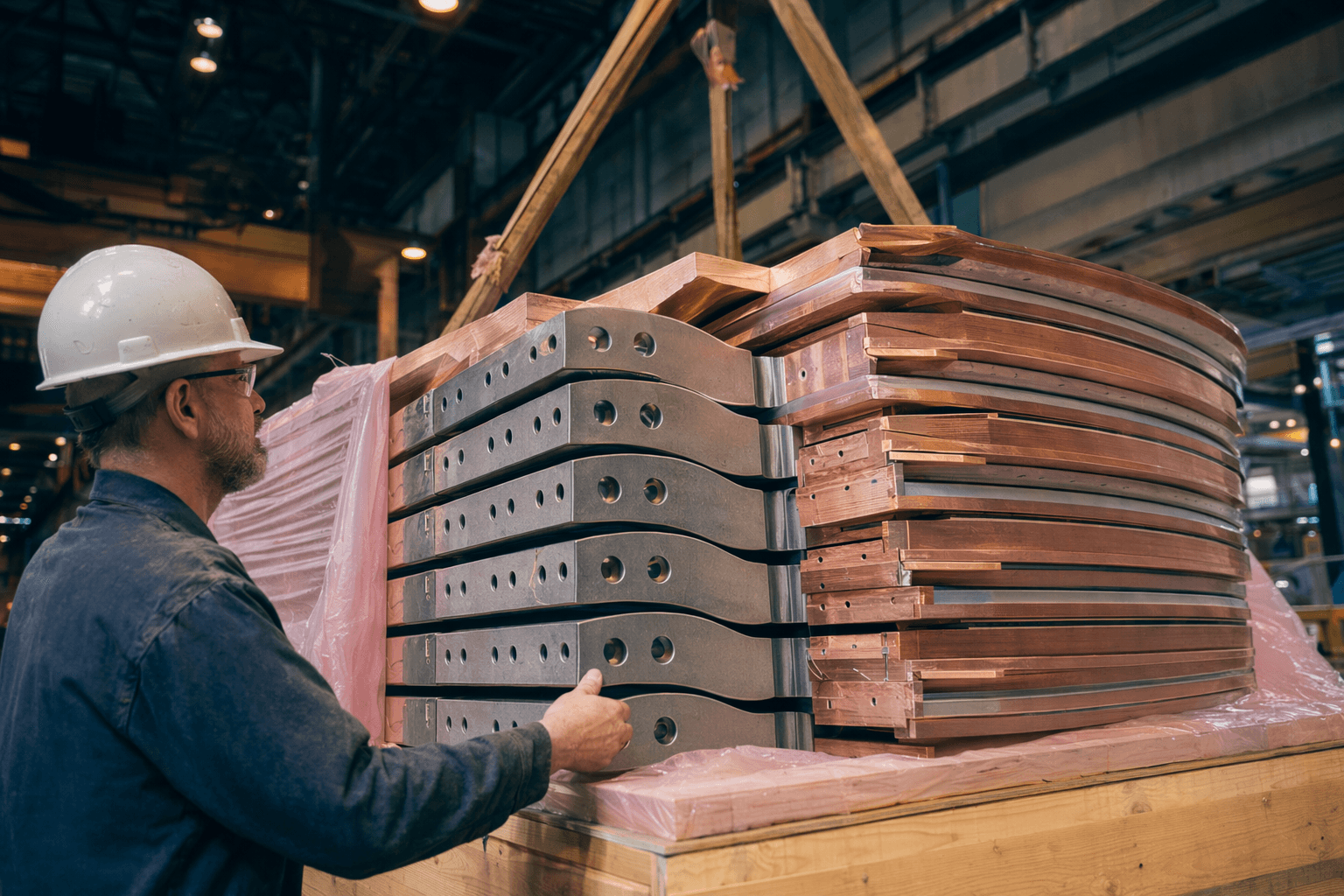
The last U.S.-supplied pieces for ITER’s central solenoid are now in hand, and that matters because this is not just another hardware drop. It closes out the American procurement package for the machine’s most powerful pulsed superconducting magnet, the component ITER says provides the magnetic flux needed to start and sustain plasma current.
On April 27, 2026, US ITER completed final deliveries for the solenoid, adding the last busbars and leads needed to connect the magnet modules electrically. Those parts arrived after the earlier shipment of the six-module magnet’s support structures, tooling and the modules themselves, all of it built to feed the towering assembly now taking shape at the Cadarache site in southern France.
The scale is hard to miss. The central solenoid stands 18 meters tall when assembled, and it is built as a stack of six modules. Five are already in place at ITER, with the sixth scheduled to be added later in the year. Each module took more than two years to fabricate and test before shipment, a timeline that shows why “final deliveries” is a real construction threshold and not a ceremonial one. Without the busbars and leads, the stack cannot be fully tied into the machine’s electrical and magnetic architecture.
US ITER, led through the project team at Oak Ridge National Laboratory, said the procurement package is now effectively closed out, which gives the domestic program credit for the full magnet scope. The fabrication work was done at General Atomics’ Magnet Technologies Center in Poway, California, turning the solenoid into one of the clearest U.S. supply-chain wins inside the sprawling international build.
For fusion watchers, the milestone shifts ITER from abstract promise to trackable machine assembly. The central solenoid is one of the defining components of the tokamak, and its completion keeps the path open toward first plasma. Just as important, it shows that a highly specialized, multinational component can be designed, fabricated, tested, shipped and delivered on schedule enough to keep the build moving. In a project this large, that kind of closeout is the difference between paper progress and real assembly momentum.
This article was produced by Prism’s automated news system from verified source data, official records, and press releases, then run through automated quality and moderation checks before publishing. The system is built and supervised by the people who set the standards it runs under. Read our full AI policy.
Did this article answer your question?