U.S.-Japan engineer project helps drive Japan’s nuclear restart push
Japan’s restart push is not just about reactors and permits. It is also about the engineers who learned radiation work, safety culture, and plant problem-solving before the country needed them most.
The real engine behind Japan’s restart push
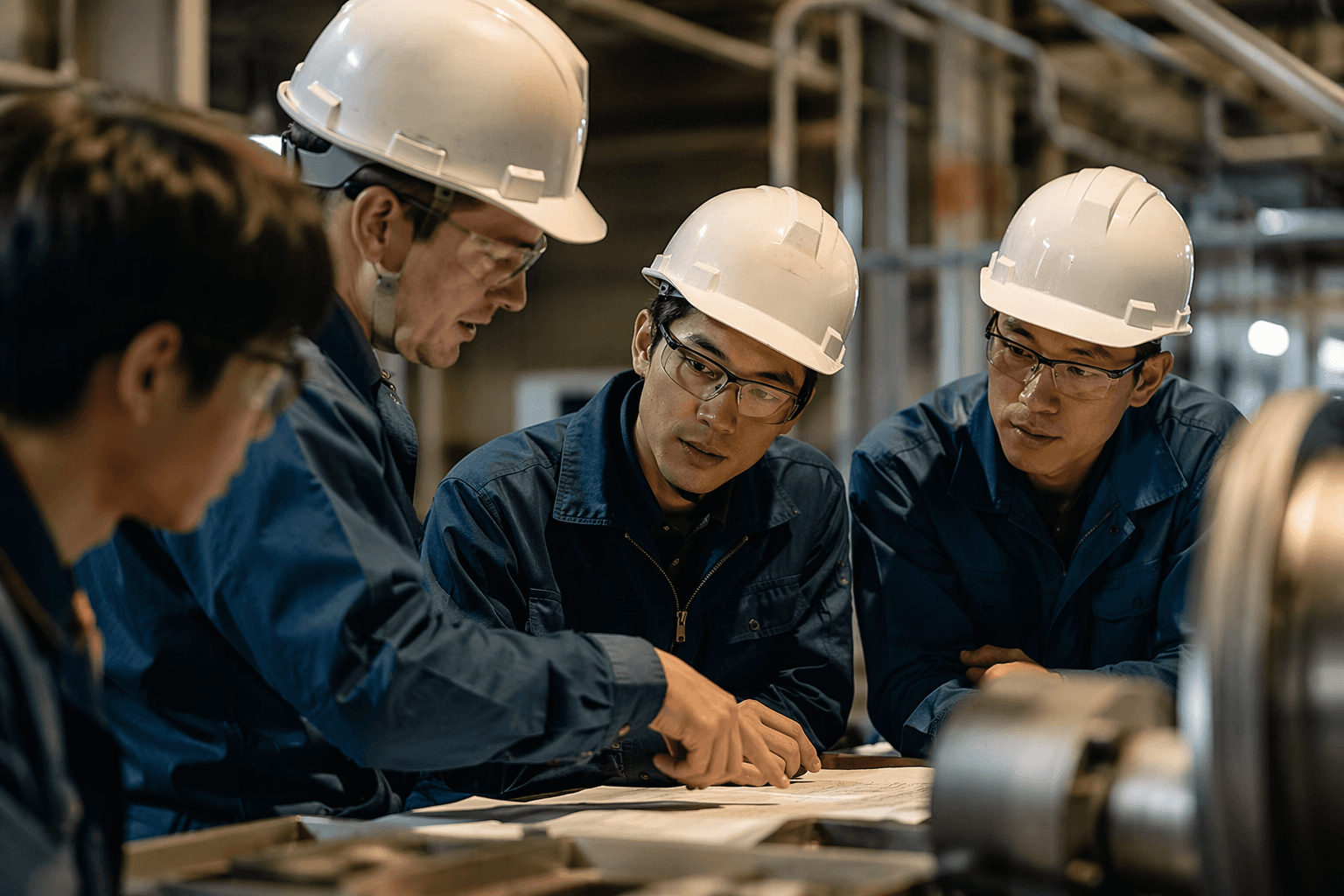
Japan’s nuclear restart story is usually told as a regulator’s checklist or a politician’s energy pledge. The more interesting part is the human pipeline underneath it: the Super Engineer Project, a U.S.-Japan training effort that quietly built a generation of nuclear professionals who could do the unglamorous work of keeping plants safe, restart-ready, and decommissioning work moving at Fukushima Daiichi.
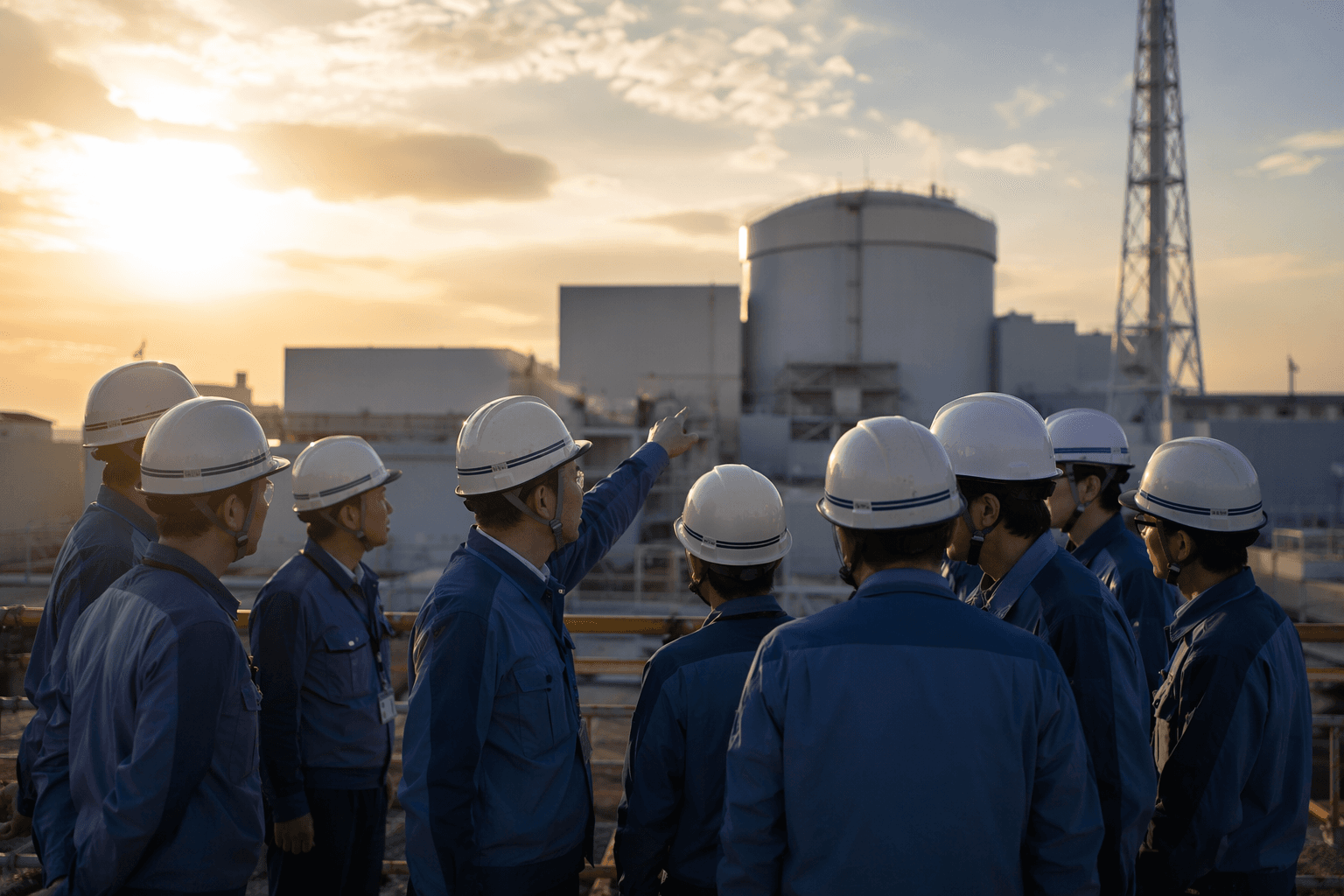
That is the part worth paying attention to. A nuclear fleet does not come back online because a cabinet approves a target. It comes back when there are enough people who know radiation protection, plant safety culture, and nuclear engineering well enough to solve the problems that sit between a policy headline and a spinning turbine.
How the pipeline was built
The Super Engineer Project ran from 2015 to 2017 and was backed by the Japan Ministry of Economy, Trade, and Industry and Hokkaido University. It linked Japanese universities and energy companies with U.S. nuclear companies, power plants, the University of Illinois Urbana-Champaign’s North American Technical Center in Nuclear, Plasma, and Radiological Engineering, and the U.S. branch of ISOE, the international radiation worker exposure network.
That mix matters. This was not just classroom theory, and it was not just plant-floor apprenticeship either. It was designed to move students and young professionals into real operating environments where they could see dose management, shielding decisions, work planning, and radiation protection culture in action. For anyone who has ever tried to learn nuclear work from slides alone, that is the difference between memorizing terminology and learning how a plant actually runs.
ISOE, which is jointly sponsored by the OECD Nuclear Energy Agency and the International Atomic Energy Agency, is especially relevant here because it is built around occupational exposure at nuclear plants and regulators. In other words, it is about the daily mechanics of keeping workers safe while the machine keeps moving. That is exactly the kind of know-how Japan needed to preserve and spread after Fukushima.
What these engineers were trained to handle
The point of the project was broader than one skill set. It aimed to strengthen Japanese students’ abilities in radiation protection and nuclear engineering, but the practical value extends into the full restart-and-recovery toolbox. These are the people who know how to work in high-dose environments, how to think about contamination control, how to protect crews during maintenance outages, and how to make safety culture more than a slogan.
That expertise matters even more when a country has to do two hard jobs at once: restart reactors under tighter scrutiny and manage Fukushima Daiichi decommissioning over the long haul. The restart side needs engineers who can navigate regulation, upgrades, inspections, and public skepticism. The cleanup side needs people who understand radiological work in the real world, where every task has to be planned around exposure, logistics, and contamination boundaries.
Japan has spent years in that double bind. After the Fukushima Daiichi accident in March 2011, every reactor was shut down. Before the accident, Japan’s 54 reactors supplied about 30 percent of the country’s electricity. Today, Japan’s 33 operable reactors have seen fewer than half restarted, and the country still relies heavily on natural gas and coal. Nuclear now accounts for about 8.5 percent of electricity, which is a reminder that the restart debate is not abstract. It is tied to grid mix, fuel imports, and the basic question of how Japan keeps the lights on.
Why policy shifted back toward nuclear
Japan’s Seventh Strategic Energy Plan, approved by cabinet in February 2025, marks a major turn. Instead of treating nuclear mostly as something to shrink, the plan says Japan will maximize its use as part of a broader net-zero-by-2050 strategy. It targets nuclear power at 20 percent of electricity by 2040 and ties reactor restarts to energy security and Fukushima reconstruction.
That policy shift did not happen in a vacuum. Public opinion moved too, though not in a straight line. A 2012 Pew Research poll found 70 percent opposition to nuclear after Fukushima. By 2022, a Nikkei Business Publications poll suggested a majority of respondents supported restarting reactors if safety could be ensured. Electricity price pressure and worries about supply shortages helped push that change, which is exactly why restart policy in Japan cannot be separated from economics.
The state of the fleet shows how hard the climb still is. U.S. Energy Information Administration reporting said 14 reactors had restarted by 2024, and later reporting in 2025 and 2026 put the total at 15 of Japan’s 33 operable reactors. That pace reflects the usual mix of safety upgrades, regulation, and public trust issues. Nuclear restarts are rarely blocked by one thing. They are slowed by many small things that add up: hardware fixes, licensing work, local politics, and the fact that a post-accident industry has to earn confidence one plant at a time.
What the Super Engineer model gets right
The useful lesson here is not that one university program solved Japan’s nuclear problem. It did something more durable. It built a transfer mechanism for hard-won expertise across borders and generations, so that younger engineers could absorb habits that are usually learned the slow way, in control rooms, outage windows, and radiological work zones.
That is the kind of capacity building the industry often underestimates. Nuclear deployment is never only a hardware problem. It also depends on operators, health physics staff, trainers, inspectors, and engineers who know how to keep work disciplined when the stakes are high and the margin for error is tiny. If Japan is going to chase 20 percent nuclear electricity by 2040 while also managing Fukushima reconstruction, that bench has to be deep.
For students and early-career engineers, the takeaway is simple: the strongest careers in nuclear are built where theory meets actual plant conditions. Learn radiation protection, but also learn how a safety culture is enforced in the field. Learn engineering fundamentals, but also learn how work gets sequenced around dose, access, and outage deadlines. The Super Engineer Project shows that those skills are not side dishes. They are the main course.
And that is why this story matters more than a single press release. Japan’s restart push is being driven not just by policy, but by people who learned how to do the work when the industry needed them to be ready. That pipeline, once built, keeps paying off long after the original class has moved on.
This article was produced by Prism’s automated news system from verified source data, official records, and press releases, then run through automated quality and moderation checks before publishing. The system is built and supervised by the people who set the standards it runs under. Read our full AI policy.
Know something we missed? Have a correction or additional information?
Submit a Tip