Valar Atomics reaches first criticality at Utah test reactor
Ward 250 has gone critical in Utah, giving Valar Atomics the second advanced reactor milestone in DOE’s pilot program and clearing the key physics hurdle before power testing.

Valar Atomics’ Ward 250 has crossed the line every advanced reactor team watches for first: criticality. At the Utah San Rafael Energy Lab in Emery County, Utah, the TRISO-fueled modular high-temperature gas reactor completed zero-power testing and achieved a self-sustaining fission chain reaction at essentially no measurable power, a milestone the U.S. Department of Energy confirmed on June 18, 2026.
That matters because criticality is the moment a reactor stops being a construction project and starts behaving like a reactor. DOE said the demonstration showed Ward 250 could sustain a controlled nuclear chain reaction before generating power, and it also made the system the first DOE-authorized reactor built and operated outside a national laboratory. For the Gen IV field, that is a notable shift: the program is no longer confined to the traditional lab pathway.
Ward 250 is now the second advanced reactor to go critical under DOE’s Reactor Pilot Program, which DOE launched in June 2025 and initially filled with 11 selected projects in August 2025. The first was Antares Nuclear’s Mark-0, which reached criticality on June 4, 2026, at Idaho National Laboratory. DOE has set a goal of at least three reactors reaching criticality by July 4, 2026, so Ward 250 pushed the program another step closer to that deadline.
Valar said the reactor is now entering non-commercial power ascension, moving from the no-power physics phase into higher-power system integration. That next stage is where control systems, heat removal, fuel behavior, and plant operations can be exercised in sequence, turning a criticality demo into a more realistic proving ground for licensing and future deployment. DOE describes the Reactor Pilot Program as a new pathway meant to fast-track commercial licensing, and Ward 250 is now one of the clearest tests of that idea.
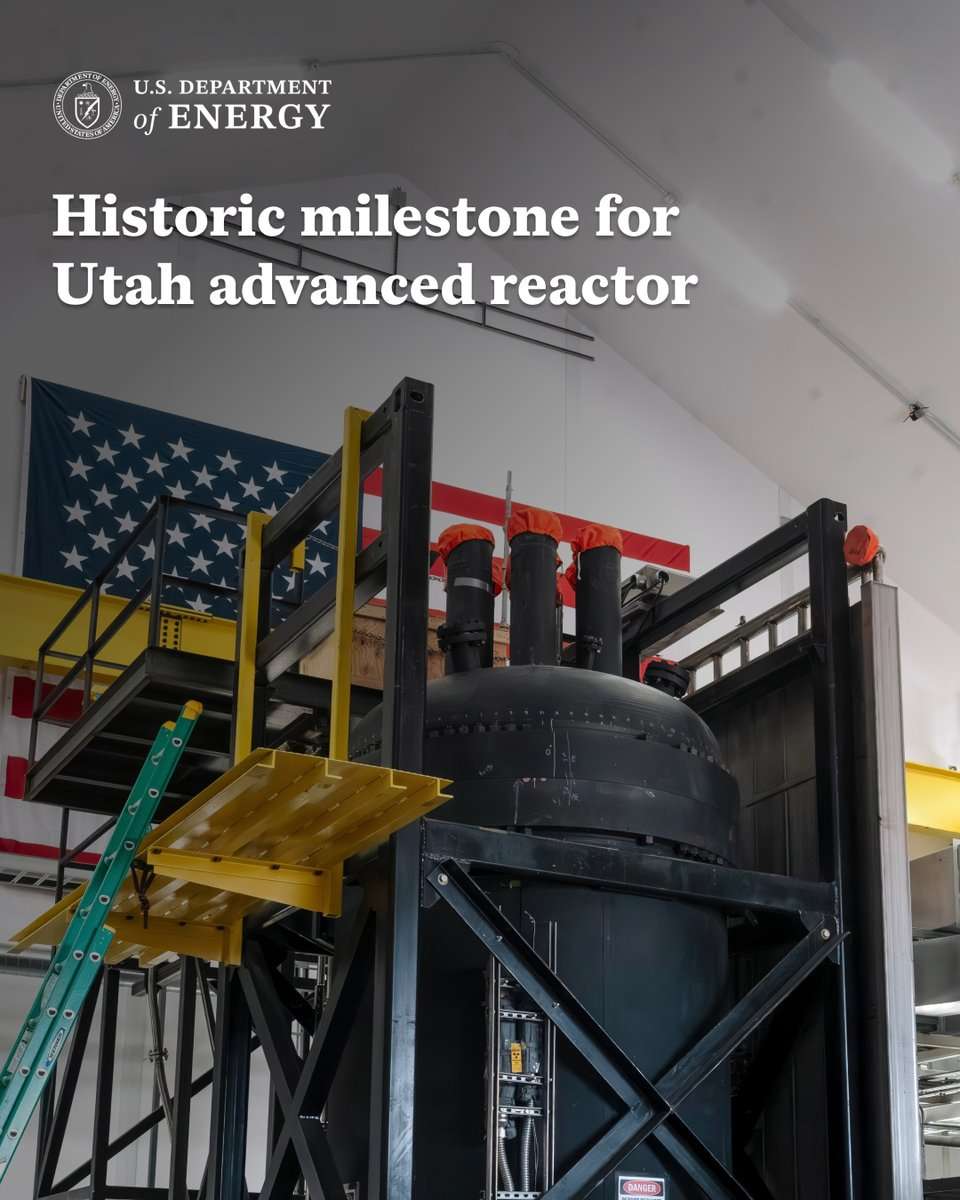
The project has also been tied to a larger federal and state buildout effort. Valar says it is partnering with DOE, the San Rafael Energy Research Center, and the State of Utah, and its goal is to go live before America’s 250th birthday on July 4, 2026. A DOE shipping evaluation dated April 30, 2026, also referenced limited shipments of HALEU TRISO fuel compacts to the Utah site, a clue to how the project moved from fuel preparation into on-site testing.
For an industry that lives on milestones, Ward 250 just hit one of the hardest. The reactor is no longer just on paper or in parts. It is critical, it is under DOE’s new fast-track umbrella, and it is now headed toward the tests that will show whether the machine can move from physics to power.
This article was produced by Prism’s automated news system from verified source data, official records, and press releases, then run through automated quality and moderation checks before publishing. The system is built and supervised by the people who set the standards it runs under. Read our full AI policy.
Did this article answer your question?


