White House sets 2030 deadline for lunar nuclear power reactor program
The White House gave NASA 30 days to start a lunar reactor program aimed at 2030 launch, with the Pentagon and DOE pulled into the race.
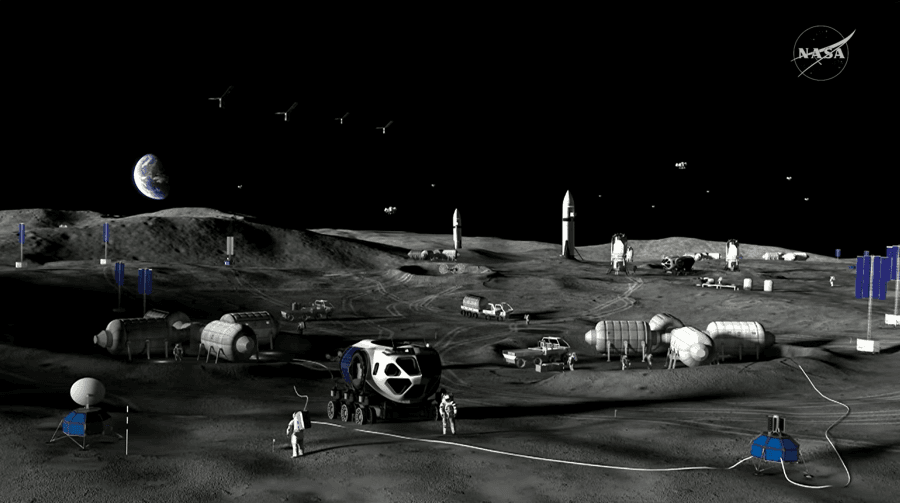
The White House just put a hard clock on space nuclear power. In National Space Technology Memorandum-3, released by the White House Office of Science and Technology Policy on April 14, the administration created the National Initiative for American Space Nuclear Power and told NASA to start a program within 30 days for a mid-power reactor with a lunar fission surface power variant ready for launch by 2030.
That is not a vague policy nod. It is a deadline, a launch target, and a federal chain of command. The memo also leaves room for a space variant aimed at a nuclear electric propulsion demonstration, while White House-related reporting says orbital deployments could begin as early as 2028. Another marker sits with the Pentagon, which is supposed to be briefed within 90 days on the relevant use-cases, payloads, and the best use of a 2031 mission.
NASA is not starting from scratch. The agency says its Fission Surface Power work, done with the Department of Energy and industry, is built around a system that would provide at least 40 kilowatts of power, enough to continuously run 30 households for ten years. NASA’s technical material identifies the current government reference design as a 40 kWe HALEU-fueled reactor, and the program traces back to Kilopower, which ended in 2018.
The memo pushes that work into a tighter federal program with split responsibilities. NASA and the Department of Defense were told to run parallel, mutually reinforcing design competitions for low-power systems around 1 kWe and mid-power systems up to 20 kWe, while preparing for higher-power 100 kWe reactors in the 2030s. The White House also pressed for faster safety analysis, environmental assessments, and launch approval processes, including shared assessments and reciprocity across agencies.

There is already industry muscle behind the effort. In late 2022, NASA awarded three $5 million Phase 1 concept-design contracts for Fission Surface Power to Intuitive Machines with X-energy, Lockheed Martin with BWXT, and Westinghouse with Aerojet Rocketdyne, now part of L3Harris. That earlier work matters because it shows the 2030 target is tied to an existing contractor base, not a blank sheet of paper.
The broader policy message is clear: the administration wants space nuclear power to move from memo to hardware by leaning on private industry, terrestrial nuclear supply chains, modeling tools, materials data, and expert personnel already in hand. The strategic backdrop is just as plain. The White House is treating lunar and cislunar nuclear infrastructure as a competition worth winning, with China and Russia looming over the schedule.
This article was produced by Prism’s automated news system from verified source data, official records, and press releases, then run through automated quality and moderation checks before publishing. The system is built and supervised by the people who set the standards it runs under. Read our full AI policy.
Did this article answer your question?