AAV outlines five enrichment types to keep parrots engaged
The AAV’s five-part framework turns bird enrichment into a fix-it guide for screaming, feather picking, boredom and inactivity.
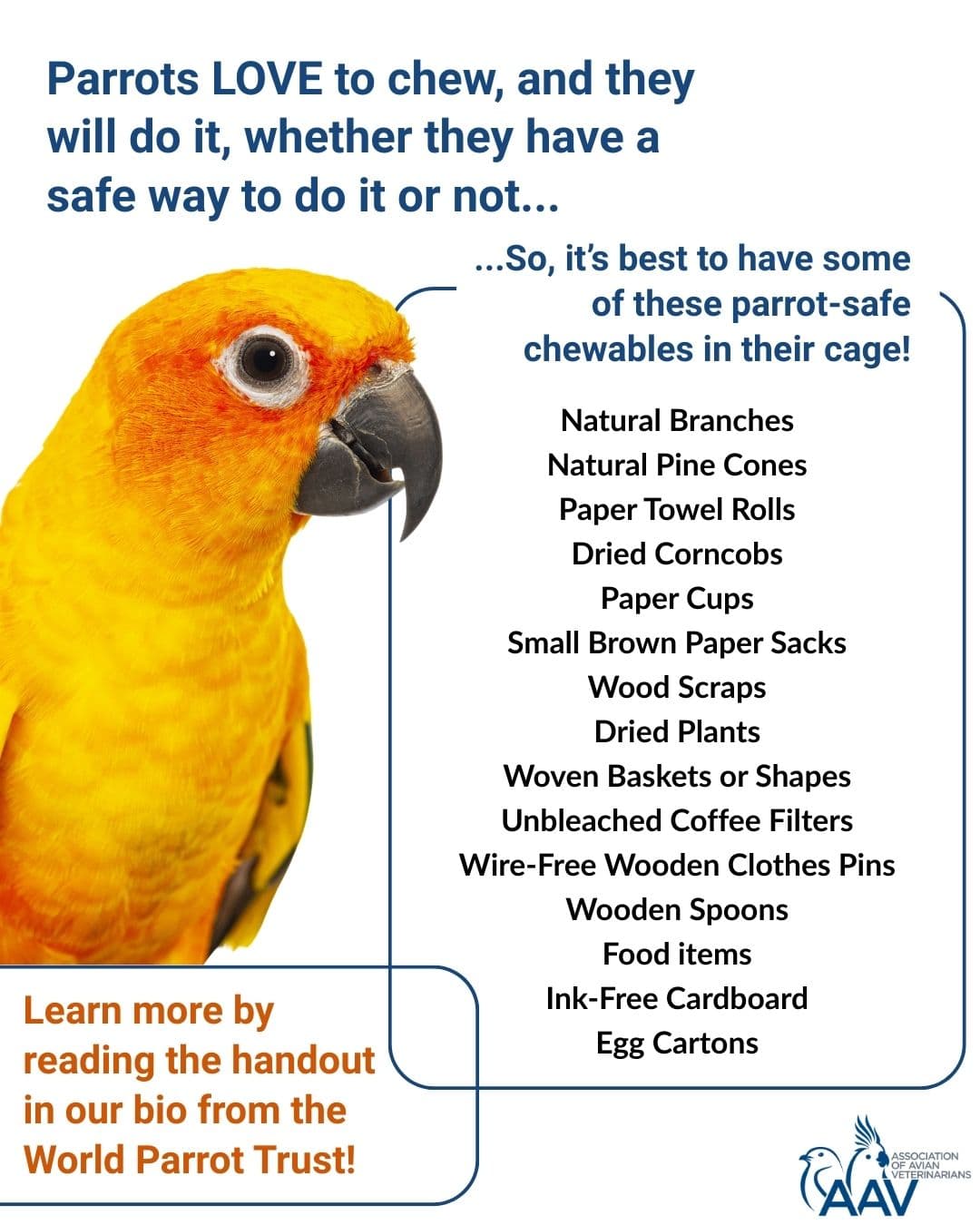
When your parrot is screaming at dawn, shredding feathers, or parked on the perch with nothing to do, the answer is usually not one more toy. The Association of Avian Veterinarians divides enrichment into five types: sensory, nutritional, manipulative, environmental and social.
Sensory enrichment
Sensory enrichment is the fastest way to break up a monotonous day. It covers what a bird sees, hears, smells and feels, so this is the category to lean on when your parrot looks bored, startles at every little change, or fixes on one corner of the cage because nothing else is happening there. Offer safe new textures, varied perch surfaces, and carefully introduced sounds or visual changes.
This is where a lot of people overdo it by making every change at once. Better to rotate one perch type, one branch, or one safe sound source at a time so the bird can actually process it. If your bird is a cautious type, subtle sensory changes can wake up curiosity.
Nutritional enrichment
If the problem is boredom that turns into screaming, frantic pacing, or feather picking, nutritional enrichment is usually the first place I look. Wild parrots spend much of their day foraging or searching for food, while the same food in captivity may be gone in minutes. That mismatch leaves a big hole in the day, and some birds fill it with excessive preening that can progress into feather destructive behavior.
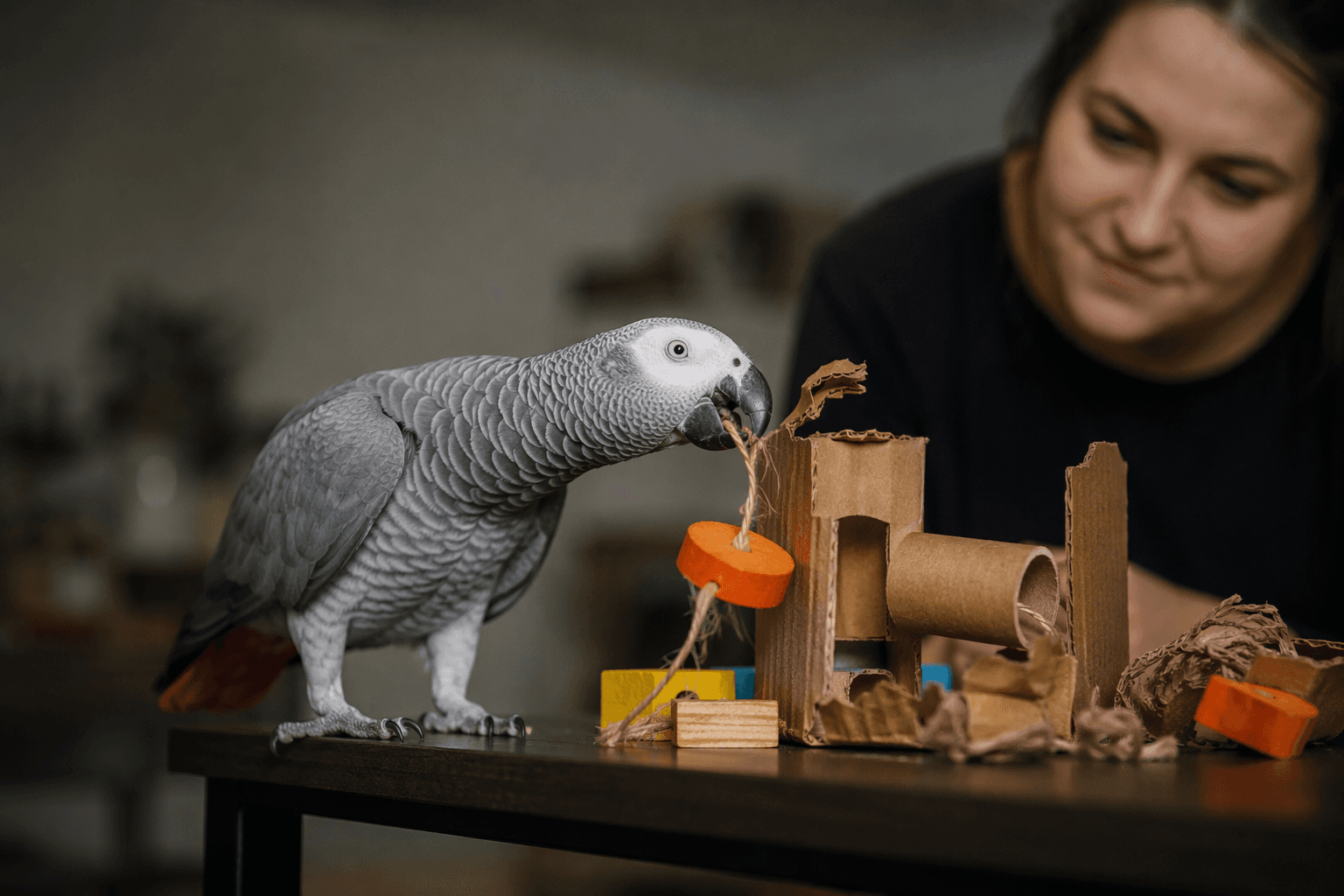
The fix is to make meals take work. Split part of the daily ration into multiple feeding spots, tuck pellets into paper cups or shreddable paper, or make the bird search through a small safe area for a few pieces at a time. Foraging may help manage feather destructive behavior and other stereotypies in psittacines.
Manipulative enrichment
Manipulative enrichment is for birds that need to chew, shred, move, and destroy something that is not your furniture. This is the category that matters most for species such as cockatoos and macaws, which often need substantial chewing outlets to stay occupied and out of trouble. If your bird is bored enough to bark, slam toys, or attack cage bars, give it something it can actually work with.
The practical part is choosing items that can be handled with the beak and feet, not just stared at. Shred-safe materials, chewable wood, and toys that can be pulled apart beat hard plastic decorations every time. The common pitfall is buying toys that look busy but offer no physical payoff, which leaves a smart parrot with the same problem and a lighter wallet. A good manipulative setup lets the bird tear, carry, twist, and test things all day.
Environmental enrichment
Environmental enrichment is the bigger picture: cage placement, room layout, perches, lighting and climbing opportunities. This is the section to fix when your bird seems inactive, avoids moving around the cage, or only uses one perch because the rest of the setup is awkward. Environmental enrichment is part of bird care.
Birds are highly intelligent animals that need regular exercise and mental stimulation, and enclosure size and design should allow free movement. In practice, that means giving your bird a layout that invites climbing and short flights, not one that traps it in a dead zone. Change perch heights, open up room to move, and make sure the bird has a reason to travel from one end of the space to the other. If the cage is so crowded with accessories that the bird can barely turn around, the setup is working against you.
Social enrichment
Parrots are flock animals, so loneliness can show up as screaming, withdrawal, or clingy behavior that never settles. Social enrichment covers interaction with other birds and, when no bird companion is available, meaningful contact with you. Flocking serves primarily as a protective unit, and social interaction is essential to survival.
That does not mean constant handling or having the bird on you every minute. It means predictable contact, training, talking, and time in the room with you doing normal life, so the bird stays connected without becoming dependent on nonstop attention. The AAV’s bird-owner resources include broader companion-bird guidance, including a brochure series that references The Parrot Enrichment Activity Book by Kris Porter.
This article was produced by Prism’s automated news system from verified source data, official records, and press releases, then run through automated quality and moderation checks before publishing. The system is built and supervised by the people who set the standards it runs under. Read our full AI policy.
Did this article answer your question?