Bigger Aviaries Give Parrots More Flight, Exploration, and Enrichment
An aviary is not just more square footage. It changes how a parrot flies, explores, rests, and handles stress every day.
What “bigger cage” really means for a parrot
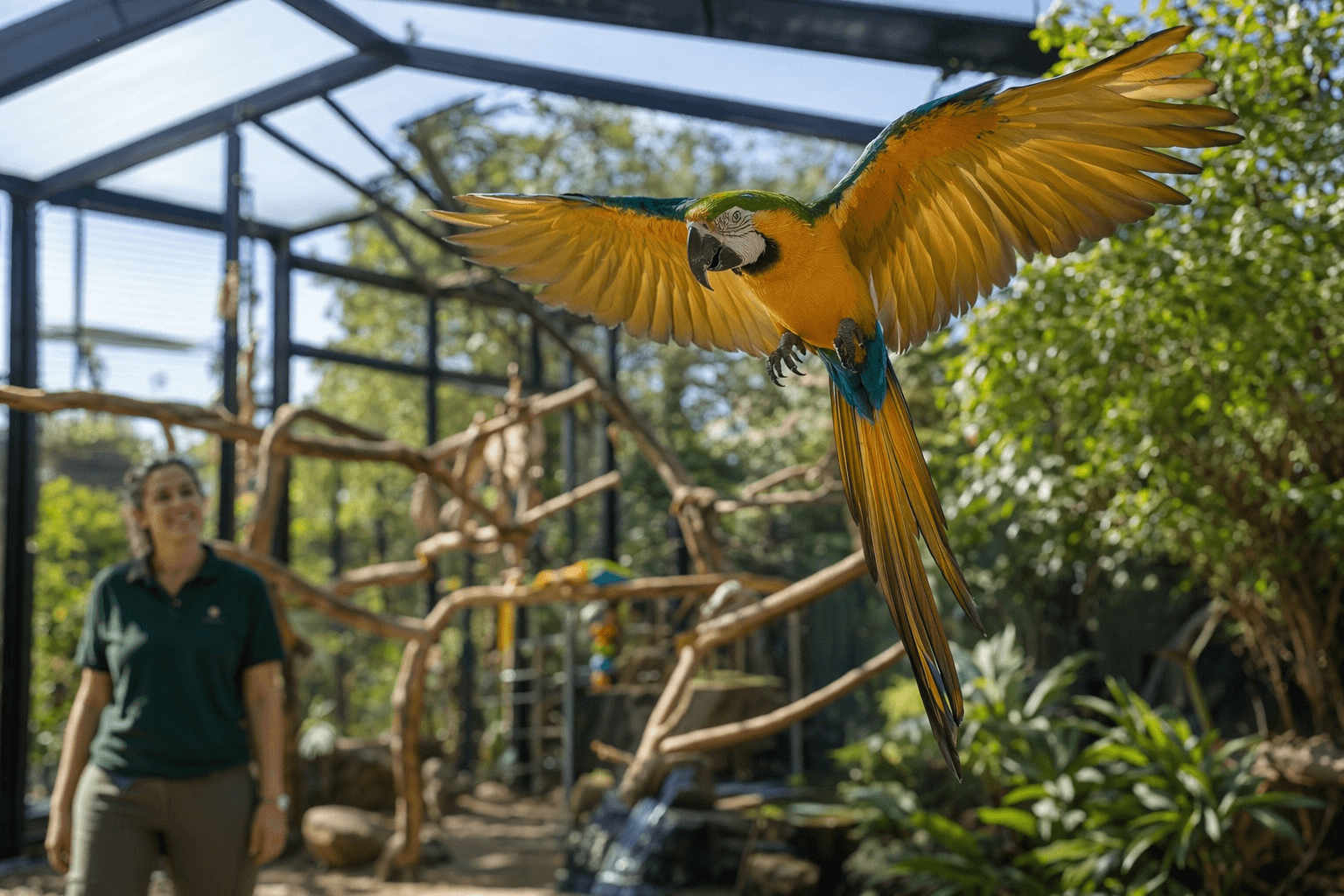
A larger aviary is not a luxury upgrade, it is a different kind of life. Squawk Shop frames the shift clearly: when the space gets bigger and better designed, a parrot can do more of what its body and brain were built for, including flight, exploration, and natural behavior that cramped housing cannot support well. That matters because housing is not a background detail in parrot care, it shapes exercise, stress, and how much stimulation the bird gets every day.
The phrase “bigger cage” can sound like a simple storage problem. In reality, the bird is deciding, minute by minute, whether it can move, perch, climb, forage, retreat, and rest on its own terms. An aviary changes the daily rhythm by giving the bird longer flights, more distance between choices, and more opportunities to behave like a parrot instead of a decorative pet.
Why aviaries keep showing up in welfare conversations
Aviaries have a long history, especially as garden structures, and Britannica notes that they can range from small enclosures to flight cages as large as 30 meters long and 15 meters high. That scale is not just impressive on paper. It shows how far enclosure design can move beyond containment and into enrichment, especially when aviculturists try to simulate natural conditions.
The modern conversation about aviaries is also tied to the changing parrot world. The MSD Veterinary Manual notes that mass importation of wild-caught psittacine birds was curtailed in the mid-1980s, and today’s pet bird population is primarily captive-bred. That shift helps explain why housing discussions now focus so heavily on enrichment, flock-like social needs, and environments that support a captive bird’s instincts rather than simply holding the bird in place.
Who truly benefits from an aviary
Not every parrot needs the same setup, but the birds most likely to benefit are the ones whose species and temperament lean hard toward movement, complexity, and social contact. The RSPCA specifically flags larger breeding parrots such as Amazons, African greys, cockatoos, and macaws, and says no more than two should be kept together in an aviary if they are non-colony birds. That is a useful reminder that bigger space does not automatically mean more birds.
Aviaries make the most sense when the bird is getting room to move, room to choose, and room to stay mentally engaged. The MSD Veterinary Manual says small cages can stress birds and cause problems, and recommends a cage at least one and a half times the bird’s wingspan in all directions. For a parrot that is already under-stimulated, clipped into a tiny routine, or unable to exercise freely, an aviary can be a serious welfare improvement.
What changes in daily life: flight, exploration, noise, and stress
Flight is the clearest difference. A well-designed aviary gives a bird room to launch, turn, brake, and land, which is very different from hopping between a few short perches. But the change goes beyond exercise. More space also means more exploration, more object interaction, and more chances to make choices about where to perch, when to retreat, and how to spend time.
That choice can lower stress. Small cages can trap birds in a constant state of alertness, while a larger, well-structured space lets them separate themselves from activity and manage their own sensory load. Noise tolerance often improves in the same way, not because parrots become quiet, but because a bird with room to move and retreat has more ways to cope when the environment gets loud or busy.
Foraging and chewing matter here too. The Association of Avian Veterinarians says chewing helps parrots explore their environment while keeping the beak groomed, and an aviary gives you more room to distribute that kind of activity across the day. In a good setup, enrichment is not a toy you toss in once a week, it is part of the structure.
The setup details that separate a good aviary from a risky one
The RSPCA says an aviary is the best way to provide birds with a large outdoor enclosure, but it also makes clear that design details matter. At least one-third of the outdoor aviary should be shaded, which helps birds regulate heat and avoid overexposure. Safety porches and double doors are also recommended to prevent escapes, a detail that sounds small until the bird is halfway out.
Outdoor access can be excellent for fitness and mental stimulation because sunlight, light winds, and rain help keep birds in good condition. But sunlight has to be handled carefully. The Association of Avian Veterinarians says natural sunlight or full-spectrum lighting is required for synthesis of vitamin D3, and also recommends shade and fresh water to reduce heat stress. The RSPCA adds another important layer: aviaries should be secure from wild birds to reduce disease risks such as avian flu and psittacosis.
Common mistakes that turn an aviary into a problem
The biggest mistake is assuming that more floor space fixes everything. If the space is too hot, too exposed, too easy to escape from, or too close to wild bird traffic, the bird may be more stressed, not less. Another common error is overcrowding, especially with large parrots that need social room as much as physical room.
A second mistake is forgetting that outside time still needs management. University of Illinois Veterinary Medicine notes that parrots are social creatures that naturally live in flocks and need ample supervised time outside the cage for exercise and activity, but it also warns that birds outside the cage must be thoroughly parrot-proofed because they chew wires and ingest toxic items. That means a beautiful aviary can still fail if the surrounding environment is unsafe.
What apartment and budget-conscious owners can borrow from aviary design
You do not need a full outdoor aviary to borrow the best ideas from one. The core lesson is not “build bigger at any cost.” It is “build for movement, choice, and safety.” A larger indoor flight cage that meets the one-and-a-half-times-wingspan guideline, plus supervised out-of-cage time, can bring some of the same benefits without a backyard build.
- Use vertical space with ladders, ropes, nets, and bird-safe branches.
- Build clear routes for climbing and short flights instead of one flat play area.
- Add multiple perches at different heights so the bird can choose.
- Rotate chewable items so exploration stays fresh.
- Use full-spectrum lighting when safe sunlight is not available.
- Keep fresh water available whenever the bird is active.
You can also steal the aviary’s structure in smaller ways:
These details do not replicate a full aviary, but they do borrow its logic: movement should be built into the environment, not squeezed in around the edges.
A practical decision framework
An aviary is worth serious consideration when your bird is flight-oriented, physically active, and clearly under-challenged in its current setup. It is especially compelling if you can provide safe outdoor access, manage shade and weather, prevent escapes, and keep the space protected from disease risks and toxic hazards. For larger parrots like Amazons, African greys, cockatoos, and macaws, the decision often comes down to whether you can support both freedom and control at the same time.
If you cannot build an aviary, that does not mean you are stuck with an inadequate life for your bird. It means you need to think like an aviary designer: more room to move, more ways to climb, more chances to chew and forage, and more control over light, safety, and supervision. That mindset, more than any one structure, is what turns housing from containment into real welfare.
This article was produced by Prism’s automated news system from verified source data, official records, and press releases, then run through automated quality and moderation checks before publishing. The system is built and supervised by the people who set the standards it runs under. Read our full AI policy.
Did this article answer your question?