Parrot owners told sunny windows are not enough for bird health
A bright window can still leave a parrot short on UV. Here’s when full-spectrum lighting matters, how to set it up, and what care gaps to watch.
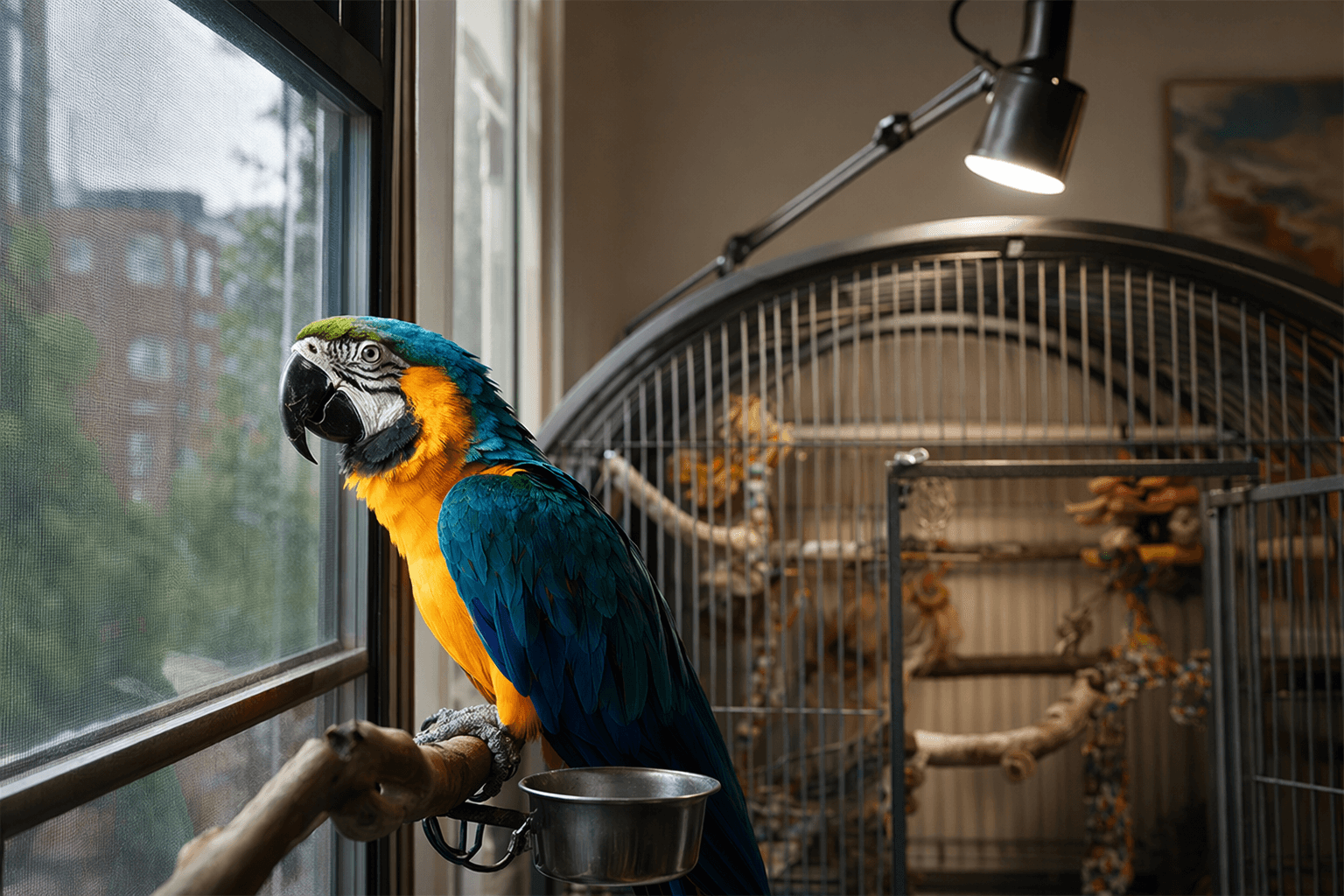
A sunny window can fool a lot of people. The room looks bright, the cage looks well placed, and yet the bird is still missing the biologically useful light that parrots are adapted to use. That is the central warning from Squawk Shop’s lighting guide: indoor daylight and glass-filtered sun are not the same as real access to UV light, and ordinary household bulbs do not fill that gap.
Why a bright room is not enough
The mistake is easy to make because humans judge light by what we can see. Parrots do not live on visibility alone. The guide argues that standard household bulbs are narrow, human-centered light sources, and that they lack UVA and UVB, the wavelengths birds use in ways people often never think about. A cage near a window may look ideal to us, but most windows filter out the beneficial UVB rays that support vitamin D production.
That is why lighting belongs in the same conversation as diet, toys, and cage design. Squawk Shop frames it as part of the whole health setup, not a decorative extra. If a bird spends much of its life indoors, lighting can be one of the invisible variables that shapes comfort and long-term wellbeing.
When adding lighting is worth it
A full-spectrum setup matters most when indoor life is the norm. For companion parrots that spend most of the day inside, the concern is not whether the room feels bright enough to a person, but whether the bird is getting meaningful exposure to the wavelengths its body expects. Merck Veterinary Manual guidance for psittacines says owners should either expose birds to direct sunlight when appropriate or properly use UVB bulbs to help prevent vitamin D deficiency.
That matters because UV is tied to more than brightness. The Association of Avian Veterinarians says UV light can help birds maintain good bone density and can stimulate exercise. In other words, this is not a luxury feature for an elaborate bird room. It is part of the health picture, especially for birds that would otherwise live under indoor lighting day after day.
There is also a clue in the research that parrot owners should not ignore: AAV educational material says 72% of parrots have UV-reflective plumage. That means UV light can affect avian visual and social behavior as well as physiology, which makes lighting relevant even when a bird seems to be managing just fine in a bright living room.
How to choose and place a full-spectrum setup
The first rule is simple: do not assume a window solves the problem. A proper setup should provide UVB, and it should be used with the bird’s ability to move in and out of the light in mind. The Association of Avian Veterinarians advises providing a UV gradient so the bird can move away from the light if desired, which is exactly how good husbandry should work: access without forcing exposure.
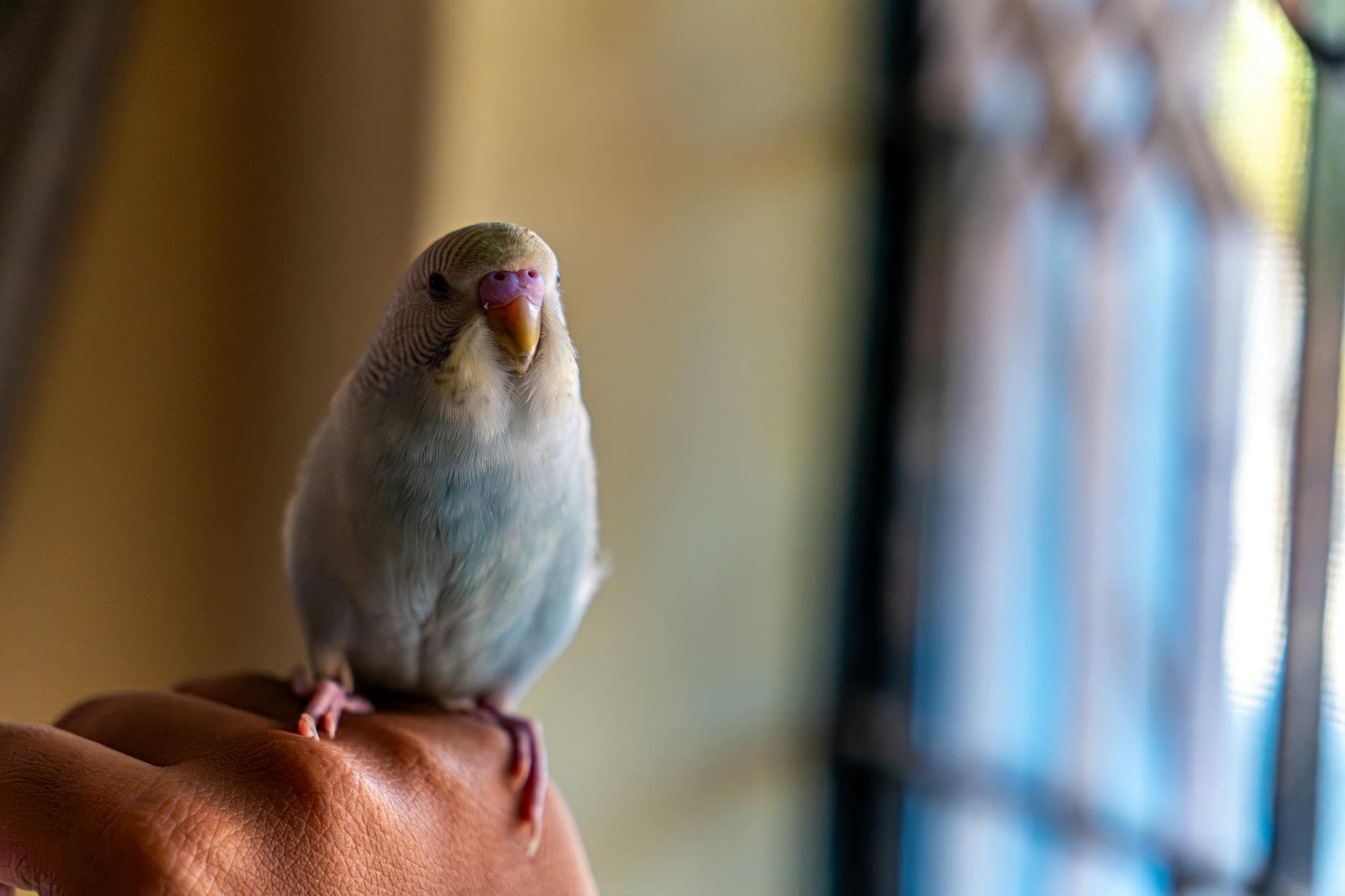
That gradient matters because light is not only about how much you add, but where you put it. A bird should have the option to bask, step back, and choose its own comfort zone. The AAV also tells owners to talk to an avian veterinarian about safe use of full-spectrum lighting, which is the right instinct here because bulbs, distance, and cage placement all affect whether the setup actually helps.
If you are deciding between “more light” and “the right light,” choose the second. The point is not to flood the room. It is to create a biologically meaningful environment that does something an ordinary lamp cannot. For birds that live indoors most of the time, that can make the difference between a space that merely looks cheerful and one that better matches the needs of the animal in it.
What to watch for when the light environment is falling short
The challenge with lighting problems is that they are often quiet. You may not see an obvious crisis at first. Instead, the bird simply lives in an environment that looks fine to you while still missing the UV exposure needed for vitamin D and bone health. That is why avian vets pay attention to indoor-housed birds, including the study of 31 adult birds from five orders that were kept indoors long-term without prior UVB exposure and then evaluated for vitamin D status after access to UVB basking lights.
There is another practical signal to keep in mind: if your bird never gets direct sunlight outdoors and has no properly used UVB setup, the lighting plan probably needs another look. A bird by a window is not automatically covered, because the glass itself can block the helpful UVB. If you are relying on a sunny sill alone, you may be building a room that feels right to you but still falls short for the bird.
A useful outdoor benchmark
One avian-veterinary handout recommends natural sun exposure outdoors for 20 to 30 minutes, 2 to 3 times a week in the warmer months, with major safety cautions around escape, predators, and temperature. That benchmark is useful because it shows how seriously bird specialists treat the difference between real sun and indoor light. It also explains why indoor full-spectrum lighting is discussed as a substitute, not an equal twin, for direct outdoor exposure.
The takeaway is straightforward: sunny glass is not enough, and ordinary room light is not enough either. If your parrot lives indoors, lighting should be treated as a genuine husbandry decision, not an afterthought. The birds most people keep in living rooms and kitchens are still birds, with bodies built for wavelengths humans barely notice, and good care starts by making room for that reality.
This article was produced by Prism’s automated news system from verified source data, official records, and press releases, then run through automated quality and moderation checks before publishing. The system is built and supervised by the people who set the standards it runs under. Read our full AI policy.
Did this article answer your question?