Bird First-Aid Guide Helps Owners Spot Parrot Emergencies Early
The first 10 minutes after a parrot gets hurt or suddenly goes quiet can change the outcome. This guide shows what to do, what to avoid, and how to build a bird-ready plan before panic starts.
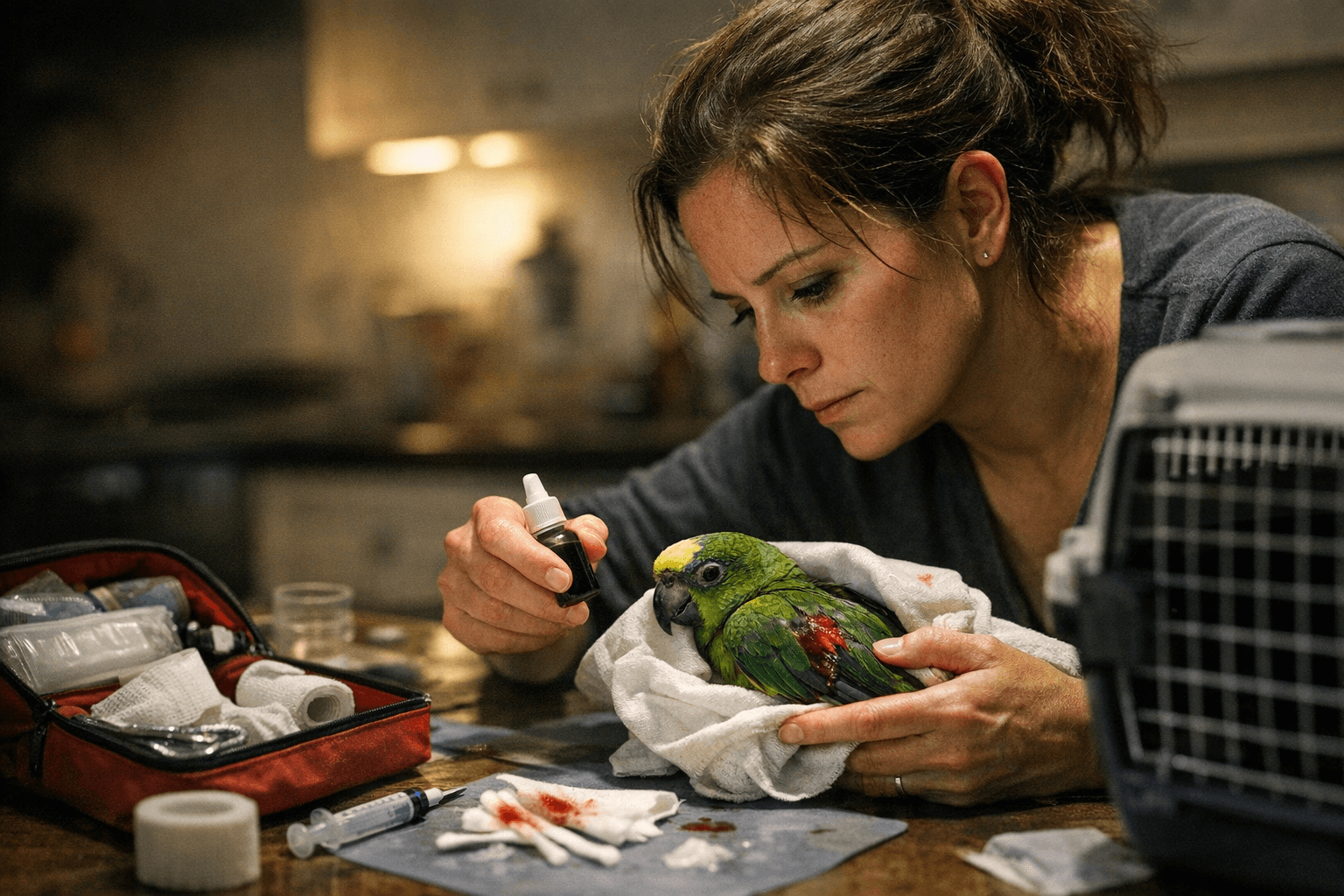
The first 10 minutes matter most
The most dangerous part of a parrot emergency is how ordinary it can look at first. A bird that is fluffed up, sitting quietly, or keeping its eyes partly closed may already be in serious trouble, because pet birds are wired to hide illness and injury until the problem is advanced. That is why the first response is not guesswork, it is calm, fast triage that buys time until an avian vet takes over.
When a parrot is bleeding, breathing badly, or hit by a cat, dog, or larger bird, the goal is simple: stop the situation from getting worse. The MSD Veterinary Manual notes that traumatic injury is a common presentation in pet birds, and that bite wounds and attacks happen frequently. In those first minutes, every decision should reduce stress, limit handling, and get the bird to professional care as soon as possible.
What to do now vs what never to do
- Keep the bird quiet and inactive.
Do now:
- Move the bird to a stable, quiet carrier as soon as you can, and carry it gently without swinging.
- Check for obvious bleeding, labored breathing, or signs of shock such as weakness and sitting low.
- If bleeding is present and you know how to do it, use direct pressure or a pressure wrap as a temporary measure.
- Call an avian veterinarian right away and head there without delay.
- Never assume a bird is fine because it is still alert.
Never do:
- Never improvise home remedies such as honey or tea tree oil.
- Never use a pressure wrap if you are not sure of the proper method.
- Never keep handling the bird repeatedly just to “check one more time.”
- Never treat first aid as a substitute for veterinary care.
That last point matters. Bird first aid is a bridge, not a destination. It is there to slow the slide, not replace the clinic.
Read the body language before the crisis deepens
Parrots rarely announce a problem in a dramatic way. More often, they whisper it through behavior changes: sitting still at the cage bottom, puffing up, or seeming less interested in movement and interaction. The Association of Avian Veterinarians highlights that weight loss is one of the earliest signs of disease, which means the bird that still seems “mostly normal” may already be losing ground.
That is where home observation pays off. If you already know your bird’s usual posture, appetite, and energy, you are more likely to spot a subtle change fast enough to matter. A bird that looks tired, breathes harder than usual, or stops acting like itself is not giving you a minor clue. It is giving you a warning.
The safest way to move a sick bird
Transport can help or hurt depending on how you do it. The Association of Avian Veterinarians advises a stable, quiet carrier and gentle carrying without swinging, because rough movement adds stress to an already fragile bird. A dark, calm environment is easier on the bird than noise, jostling, or a flurry of last-minute handling.
If the bird is weak, bleeding, or struggling to breathe, think of the carrier as a temporary intensive-care space. Keep the environment quiet, reduce handling, and get moving toward the vet. For birds that are sick or injured, MSD recommends keeping them quiet and inactive, which fits the same principle: less stimulation, less movement, less risk of making the injury worse.
Why home remedies and delay cause real damage
This is where many well-meaning owners lose precious time. A dab of the wrong substance, a poorly applied wrap, or a decision to “watch for a while” can turn a manageable emergency into a major one. The FAQ section in the guide specifically raises the dangers of home remedies like honey and tea tree oil, which tells you how risky DIY treatment can become when panic takes over.
The same logic applies to bleeding wounds and bites. A pressure wrap can be appropriate in some emergencies, but only if you know exactly how to use it. If you are uncertain, do not improvise. The safest move is to stabilize the bird, keep it quiet, and get to an avian vet quickly.
Make the home ready before the emergency starts
The best first-aid plan is the one already sitting on your shelf before a wing is clipped wrong or a toe starts bleeding. The Association of Avian Veterinarians recommends regular checkups for companion birds, and that advice matters because many birds live long lives and need long-term preventive care. A good routine also makes emergencies easier to spot, because you know what normal looks like.
- A stable carrier that is easy to grab in a hurry.
Build the basics now:
- A gram scale for home weight checks, since weight loss can be an early warning sign.
- Contact information for an avian vet, saved where you can find it fast.
- A quiet transport plan that does not rely on improvisation.
- A checklist for household dangers and environmental air pollution, both of which AAV includes in bird-owner resources.
Those are small steps, but they pay off when panic arrives. A bird that is weighed regularly, carried calmly, and checked by an avian vet before a crisis has a better chance of being treated early.
Long-term care lowers the odds of emergency care
First aid gets the bird through the moment. Long-term habits lower the odds of ever needing it. AAV’s guidance also stresses that seeds alone do not meet a bird’s nutritional needs, and recommends a pelleted diet supplemented with vegetables for long-term health. That is not just a nutrition note, it is emergency prevention. A bird on a better diet is easier to monitor, easier to support, and better positioned to recover if something does go wrong.
AAV’s owner resources also point to senior parrot care, signs of illness, and ways to protect birds from household dangers. Those topics all connect back to the same idea: emergencies are easier to handle when you are already paying attention to the bird’s normal weight, posture, breathing, and environment.
The clearest lesson in parrot first aid is also the simplest. Move fast, keep the bird calm, avoid home remedies, and get professional help without delay. A prepared owner does not need to become a home veterinarian. You just need the right plan in the first 10 minutes, because that is often where the outcome is decided.
This article was produced by Prism’s automated news system from verified source data, official records, and press releases, then run through automated quality and moderation checks before publishing. The system is built and supervised by the people who set the standards it runs under. Read our full AI policy.
Did this article answer your question?