Can parrots eat lemons and limes safely, citrus guide for owners
Lemons and limes are not a parrot staple. In tiny, limited tastes only, pellets and safer produce make far more sense.
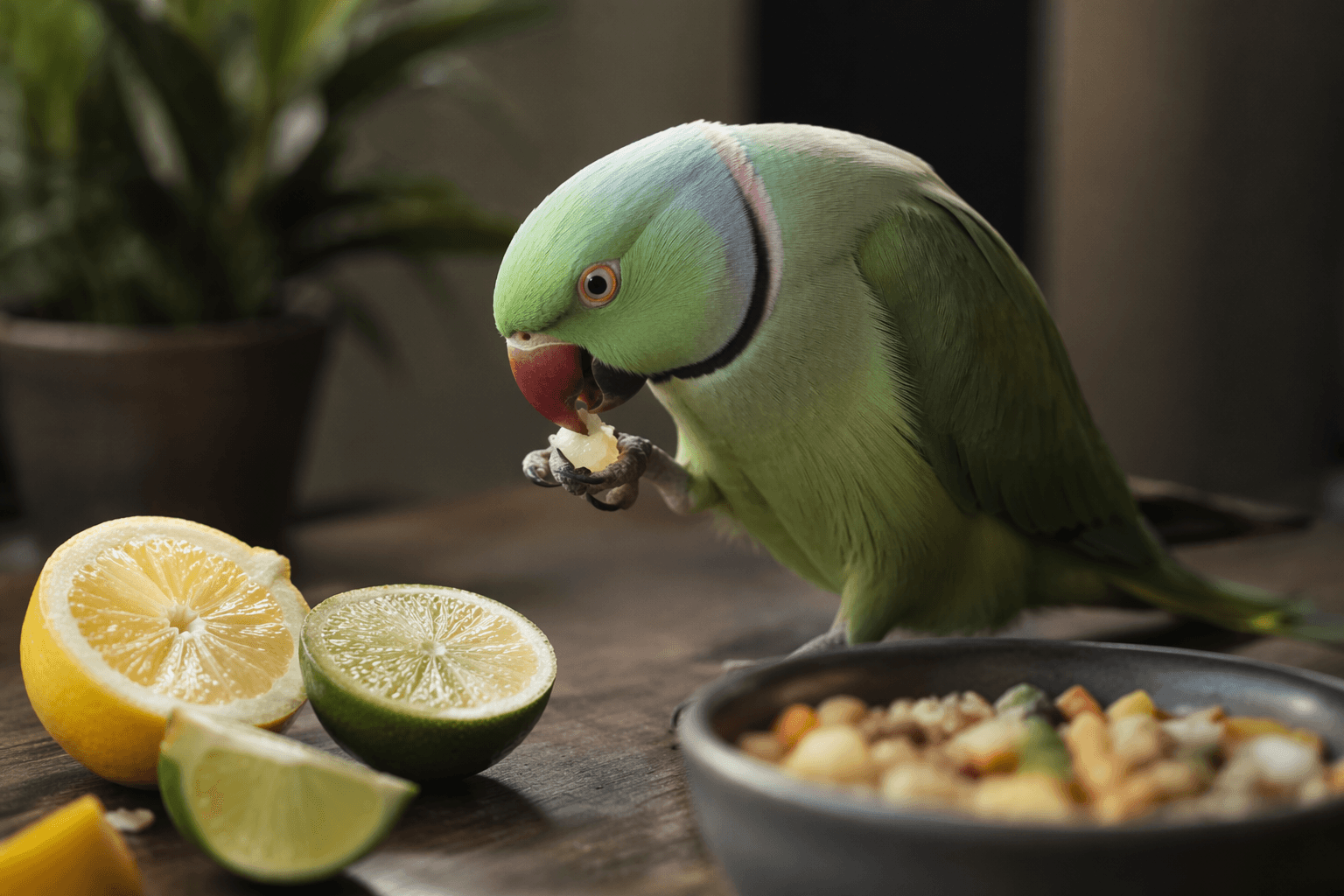
Lemons and limes are technically a maybe, but they are not fruits worth building a parrot menu around. The practical owner answer is simple: if you offer citrus at all, keep it to a tiny taste and treat it as an occasional curiosity, not a regular treat. The stronger feeding choice is still a diet anchored by complete pellets, with fresh produce added in smaller amounts.
The real answer: yes, but only in limited cases
The clearest guidance here comes from the broader bird-nutrition playbook. The Merck Veterinary Manual says pet birds should eat a nutritionally balanced pelleted diet with smaller amounts of fresh vegetables and fruits, and it specifically warns against feeding birds large amounts of citrus fruits. That puts lemons and limes squarely in the “not a staple” category.
The RSPCA lands in the same place from a different angle. Its feeding advice says the best diet for parrots is a combination of nutritionally complete pellets plus a variety of fresh fruits and vegetables. Put those two sources together, and the answer is not “citrus is a must-have.” It is “citrus is at best a minor, occasional extra.”
Why citrus is handled cautiously
This is less about a dramatic poison warning and more about practical nutrition and tolerance. Merck notes that psittacine birds are mainly plant-based eaters, and that pelleted and extruded diets have greatly improved their nutritional intake, health, and quality of life. In other words, the best day-to-day feeding wins come from stable, balanced food, not from a sour fruit that adds little to the core diet.
That is also why citrus advice is never one-size-fits-all across birds. Lafeber’s toucan handout says citrus fruits should not be fed to toucans because their citric and ascorbic acids increase iron absorption. Parrots are not toucans, but the species difference matters: a fruit that is merely a limited treat in one bird can be a clear no in another. The safe habit is to respect the bird in front of you, not generalize from another species.
A practical feeding rulebook for lemons and limes
If you decide to offer any citrus, think in terms of taste, not serving. The point is to test interest or provide a tiny novelty, not to create a new routine around a sour fruit that Merck already places in the caution column. A good rule is to let the bird stay in control: if the fruit is ignored, there is no reason to push it.
Keep the rest of the feeding picture clean and familiar.
- Make pellets the foundation.
- Use fresh fruits and vegetables as the supporting cast.
- Treat lemons and limes as occasional only, if at all.
- Do not let citrus crowd out more useful foods.
That approach matches the way avian nutrition has moved for years. Lafeber notes that in 1998 the Association of Avian Veterinarians worked with an expert panel to develop maintenance guidelines for formulated feed for parrots and songbirds, which reflects a long shift away from seed-heavy thinking and toward structured, balanced feeding.
Watch the bird, not just the bowl
The most important question after any new food is how your parrot handles it. The guide’s focus on distress signs is the right one, because a food decision is only as good as the bird’s response. If a parrot seems uncomfortable after trying citrus, the safe move is to stop offering it and go back to foods that fit the bird better.
That cautious approach also matches the broader advice from major animal-care groups. The RSPCA says owners should consult a vet if they are unsure what foods are best for their bird, and the ASPCA keeps separate toxic and non-toxic plant pages for lemon and lime while telling owners to contact a veterinarian or poison hotline if they have questions. When citrus is involved, uncertainty is a reason to slow down, not to guess.
Better fruit choices usually make more sense
If your goal is a healthy fruit treat, the better answer is usually not a citrus fruit at all. The RSPCA’s model already gives you the roadmap: nutritionally complete pellets first, then a variety of fresh fruits and vegetables in sensible amounts. That leaves room for produce that fits more naturally into a balanced diet without making acidity the centerpiece.
That is why lemons and limes rarely earn a place as an everyday offering. They are not the fruit that solves a feeding problem, and they are not the fruit that should shape the routine. In the end, the owner decision is the same one the opening question points to: technically possible in tiny cases, yes, but truly worth offering? Usually not, when better foods are already doing the real work.
This article was produced by Prism’s automated news system from verified source data, official records, and press releases, then run through automated quality and moderation checks before publishing. The system is built and supervised by the people who set the standards it runs under. Read our full AI policy.
Know something we missed? Have a correction or additional information?
Submit a Tip