Chewy Ranks Top Parrot Toys and Perches for Safety, Durability, and Enrichment
One frayed rope toy can cost a parrot its leg. Here's the vet-style safety audit every bird owner needs before buying from any top-10 list.
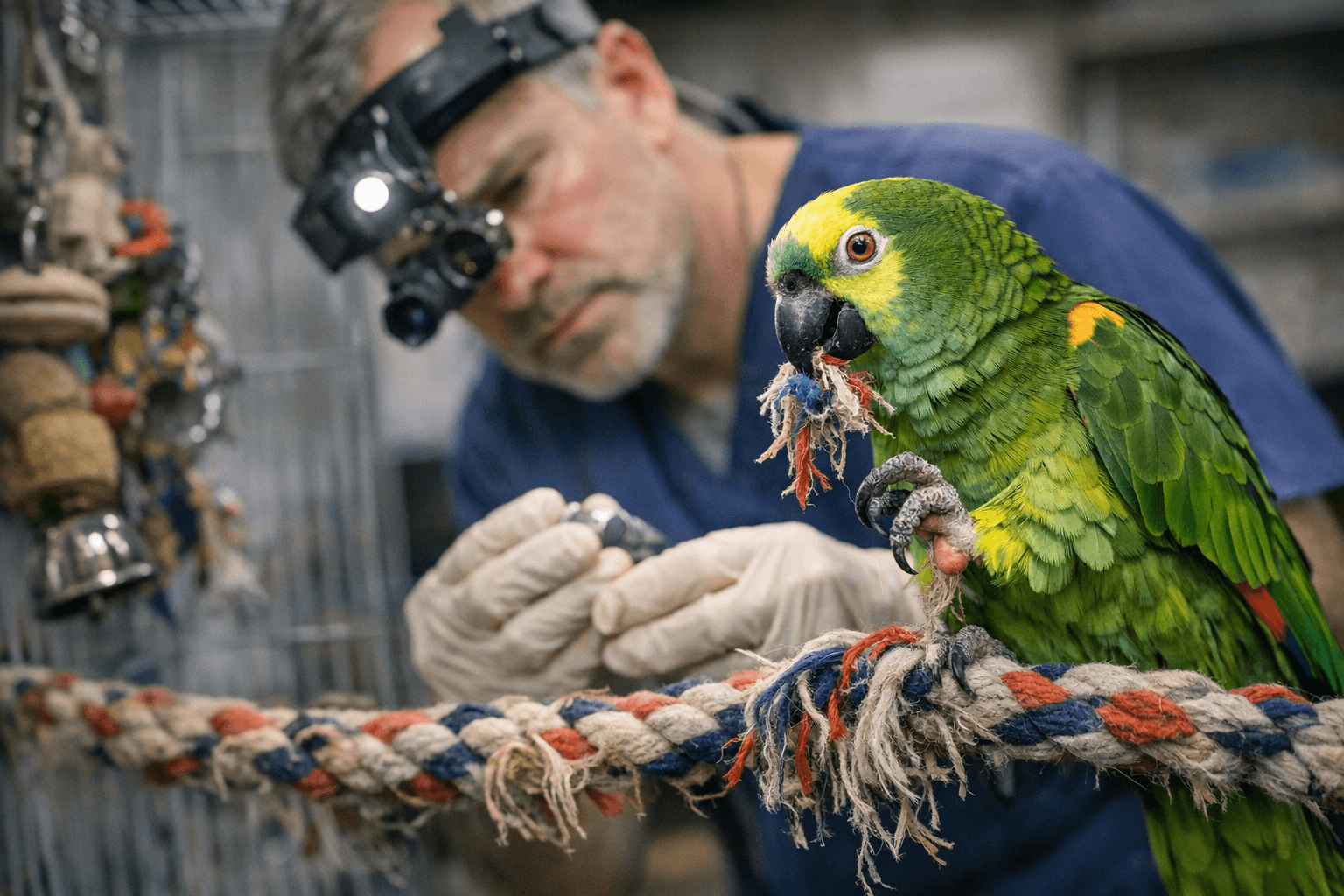
The safety report that changed how a lot of avian owners think about toy shopping didn't come from a lab. It came from a bird getting its leg tangled overnight in a rope toy that had frayed past the point of safe use, with circulation cut off before morning. The incident, documented in avian safety literature, is exactly why Chewy's ranked list of parrot toys and perches, compiled from thousands of customer reviews plus veterinarian input, is best treated not as a checkout cart guide but as a starting point for a real home safety audit. Here's how to use it that way: ranked by the categories that matter most, with the red flags built in.
1. Heavy-duty hardwood chew blocks
Chewy's top tier is anchored by thick wooden chew toys rated for "tough chewers," and for good reason: a macaw or large cockatoo can splinter a softwood block in under an hour. Safe woods include pine, balsa, birch, basswood, poplar, maple, walnut, ash, apple, elm, cholla cactus, and manzanita; unsafe woods to reject outright include cedar, red cherry, oak, and any plywood, which is treated with adhesives. The red flag here is pressure-treated lumber, which carries arsenic-based preservatives; never accept a toy without confirmed wood sourcing.
2. Foraging puzzle feeders
Puzzle feeders include sliding-panel boxes, rotating cylinders, gravity-release dispensers, and multi-access units, each offering different problem-solving opportunities and fine-motor practice. Chewy's rankings prioritize these because foraging mimics wild feeding behavior directly, reducing stereotypies and stress-driven feather picking. The red flag is overfeeding: if your bird is working a food-motivated puzzle several times a day, track treat calories against the day's total diet, since puzzle sessions can quietly add up.
3. Natural wood perches (manzanita, java wood, dragonwood)
Natural irregular-diameter perches are the gold standard in avian foot health because variable widths exercise different muscle groups with every grip. Sand and concrete perches tend to be very hard and abrasive, which can be stressful on a bird's feet. Over time, this can lead to pressure sores, foot pad abrasions, and other foot-related issues. Natural wood perches sidestep all of that. Low-cost swap: a thoroughly scrubbed, oven-baked branch from a pesticide-free apple, willow, or citrus tree costs nothing and gives a large parrot hours of chewing and gripping variety.
4. Shreddable fiber toys
Shreddable toys satisfy one of the most natural instincts a bird has; parrots love to tear things apart and shred materials like cardboard, palm leaves, and soft natural wood. Chewy highlights these for cockatiels, conures, and lovebirds in particular, species with a strong preening and picking instinct that can turn destructive without an outlet. The red flag is fabric tent huts made of the same soft material: cotton ropes and fabric ingestion from huts and tents made of fabric leads to crop impaction and fatalities, so shreddable toys are a controlled outlet, not a blanket permission for soft-fabric furnishings.
5. Sisal and cotton rope toys
Rope toys have a documented benefit for feather-picking birds, but they carry the most maintenance-intensive safety profile of anything on this list. Only 100% natural fiber ropes such as cotton, hemp (jute), or sisal should be used in bird toys. Nylon blend ropes should never be used as they can result in serious injury and cuts due to the strength of the strands if birds get caught in them. There have been safety problems noted when excessive fraying occurs; birds have choked and lost circulation to legs by getting tangled in ill-maintained ropes. The audit rule: check rope toys daily, not weekly, and retire them the moment fraying begins rather than waiting for a scheduled cage cleaning.
6. Acrylic puzzle toys
Acrylic ranks high for large, destructive parrots because it is virtually indestructible compared to wood. If purchasing acrylic toys, the acrylic should have a minimum thickness of 3/16 inches. Match-the-bird guide: African greys and large amazons respond well to the manipulation challenge acrylics offer, especially rotating or locking compartments, while cockatoos may prefer something they can physically destroy; give a cockatoo an acrylic toy and they'll often ignore it. The snag hazard to check: any acrylic piece with a cracked or chipped edge needs to be removed immediately, as sharp plastic edges can cut tongue tissue.
7. Foraging baskets and buckets
A plain, uncolored wicker or palm fiber basket from a craft store, or a stainless steel bucket from a feed supply shop, can be filled with shredded paper, pinecones, paper balls, popsicle sticks, nuts in the shell, and dried fruit to create a foraging station that rivals any commercial product. Small branches, sisal rope, cotton or leather strips, and wooden clothes pegs (the old-fashioned kind without a metal spring) work well as filler; glass beads, charm bracelets, or anything small enough for the bird to swallow should never be included. This is the single strongest low-cost enrichment swap on the list: a $3 craft basket with pantry staples outperforms a $25 commercial foraging toy for most mid-level foragers.
8. Swing and ladder climbing toys
Climbing toys like ladders, ropes, and swings give a parrot a chance to get exercise and move around inside the cage. Chewy's rankings include these for their dual physical and psychological benefit, particularly for high-energy species like sun conures and caiques. The snag hazard to check here is hanging length: when hanging toys strung on leather or rope or chain, avoid leaving a long strand between the toy and the cage, since birds when rambunctious can get the leather wrapped around their necks. Keep attachment points tight to the cage bars.
9. Compact foraging and manipulation toys for conures and amazons
Chewy's mid-list rankings specifically address medium-sized species that need scaled-down versions of foraging and puzzle toys. A toy sized for a macaw becomes a frustration object for a conure; the beak force just isn't there to operate large locking mechanisms, and the foot grip on wide perch attachments is uncomfortable. For medium-sized birds, lighter options such as bird puzzle feeders, hanging swings, and DIY bird toy projects usually deliver the right cognitive and sensory mix. Match-the-bird rule: if a bird is ignoring a puzzle toy, downsize before assuming the bird lacks foraging drive.
10. Hardware and hanging components (quick links, washers, c-clips)
This is the most overlooked safety category in any toy or perch purchase, and it belongs on every audit list. Many bird toys are made with zinc-coated (galvanized) metal components, and if a bird spends a lot of time chewing on toy hardware such as washers, quick links, or wire, it is possible they will ingest enough zinc to build up toxic levels in their systems over time. Stainless steel components are often 4-5 times more expensive than their galvanized counterparts, but owners who are concerned can often find stainless steel replacement components at a local hardware store, which is substantially cheaper than an emergency avian vet visit for heavy metal toxicity. Any hardware showing flaking, rust, or a gritty galvanized coating should be replaced before the toy goes back in the cage.
The through-line in all of Chewy's criteria, whether the product is a $6 shreddable toy or a $60 chew block, is the same checklist any avian vet would hand you: right size for the species, non-toxic and traceable materials, no loose or small parts, and inspected on a schedule short enough to catch problems before the bird does. A product list starts the conversation; the weekly hands-on audit is what keeps it safe.
This article was produced by Prism’s automated news system from verified source data, official records, and press releases, then run through automated quality and moderation checks before publishing. The system is built and supervised by the people who set the standards it runs under. Read our full AI policy.
Did this article answer your question?