Clicker Training Helps Parrots Build Trust and Better Behavior
Clicker training gives wary parrots a calmer way to learn, turning step-up battles, hand fear, and warning bites into trust-building routines.
Why the click changes the whole conversation
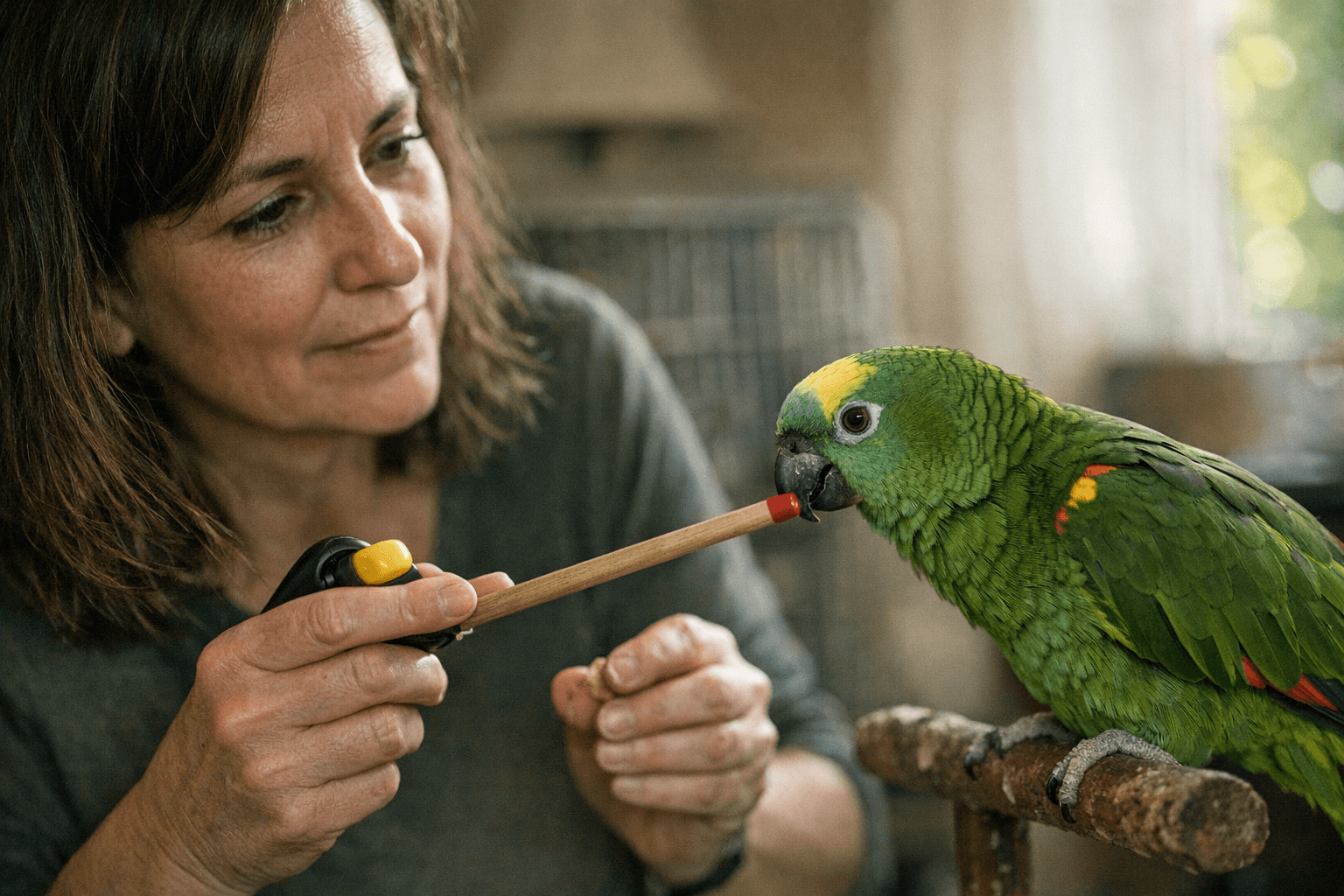
When a parrot has already decided that hands are suspicious, every correction, grab, or failed step-up can make the next interaction harder. Clicker training offers a cleaner deal: the bird does one thing right, the click marks that exact moment, and a reward follows. The Association of Avian Veterinarians describes that click as a bridge between the behavior and the treat, which is why the method feels so precise to birds and so much less confrontational to people.
That precision matters because positive reinforcement is not just about handing over food. The American Veterinary Society of Animal Behavior defines it as adding a pleasurable stimulus to make a behavior more likely to happen again, and its cooperative-care materials push the same idea further by keeping animals comfortable, relaxed, and in control. In a parrot home, that turns training into a respectful dialogue instead of a power struggle.
Set up the first session so the bird can win
Clicker work goes best when the room feels predictable and the bird feels safe. Start by looking at temperament, then choose a space that is calm, comfortable, and free of the kind of distractions that make a wary bird tighten up or flee. The goal is not to test bravery. The goal is to make the right choice easy enough that the bird can repeat it.
A simple setup usually looks like this:
- A marker, which can be a commercial clicker, a ballpoint pen click, or even a verbal click sound
- Small, highly preferred treats that can be delivered quickly
- A short training window, so the session ends before the bird gets tired or frustrated
- A first cue that is easy to understand, before moving on to more advanced work
Best Friends Animal Society notes that birds, including parrots, can be trained with clicker methods using treats and a clicker. That pairing is what makes the system click, literally and behaviorally: the bird learns that the sound is information, not pressure.
Step-up resistance starts to loosen when the bird gets clarity
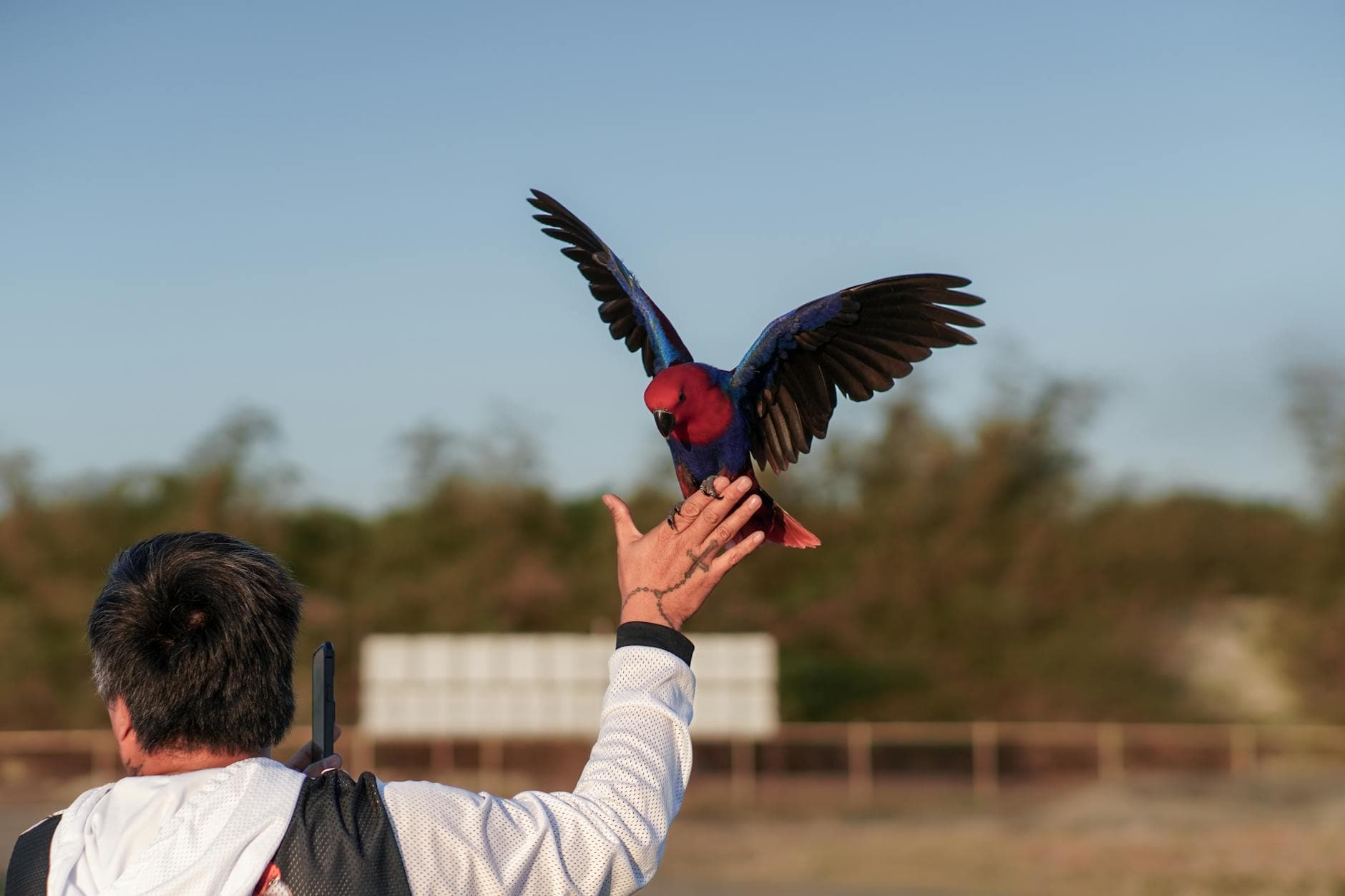
One of the most useful things about clicker training is how it handles the daily friction point that frustrates so many homes: step-up resistance. Instead of pushing the bird closer or repeating the cue louder, you can reward tiny pieces of the behavior, such as shifting weight toward the hand, lifting one foot, or leaning forward without panic. The bird begins to understand that moving into the interaction, not away from it, predicts something good.
That layered approach matters because many owners give up when a parrot does not respond immediately. Clicker training works best as a gradual build, with each successful repetition making the next one easier. A bird that once froze at the edge of the cage can become a bird that sees the hand as a cue for good things instead of a threat.
Fear of hands is usually about history, not stubbornness
Hands can mean a lot to a parrot, and not all of it is positive. If a bird has been mishandled, grabbed, or forced into contact, the body language often tells the story before the beak does. Clicker training helps by separating the person from the pressure. The bird can learn that hands appear, calm behavior earns a click, and the interaction ends before stress spikes.
That is why the method is so useful for trust-building. Instead of flooding a bird with attention, you are creating controlled moments where the bird can choose to participate. The more often the bird experiences hands as part of a predictable reward pattern, the less those hands have to be defended against.
Aggression cues become signals to read, not punish
Parrot biting, screaming, and other “bad” behavior are increasingly treated as communication rather than dominance or stubbornness, and clicker work fits that framework well. A bird that pins its eyes, shifts posture, or moves away is telling you something about comfort and timing. If the bird is rewarded for calm approaches or for disengaging before escalation, the session teaches an alternative to lashing out.
That is a major reason reward-based methods have taken hold in companion bird care. Punishment can suppress a response for the moment, but it does not build the trust needed for the next handling session, the next cage change, or the next household routine. A clicker gives you a way to mark the behavior you want without forcing the bird to guess what earned the payoff.
Flighted birds need training that respects mobility
The flighted bird adds another layer, and it is an important one. A bird that can fly has an exit route, which means pressure often backfires faster than it would with a clipped or more stationary bird. Training in that context becomes as much about relationship management as cue learning: keep the bird comfortable, respect the bird’s ability to leave, and let trust do the work that force never can.
That mobility also makes safety part of the conversation. A flighted bird that feels cornered may simply leave the interaction, and that choice is valuable information. If the session stays calm and predictable, the bird learns that staying engaged is better than escaping it.
The same tools can build confidence around toys and care
Clicker training is not only for obedience-style cues. The Association of Avian Veterinarians notes that some birds need to be trained on how to interact and play with a toy, and that positive reinforcement, including clicker or target training, can teach that skill. That matters in homes where a bird is cautious, under-stimulated, or unsure how to explore new enrichment.
It also fits nicely into cooperative care. When a bird stays relaxed and in control during handling and husbandry, routine care becomes less of a battle and more of a practiced exchange. Over time, that can make everyday tasks feel less invasive and more predictable, which is exactly the kind of emotional economy many parrots need.
Why parrots often take to this approach
Cornell University’s bird research puts a deeper scientific frame around all of this. Parrots are known for vocal mimicry and vocal learning, and Cornell notes that parrots and songbirds diverged about 50 million years ago. That evolutionary distance, plus the species’ unusual cognitive and communication skills, helps explain why parrots respond so well to clear signals, repetition, and choice-based learning.
In the end, clicker training is not a gimmick or a trick. It is a practical, evidence-based way to reduce household friction, improve handling, and make a parrot a more willing participant in its own care. For a bird that has learned to fear hands, resist step-up, or escalate when pressured, that kind of trust is not a bonus. It is the whole point.
This article was produced by Prism’s automated news system from verified source data, official records, and press releases, then run through automated quality and moderation checks before publishing. The system is built and supervised by the people who set the standards it runs under. Read our full AI policy.
Did this article answer your question?