Flight Training for Parrots Balances Freedom, Welfare, and Safety
Flight training can be life-giving, but only when the bird, the home, and the plan are ready. The real test is whether freedom can stay safe.
Why flight is more than a cute trick
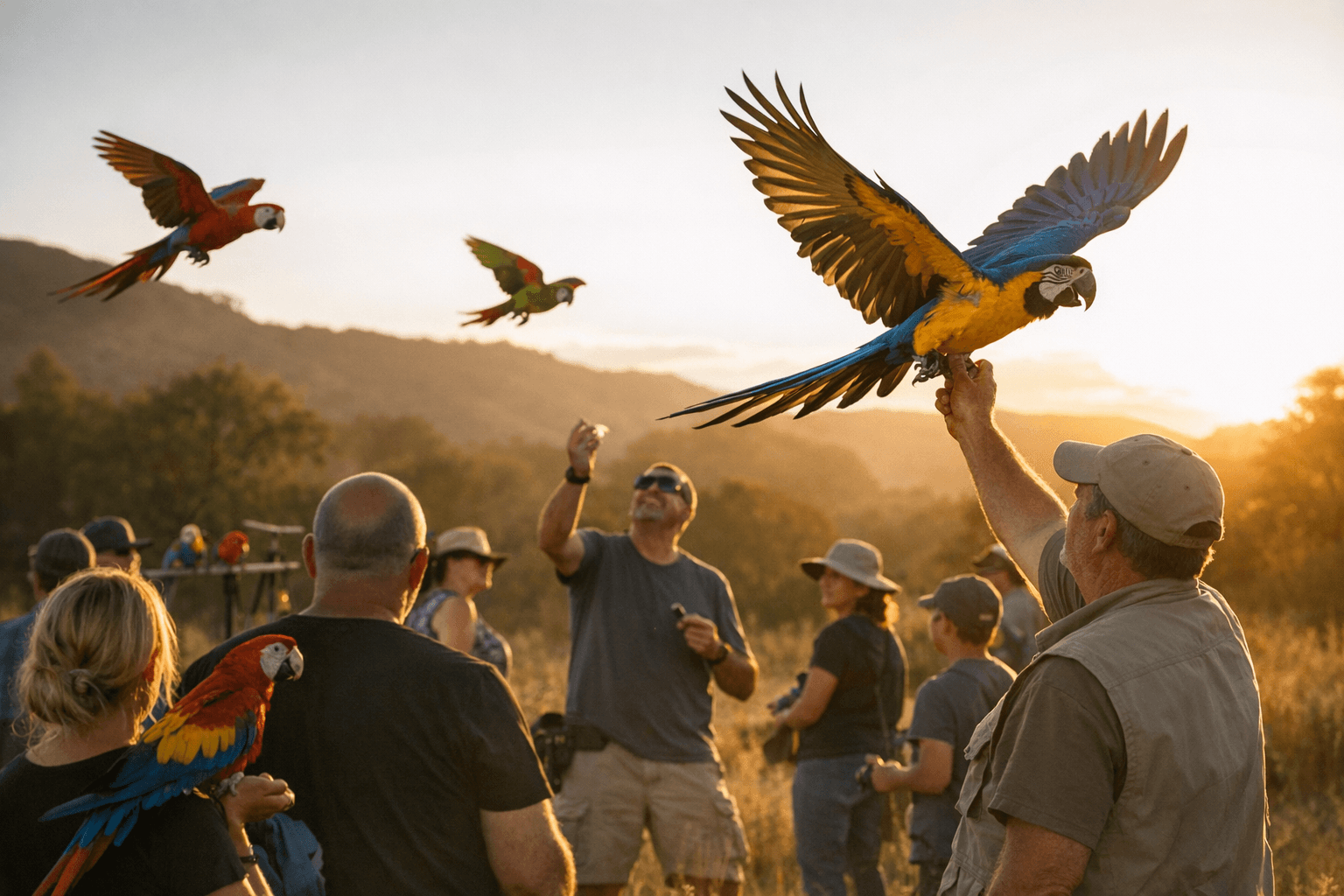
A parrot in full flight is not showing off, it is doing what its body and mind were built to do. The veterinary literature behind this conversation is clear that pet birds are intelligent, social animals adapted for flight, and that life in a small indoor cage with little exercise can carry both physical and psychological costs. That is why flight training belongs in the same conversation as welfare, not just behavior.
The best flight stories are never about spectacle. They are about a bird getting more exercise, more mental engagement, and a more natural way to move through its space, while the person at home learns how to make that freedom safe. In other words, the question is not whether flight is valuable. The question is whether the bird, the room, and the training plan are ready for it.
Choosing the right bird for the job
Not every parrot is starting from the same place. Temperament, confidence, early life, and pre-acquisition experience all matter, and a 2025 welfare review found those factors to be important indicators of companion-parrot welfare. That matters here because a bird that is naturally steady and well socialized will not learn the same way as one that has a rougher history or a stronger tendency toward behavioral problems.
That is also why flight training should never be treated like a status symbol. It has to be individualized. A bird’s build, personality, and comfort level all shape whether flight is a healthy next step or an unnecessary risk, and the welfare literature points in the same direction: species susceptibility to behavior issues is part of the picture, not an afterthought.
The home has to be ready before the bird is
A safe flight plan starts with the room, not the wings. The Association of Avian Veterinarians notes that wing trimming is often used to prevent escape or keep birds away from hazards inside the home, especially kitchens and ceiling fans. That tells you exactly where the risks live: in the everyday parts of a house that people stop noticing until a bird flies into them.
The practical mistake is assuming that a bird can be let loose first and protected later. Controlled space comes first, and overestimating readiness is where accidents begin. If the home still has open hazards, escape routes, or busy areas that cannot be managed, the bird is not being given freedom, it is being placed in a dangerous experiment.
A quick readiness check should look like this:
- Safe, controlled room for training
- No access to kitchens or ceiling fans
- No open escape points that a startled bird could use
- A bird whose temperament is steady enough for gradual work
- A plan that respects progressive conditioning instead of rushing to full freedom
Body condition matters as much as confidence
Flight training is much harder to justify if the bird’s body is not ready for the work. The Merck Veterinary Manual says obese birds should be converted to a pelleted diet with portion control, and exercise should be encouraged. It also recommends larger cages, climbing opportunities, and, for flighted birds, a flight cage outdoors.
That guidance turns flight from a fantasy into a health project. A bird that has been under-exercised in a cramped indoor setup may need weight management, more movement, and a better environment before serious flight work begins. The point is not to push harder. The point is to make the body capable of benefiting from the freedom you want to give it.
Why the welfare lens matters now
The scientific picture is still thin, which is part of the story. A 2025 systematic review in Animal Welfare found 1,848 peer-reviewed studies relevant to companion-parrot welfare, but only 98 met the review’s inclusion criteria. That gap is a reminder that a lot of parrot care still depends on expert judgment, practical experience, and careful observation rather than a huge standardized evidence base.
Even so, the broader welfare conversation is widening. The Association of Avian Veterinarians describes avian welfare as a complicated issue that touches rehoming, foraging opportunities, wing trims, diet recommendations, and shelter care. Flight training fits into that larger picture because it asks the same question those other issues do: are we helping the bird express natural behavior without creating avoidable harm?
What successful flight training really looks like
Successful flight training is not a dramatic leap from cage to open house. It is progressive conditioning, built around the bird’s temperament and the safety of the environment. It assumes patience. It assumes that the guardian can read body language, respect limits, and resist the urge to move faster than the bird’s confidence allows.
The upside is real. A well-prepared bird can get more exercise, more space, and a richer daily life. The downside is equally real when the setup is careless: panic, collision, and escape are not abstract risks, they are the predictable result of ignoring the basic welfare and safety checks that make flight possible.
In the end, flight training is one of the most generous things you can offer a parrot, but only when it is earned. When the home is prepared, the bird is fit, and the plan is thoughtful, flight becomes what it should be: freedom with purpose, not freedom with luck.
This article was produced by Prism’s automated news system from verified source data, official records, and press releases, then run through automated quality and moderation checks before publishing. The system is built and supervised by the people who set the standards it runs under. Read our full AI policy.
Did this article answer your question?