Safe Cleaning for Parrots, Avoiding Toxic Household Fumes
A fresh-smelling home can be a hidden respiratory threat to parrots. The safest cleaning routine swaps harsh sprays for labeled low-fume products and birds-first timing.
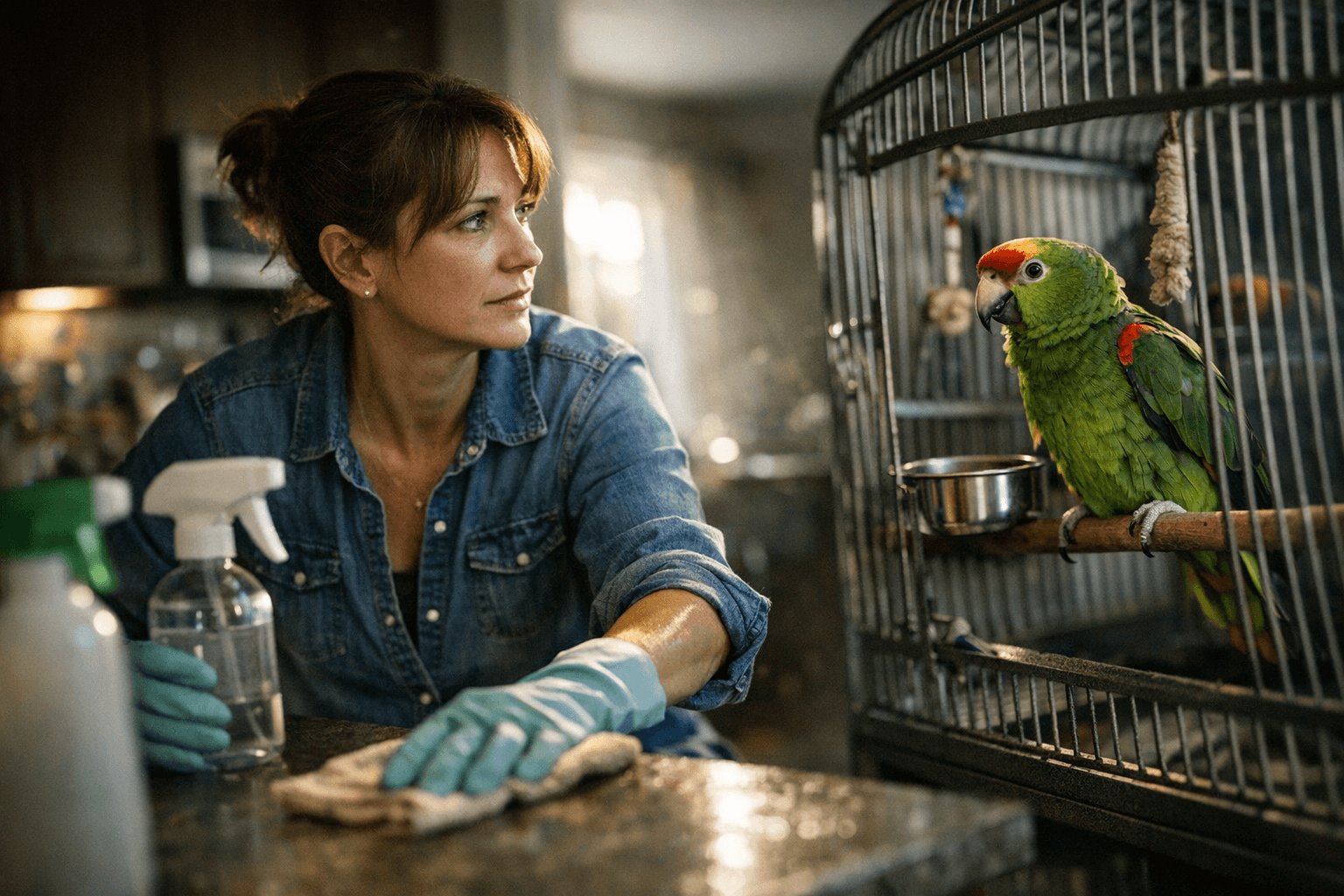
The bottle that makes your counters sparkle can be the thing that sends a parrot into a breathing crisis. Birds are built to move air differently than mammals, and their respiratory tracts are so sensitive that fumes from everyday cleaners, perfumes, sprays, and even bleach can turn routine housekeeping into an emergency.
Why parrots need a different cleaning standard
This is not a cautionary tale about exotic chemicals tucked away in a garage. It is about ordinary household habits: spraying a bathroom, wiping a cage with bleach, freshening a room, or reaching for an air freshener because the house smells “clean.” The American Veterinary Medical Association flags birds as especially sensitive to inhaled particles and fumes from aerosol products, overheated nonstick cookware, essential oils, tobacco products, certain glues, paints, and air fresheners. Merck Veterinary Manual goes further, warning that birds’ respiratory tracts are very sensitive to chemical fumes, including gasoline, pesticides, perfumes, and other sprays.
The warning that should make every guardian stop and rethink the routine is this: caged birds are at increased risk of death after exposure to fumes from bleaches and other cleaning agents. That is the invisible-risk angle most homes miss. A product can smell fresh to a person and still be dangerous in the airspace a parrot breathes every second.
Start with a bird-safe zone
A bird-safe home is not just a cleaner home. It is a home where the air itself is managed with the bird in mind. Set aside a true bird-safe zone, a room or area where no aerosols, fragrance products, polishers, or aggressive cleaners are used. That means no “quick spritz” of air freshener, no perfume cloud, no paint touch-up, and no cleaning shortcut that leaves residue behind.
That zone matters because parrots are exposed through the air, not just by touching a wet surface. If a cleaner is sprayed nearby, mist can drift. If a surface is wiped but not rinsed or dried, residue can keep off-gassing long after the bottle is put away. For homes with pet birds, the safest rule is simple: if it creates fumes, mist, or lingering scent, it does not belong in the bird’s airspace.
Room-by-room swap list
Kitchen
The kitchen is one of the most common sources of hidden danger because it mixes cooking fumes with cleaning fumes. Avoid aerosol degreasers, heavily scented sprays, essential oils, air fresheners, and any situation where overheated nonstick cookware containing polytetrafluoroethylene, also known as Teflon, is in use. Even a spotless counter does not help if the air is contaminated.
Choose cleaning products with clear ingredient transparency and look for the Safer Choice label from the US Environmental Protection Agency. EPA says Safer Choice products are evaluated as part of a Pollution Prevention program and are designed to help consumers find products that perform while containing safer ingredients. In practice, that means you are looking for labels that tell you more, not buzzwords that tell you less. “Natural” is not enough if the product still perfumes the room or leaves a harsh residue behind.
Cage, perches, toys, and bowls
Cage cleaning is where many guardians get the most routine and the least careful. Avoid bleach-heavy cleaners, strong aerosol disinfectants, and anything that keeps the bird near wet surfaces or active fumes. Merck’s warning about bleach fumes is especially important here because cages and bowls are small, enclosed spaces where residue and vapor can concentrate quickly.
The safest habit is to clean only when the bird is out of the area, the room is well ventilated, and the surfaces are fully rinsed and dry before the bird returns. If a product does not clearly explain what is in it, or if it relies on a vague natural claim rather than ingredient review, do not trust it around a parrot. The job is not to make the cage smell like a spa. The job is to make it clean without poisoning the air.
Living room, bedroom, and shared airspace
The broader home environment matters just as much as the cage. AVMA includes tobacco products, paints, glues, air fresheners, essential oils, and aerosol products among the inhaled hazards that can hit birds hard. That means the living room coffee table, the bedroom dresser, and the hallway closet can all be part of the same respiratory risk if you are spraying, polishing, or repairing things near the bird.
Make a habit of doing any fragranced or spray-based task when the bird is in another air-safe room, or better yet, when the product can be avoided altogether. If you are painting, gluing, or using a product with fumes, keep the bird far away until the room is fully aired out and dry. For parrots, “I only used a little” is not a safety plan.
Aviaries, outdoor spaces, bird feeders, and bird baths
The danger does not stop at cage bars. Aviaries, backyard bird feeders, and bird baths all need careful handling because dust, waste, feathers, and residue can all become exposure pathways. The Centers for Disease Control and Prevention advises bird hobbyists to wear disposable gloves when cleaning bird feeders or bird baths and to wash hands immediately afterward.
CDC also advises avoiding unprotected exposure to sick or dead birds and avoiding stirring up dust, bird waste, and feathers during cleanup of contaminated premises. That guidance is aimed at infectious disease risk, but it reinforces the same basic lesson for parrot homes: keep the air calm, avoid unnecessary disturbance, and protect yourself while you clean. Whether you are scrubbing a feeder tray or tidying an aviary, the safest cleanup is the one that keeps particles out of the air.
How to read labels without getting fooled
Bird guardians cannot rely on packaging language that sounds soothing. Green, natural, plant-based, and eco-friendly do not automatically mean bird-safe. The EPA’s Safer Choice label is a more useful filter because the ingredients in certified products are reviewed through a rigorous scientific process, and every chemical in the product is evaluated, regardless of percentage.
That is especially useful in a parrot home, where the goal is not simply to avoid a harsh smell. You want a product that works, but one that does so without loading the room with unnecessary fumes or leaving behind a problem you cannot see. The Association of Avian Veterinarians, a professional organization dedicated to avian health, welfare, and conservation, has long made bird-owner resources part of its work, including species-specific brochures for macaws, cockatoos, conures, cockatiels, and grey parrots. That long-standing focus is a reminder that household toxins are not a niche worry. They are a recurring parrot-care issue.
A cleaning schedule that protects feeding time
Cleaning timing matters because exposure risk rises when birds are nearby, active, and sharing the same air. A safer routine is to clean after feeding, when the bird can be moved away from the room or into a separate bird-safe zone. Do not spray, wipe, or disinfect while bowls are out and the bird is present.
1. Move the bird out of the cleaning area before any product comes out.
2. Use the mildest effective product, ideally one with Safer Choice labeling or a clearly transparent ingredient list.
3. Keep the area well ventilated while you work.
4. Wait until all surfaces are fully dry and any odor has cleared before bringing the bird back.
This is the part of parrot care that looks boring until it matters most. A clean schedule is not about convenience. It is about keeping a routine from becoming a respiratory event.
What to do if exposure happens
The earliest signs of chemical irritation can be subtle and easy to miss, so act fast if something seems off. If your bird has been near fumes, stop cleaning immediately, move the bird to fresh air, and remove the source if you can do so safely. Then contact an avian veterinarian right away, especially if you notice any change in breathing, posture, alertness, or appetite.
Do not wait for the bird to “settle down” if the breathing looks wrong. In a parrot home, a cleaner that seemed harmless can become the most urgent hazard in the room, and prevention starts with the air you let your bird breathe.
This article was produced by Prism’s automated news system from verified source data, official records, and press releases, then run through automated quality and moderation checks before publishing. The system is built and supervised by the people who set the standards it runs under. Read our full AI policy.
Did this article answer your question?