Daily Cage Cleaning Keeps Parrots Healthier, Prevents Bacteria Build-Up
A clean cage is not housekeeping, it is daily health care. The real win is a simple routine that clears mess before bacteria and odor can settle in.
The mess that matters most is the one you leave overnight
The fastest way to turn a parrot’s home into a health risk is to let yesterday’s food, droppings, and damp tray sit for one more day. A clean cage is not about making the room look neat, it is about stopping bacteria from getting a foothold where your bird eats, perches, and sleeps. Because parrots live so close to their food and waste, the condition of the cage affects their entire day, not just the smell of the house.
That is why daily cage cleaning belongs in the same category as feeding, fresh water, and observation. Squawk Shop’s guidance gets the priority right: cleaning is a non-negotiable habit, with daily spot checks and a consistent deep scrub keeping the cage comfortable and sanitary. The goal is not perfection every hour. The goal is a system that keeps small messes from becoming a bigger health problem.
What needs attention every day
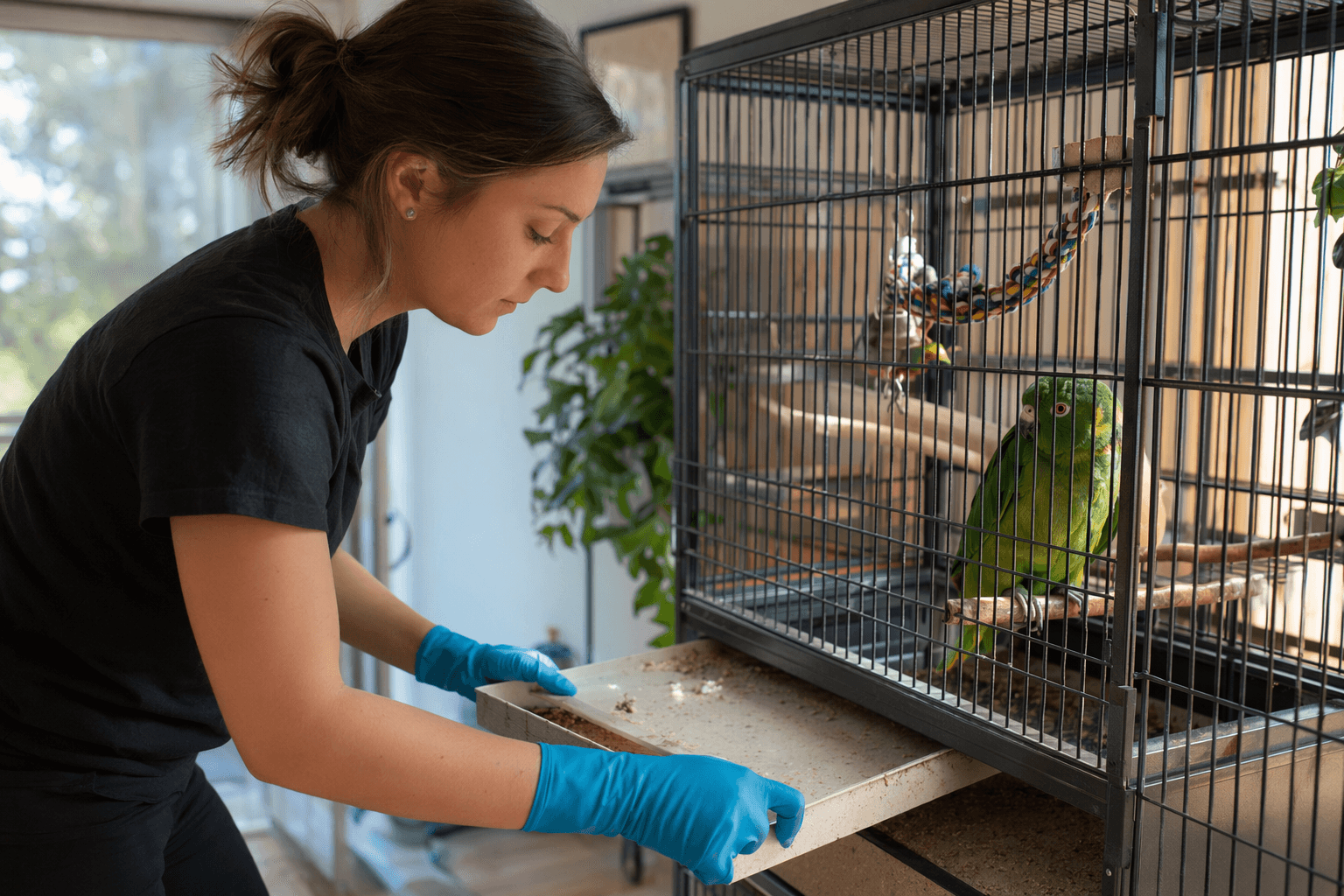
Daily cleaning should focus on the places where contamination builds fastest. Food and water dishes are at the top of the list. VCA Animal Hospitals says they should be cleaned every day, which makes sense because wet bowls and seed husks can turn into a bacteria problem long before the cage itself looks dirty. If your bird is a messy eater, a midday wipe or rinse can prevent soggy leftovers from sitting until evening.
The second daily task is the spot check. Look for droppings stuck to perches, dried food on bars, feathers and debris in corners, and damp areas around bowls or toys. These are the overlooked dirty zones that often create the biggest risk because they stay hidden in plain sight. A quick wipe of the tray, a rinse of the dishes, and a sweep of obvious waste takes only a few minutes, but it changes the whole hygiene picture of the enclosure.
Daily attention also helps you notice shifts in your bird’s health. If droppings suddenly look different, if food consumption drops, or if the cage is dirtier than usual, that can be an early clue that something is off. In that way, cleaning is not separate from care, it is part of the daily check-in.
The weekly reset that keeps bacteria from settling in
Even with good daily habits, a cage still needs a more thorough wash on a regular schedule. VCA says bird cages should be sprayed down, washed, or scrubbed at least once weekly with non-toxic disinfectant soap and hot water. The same guidance says most disinfectants should sit on the surface for 10 to 15 minutes before thorough scrubbing and rinsing, and the cage must be fully rinsed with fresh water afterward.
That waiting time matters because the product has to do its job before you scrub it away. It is also why weekly cleaning is best treated as a reset, not a quick wipe. Pull out bowls, toys, and detachable parts, scrub the surfaces that collect residue, and make sure nothing sticky or damp is left behind. If the cage has been heavily soiled, or if your bird is dealing with parasites or illness, the need for a deeper clean becomes even more important.
The point is consistency. You do not need to turn cleaning into an all-day project, but you do need to stop thinking of it as optional. A steady weekly wash, paired with daily cleanup, is what keeps the cage usable, odor-controlled, and much less welcoming to bacteria.
Why cage design and ventilation are part of cleaning
A cleaning routine works better when the cage itself is built for it. VCA says rectangular, powder-coated or stainless-steel cages are generally preferred over round cages, and tall, narrow cages are impractical for most birds. Those details matter because easy-to-reach surfaces are easier to keep sanitary, while awkward shapes make it harder to get into corners and around bars where waste can collect.
Ventilation matters too. VCA notes that good hygiene, frequent cage cleaning, fresh nutritious food, and good ventilation are all necessary for preventing and treating aspergillosis in birds. That is a stronger warning than a simple odor concern. Aspergillosis is a fungal disease, and a damp, dirty, poorly ventilated environment gives it more room to become a serious problem.
The cage should also be the right size. The MSD Veterinary Manual says a bird’s enclosure should be at least one and a half times the bird’s wingspan in all directions. That benchmark is more than a comfort detail. A cramped cage concentrates waste, increases stress, and limits movement, which can have both physical and psychological consequences for intelligent, social birds adapted for flight. A larger cage gives you more room to keep the environment cleaner and gives the bird more space to live well inside it.
Cleaning as prevention, not cleanup after the fact
This is where the bigger health picture comes into focus. The Association of Avian Veterinarians says birds need annual or more frequent wellness visits, and that fits the same preventive mindset as cage cleaning. You are not waiting for a problem to become obvious. You are building habits that lower the odds of infection, stress, and environmental strain before they show up.
That matters when dirt, feces, and leftover food can contribute to infections. It matters when parasites or respiratory disease are in the picture and surfaces and accessories need a serious scrub. It even matters when the cage just seems a little dusty or the bowls only look mildly cloudy. In parrot care, “almost clean” is often still too dirty.
A realistic system is simple enough to keep on busy days and strict enough to protect the bird: daily dish cleaning, quick spot checks, and a weekly full wash with non-toxic soap, hot water, a proper contact time, and a full rinse. Built that way, cage cleaning stops being a chore and becomes what it really is, one of the most important health routines in the whole house.
This article was produced by Prism’s automated news system from verified source data, official records, and press releases, then run through automated quality and moderation checks before publishing. The system is built and supervised by the people who set the standards it runs under. Read our full AI policy.
Did this article answer your question?