Fecal Test Could Help Expose Illegally Captured Parrots, Aid Rescues
A fecal sample may soon help officers tell a wild-caught parrot from a captive-bred bird, cutting the guesswork traffickers rely on. That could sharpen rescues and border checks fast.

A simple fecal test could give wildlife officers something they rarely have now: a faster way to tell whether a parrot came from the wild or from a legitimate breeding setup. That matters because traffickers have long been able to hide behind paperwork, passing off wild-caught birds as captive-bred and moving them through the pet trade with less scrutiny.
The new method looks at diet. By analyzing what is left in droppings, researchers can compare whether a bird’s food history fits captivity or life in the wild. The project brings together the World Parrot Trust, the South African National Biodiversity Institute, the University of Colorado Boulder, and Nature Iraq, and it is aimed at helping law enforcement spot laundering schemes before birds disappear deeper into the market.
Steven Janssen, a mobile veterinarian for the World Parrot Trust, said the identification problem is hard even for people who know parrots well. That is the point of the test: it is designed to replace a slow, stressful process with something frontline officials could actually use at airports, border crossings, rescue centers, and wildlife checkpoints.
The stakes are high. CITES says parrots are among the most-trafficked animals in the world, and that early in the Convention’s history 96 percent of animals in international trade were taken from the wild. Trade has shifted heavily toward captive-produced specimens, but that shift has created a new opening for abuse, especially where captive breeding is used as cover for illegal capture. CITES also keeps a register of captive-breeding operations for Appendix-I species, underscoring how closely trade documentation now matters.
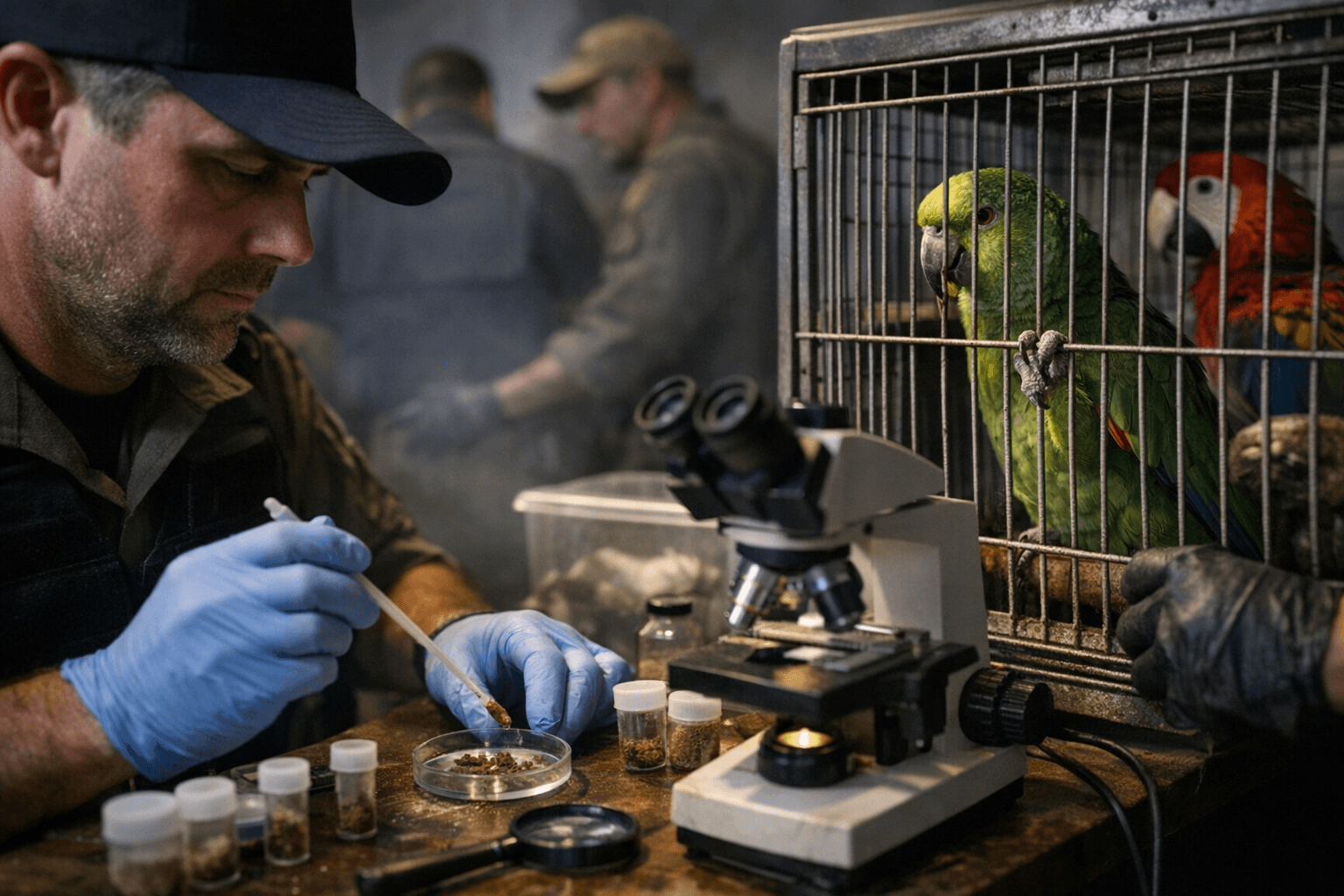
For parrot people, the science is not abstract. The World Parrot Trust says earlier work already showed that a simple, non-invasive fecal sample could distinguish a wild-caught African Grey Parrot from a captive-bred one. That suggests the new effort is building on a method with real potential, not starting from scratch.
The broader trade picture explains why enforcement tools like this are needed. A 2021 study concluded that parrots are the most internationally traded birds, mainly as companion pets. UNODC’s 2024 World Wildlife Crime Report says wildlife trafficking affects thousands of species across more than 160 countries and territories, with traffickers quick to adapt when enforcement improves. In Florida, conservation scientists used DNA identification in 2023 on 24 trafficked parrots, including endangered yellow-naped Amazons, a species FIU said is among the most trafficked Central American parrots and one for which more than 90 percent of wild nests were poached for the illegal pet trade.
If the fecal test holds up in the field, it could become a practical tool for rescuers and customs officers alike, making it harder to launder wild birds and easier to protect the parrots that still have a chance.
This article was produced by Prism’s automated news system from verified source data, official records, and press releases, then run through automated quality and moderation checks before publishing. The system is built and supervised by the people who set the standards it runs under. Read our full AI policy.
Did this article answer your question?