Winter Light Shortages Quietly Drain Calcium in Indoor Parrots
Winter light gaps can drain vitamin D3 and calcium in indoor parrots long before obvious illness. The fix is in your light, diet, and cage setup.
The winter trap most indoor parrots never see coming
A bird can look fine at breakfast and still be running low on the nutrients that keep bones, muscles, and nerves working properly. That is the danger with winter light shortages in indoor parrots: the problem builds quietly when natural sunlight is scarce and UVB lighting is missing, then shows up later as weakness, tremors, or worse. By the time an owner notices a crisis, the bird may have been slipping for weeks.
The hidden issue is not simply “less sun.” It is a breakdown in the whole system that lets parrots use calcium normally. Merck Veterinary Manual notes that most birds benefit from both oral vitamin D3 and UV-B-delivered vitamin D3, and that African grey parrots have been reported to rely more heavily on UVB light to maintain adequate serum calcium than Amazon parrots. In plain terms, winter can expose a setup that was already too thin.
Why light and calcium are tied together
Vitamin D3 is part of the calcium story, not a side note. Without enough UVB exposure, a bird may not synthesize or use vitamin D3 well, and calcium metabolism starts to wobble. The Parrot Society UK points out the key detail many owners miss: glass blocks ultraviolet light, so a sunny window perch is not the same as true UVB exposure.
That matters even more in winter, when birds spend more time indoors and owners assume a bright room is enough. A Hispaniolan Amazon parrot study found that birds with no sunlight exposure may develop vitamin D deficiencies that contribute to hypocalcemic conditions even when their diet is supplemented with vitamin D. That is the part worth underlining: diet alone does not always cover for missing light.
The birds most likely to get hit first
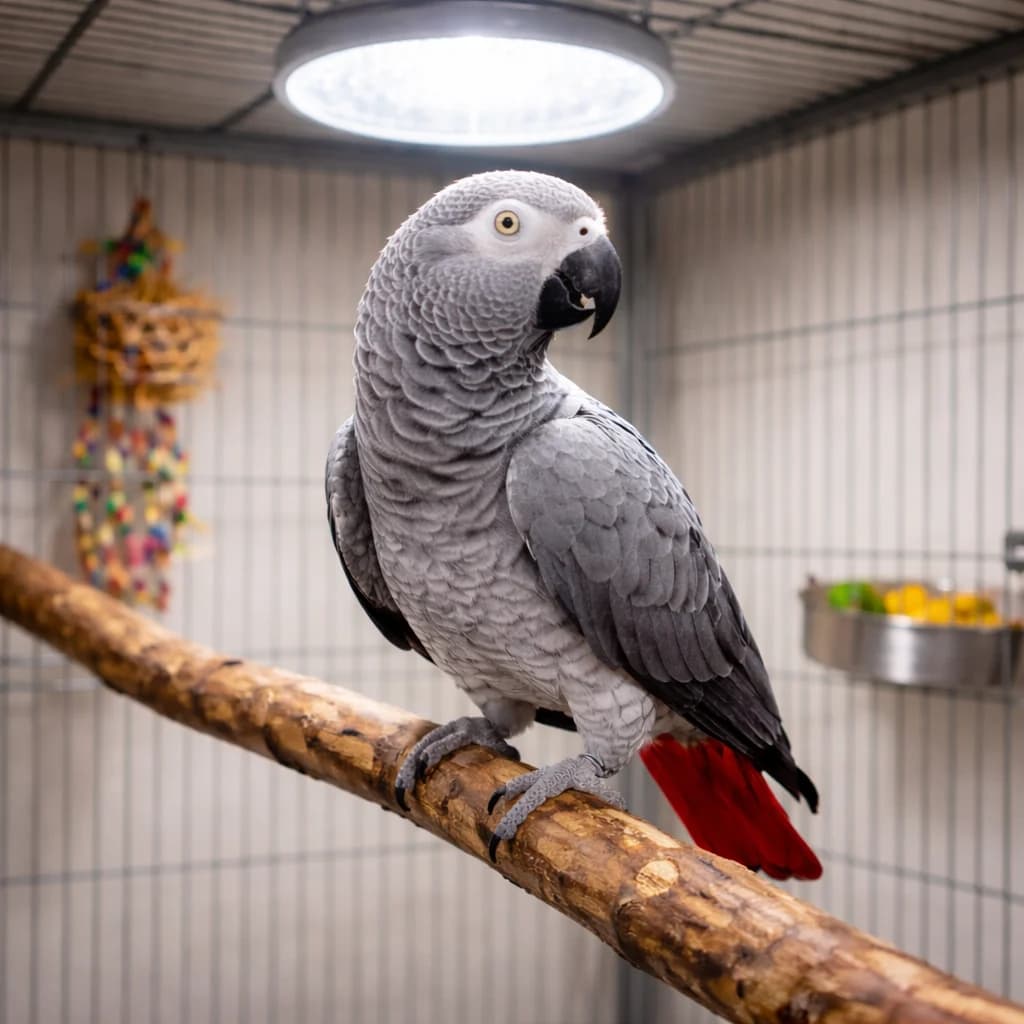
African grey parrots deserve special attention because Merck notes both chronic and acute calcium problems in the species. Young African greys may show hypocalcemia as osteodystrophy, with curvature and deformation of long bones and vertebrae. The same species is also prone to an acute hypocalcemia syndrome tied to both low calcium and low vitamin D3.
The feeding pattern matters too. Acute hypocalcemia in African grey parrots is more commonly seen in birds on all-seed diets, and Merck describes the classic signs as weakness, tremors, and seizures. A published case report documented hypocalcemic seizures in an African grey parrot, which is a grim reminder that this is not a theory problem. It is a real clinical emergency.
Amazon parrots are not immune either. The Hispaniolan Amazon work shows that even with vitamin D-supplemented diets, lack of sunlight can still leave birds vulnerable. That is the kind of detail that should make any indoor-bird owner rethink a winter setup that has drifted into “good enough.”
What the first warning signs usually look like
The early signs are easy to shrug off if you are not looking for them. A bird may seem a little less bright, a little weaker on the perch, or less steady than usual. Merck also notes that owners may first notice subtler changes such as altered droppings, vocalizations, or a bird sleeping more than normal.
Once calcium shortage starts affecting the body, the signs can move fast. Weakness, tremors, and seizures are the classic red flags in acute hypocalcemia, while chronic deficiency can damage bone structure and overall function. The hard part is that parrots are excellent at hiding illness until the problem is no longer quiet.
The husbandry mistakes that create the problem
The biggest mistake is assuming an indoor bird will pick up enough light through a window. Glass blocks ultraviolet light, so the bird may look sunlit while getting almost none of the UVB it needs. Another common mistake is treating diet, lighting, cage design, and exercise as separate chores rather than one connected system.
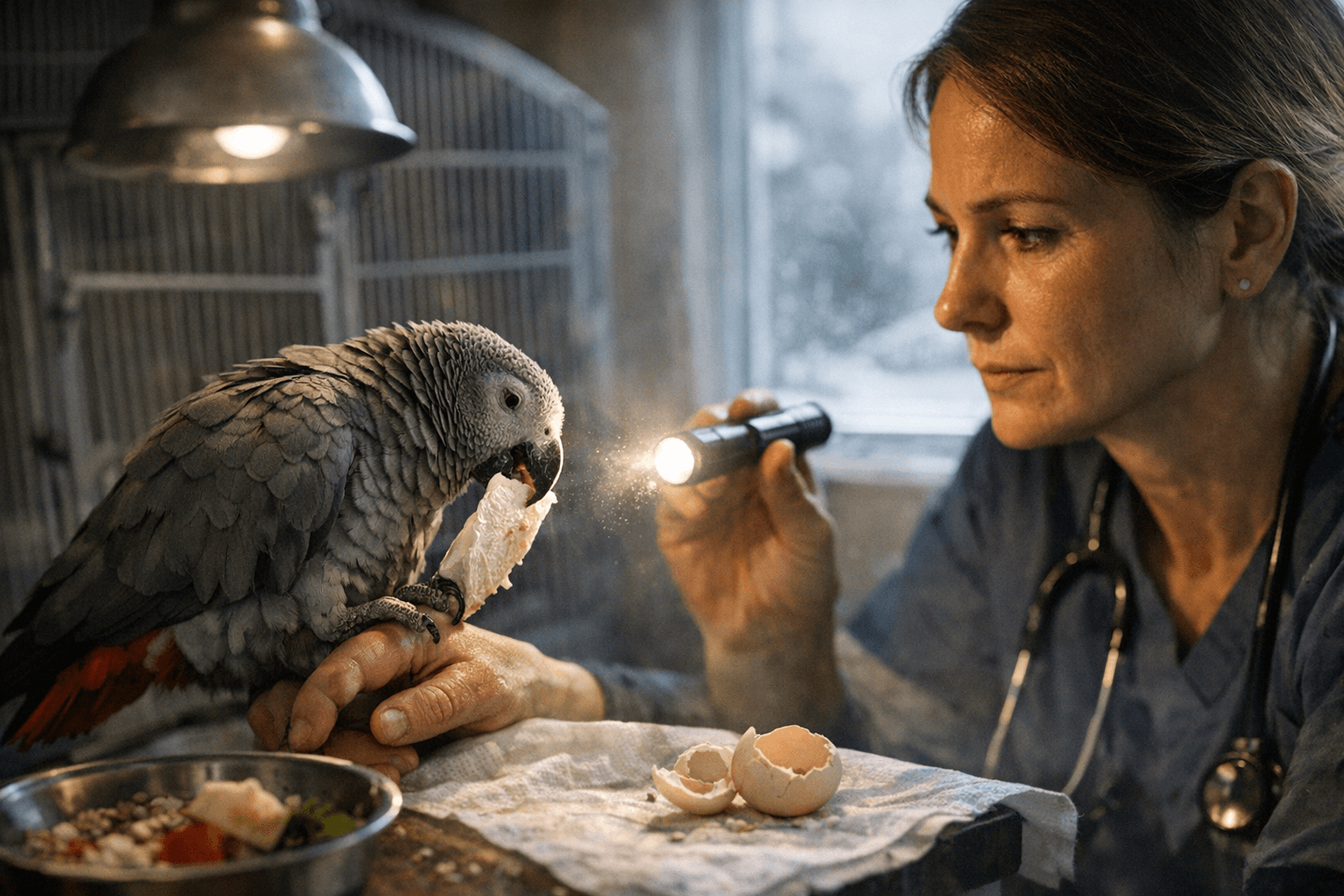
Merck also warns that keeping pet birds in small indoor cages with limited exercise has physical consequences. A cage that is too cramped, with poor perch choices and little opportunity to move, compounds the nutritional problem by undermining muscle use, bone loading, and overall fitness. Add weak sanitation and a dull habitat, and you have a bird that is both under-stimulated and under-supported.
What to change now before winter damage turns clinical
1. Check the light first
If your bird is indoors most of the day, look at the actual UVB plan, not just room brightness. Merck advises owners to expose birds to direct sunlight when possible or properly use UVB bulbs to help prevent vitamin D deficiency. The key word is properly. A bulb that is not positioned, rated, or replaced correctly can give a false sense of security.
2. Tighten the diet
A seed-heavy menu is a known problem, especially for African greys. Merck specifically links acute hypocalcemia in African grey parrots more commonly with all-seed diets. Winter is a good time to look hard at what is actually going into the bowl, because a bird can keep eating and still be nutritionally short.
3. Fix the cage environment
Perches, cage size, sanitation, and enrichment all matter. A larger, better-designed cage with varied perches encourages movement and weight-bearing, while a cleaner and more engaging setup supports health in ways a food bowl alone never can. The bird should not have to choose between boredom and balance.
4. Use the vet before the crisis
The Association of Avian Veterinarians urges owners to talk with an avian veterinarian about full-spectrum lighting and safe UVB use, and regular checkups belong in the same conversation. If your bird is in an at-risk species, eating a seed-heavy diet, or showing any subtle change in strength or behavior, do not wait for a seizure or fracture to make the appointment for you.
The winter lesson that saves birds
This is not just a cold-weather comfort issue. Winter can quietly expose a lighting gap that leaves indoor parrots depleted in vitamin D3 and calcium before the owner sees anything obviously wrong. The birds that look “fine” in a bright room may be carrying a nutritional deficit that only becomes visible when strength fades, bones weaken, or the nervous system starts to fail.
The safest winter care plan is the unglamorous one: verify UVB, stop trusting window light, improve the diet, give the bird room to move, and treat small changes in behavior as early warnings instead of background noise. That is how you keep a seasonal setup from turning into a preventable health crisis.
This article was produced by Prism’s automated news system from verified source data, official records, and press releases, then run through automated quality and moderation checks before publishing. The system is built and supervised by the people who set the standards it runs under. Read our full AI policy.
Did this article answer your question?