Yellow-Naped Amazon Parrots Use Complex Duets to Defend Territory
Yellow-naped Amazons are not just mimics. Their territory duets follow syntax-like rules, with 36 call types and more than 450 recorded calls.
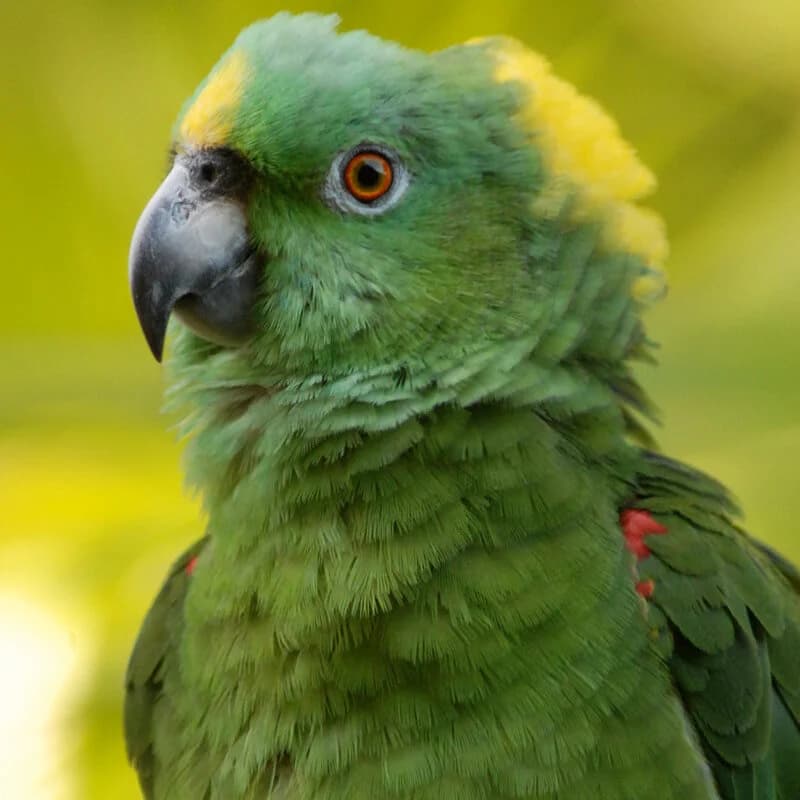
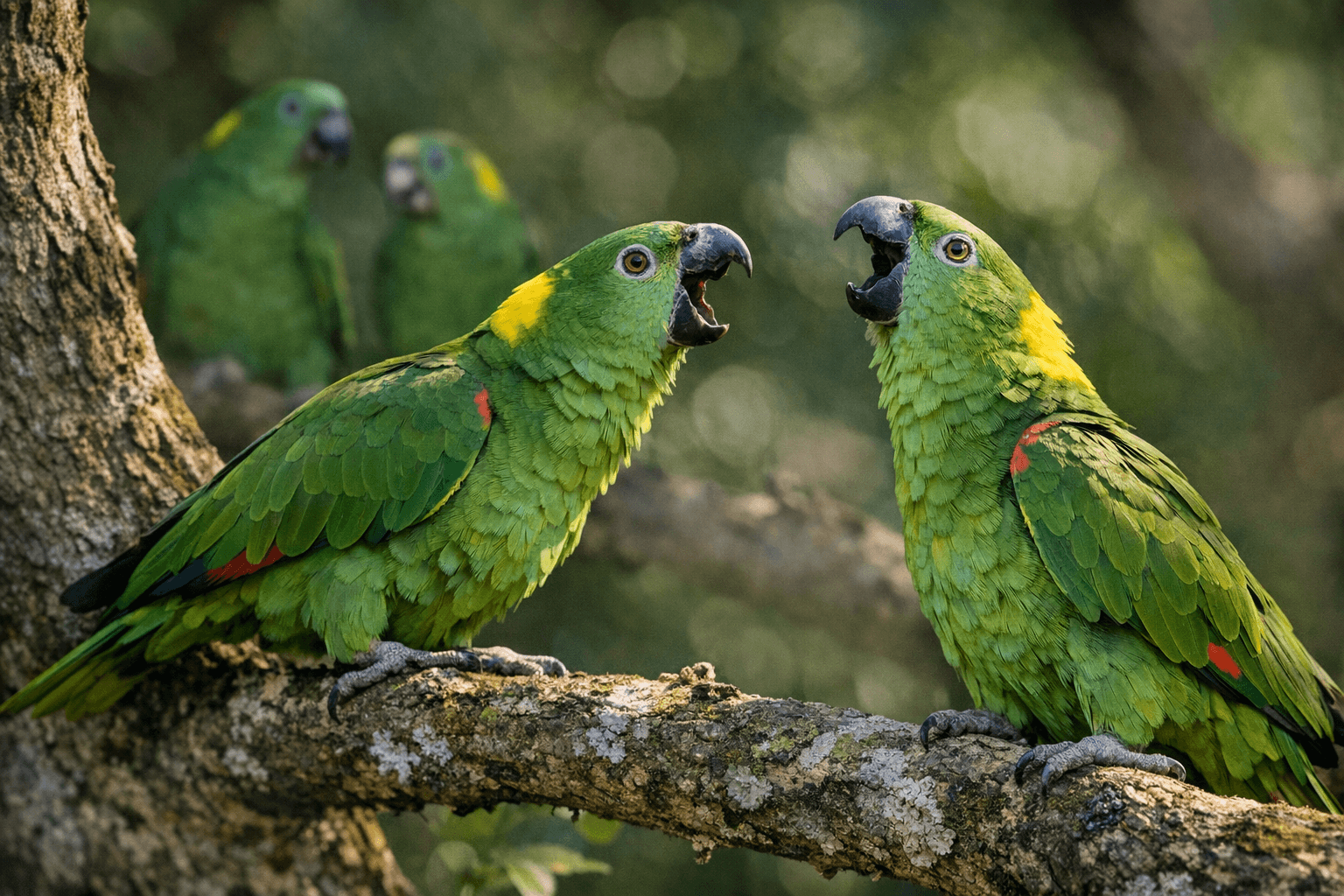
Yellow-naped Amazon parrots are doing far more than recycling sounds. In territory disputes, mated pairs use warble duets built from a large vocal repertoire, and the calls appear to follow rule-governed patterns rather than random chatter.
The study, Decoding parrot duets: complex communication in yellow-naped amazons, found 36 call types plus additional variants in the birds’ vocal lexicon. Researchers reported that the calls assort non-randomly and are organized by syntactic rules, with one summary of the work describing more than 450 calls recorded in the duets. The birds use those vocal exchanges when defending territory, which makes the performance more than noise in the canopy. It is coordinated social behavior.
Researchers including Christine Dahlin, Timothy Wright, Grace Smith-Vidaurre and Molly K. combined fieldwork, manual sorting and machine learning to decode the sequences. One hypothesis is that the complexity itself may advertise prowess during territorial fights, turning the duet into a kind of acoustic statement about strength, timing and pair quality. That matters because yellow-naped Amazons are not casual talkers in the wild. They are using structured communication in a high-stakes setting, with a mate listening and a boundary under pressure.
For parrot owners, the takeaway is hard to miss: a parrot’s vocal life is not background noise. If a wild Amazon can use finely organized calls to coordinate, defend and signal, then a companion bird’s changes in volume, rhythm or repetition deserve attention. Sudden silence, a spike in contact calling, or repeated duetting with a household bird or favored person can point to social needs, frustration, reproductive drive or stress. The lesson is not to treat chatter as cute filler, but as behavior with meaning.
The conservation stakes are just as sharp. Yellow-naped Amazons range across southern Mexico and parts of Guatemala, El Salvador, Honduras, Nicaragua and Costa Rica, and their numbers have collapsed under habitat loss, deforestation and illegal trapping for the pet trade. BirdLife International uplisted the species from Endangered to Critically Endangered in 2021, after an earlier uplisting to Endangered in 2017. The World Parrot Trust has funded fieldwork and range-wide surveys since 2007, including work in the Santa Rosa region of Costa Rica. Surveys in 2016 found 1,682 birds in roosts in Costa Rica and Nicaragua, while BirdLife reported fewer than 500 birds in southern Guatemala in 2019, down from 30,000 to 50,000 in the 1980s and 1990s. The organization estimates about 1,500 to 1,600 mature wild birds remain worldwide.
This article was produced by Prism’s automated news system from verified source data, official records, and press releases, then run through automated quality and moderation checks before publishing. The system is built and supervised by the people who set the standards it runs under. Read our full AI policy.
Did this article answer your question?