Grieving Parrot Finds New Companion After Losing Its Mate
A grieving African grey's new companion came only after careful patience, showing why parrot loss needs routine, monitoring, and slow introductions.
A loss parrots feel in their bodies
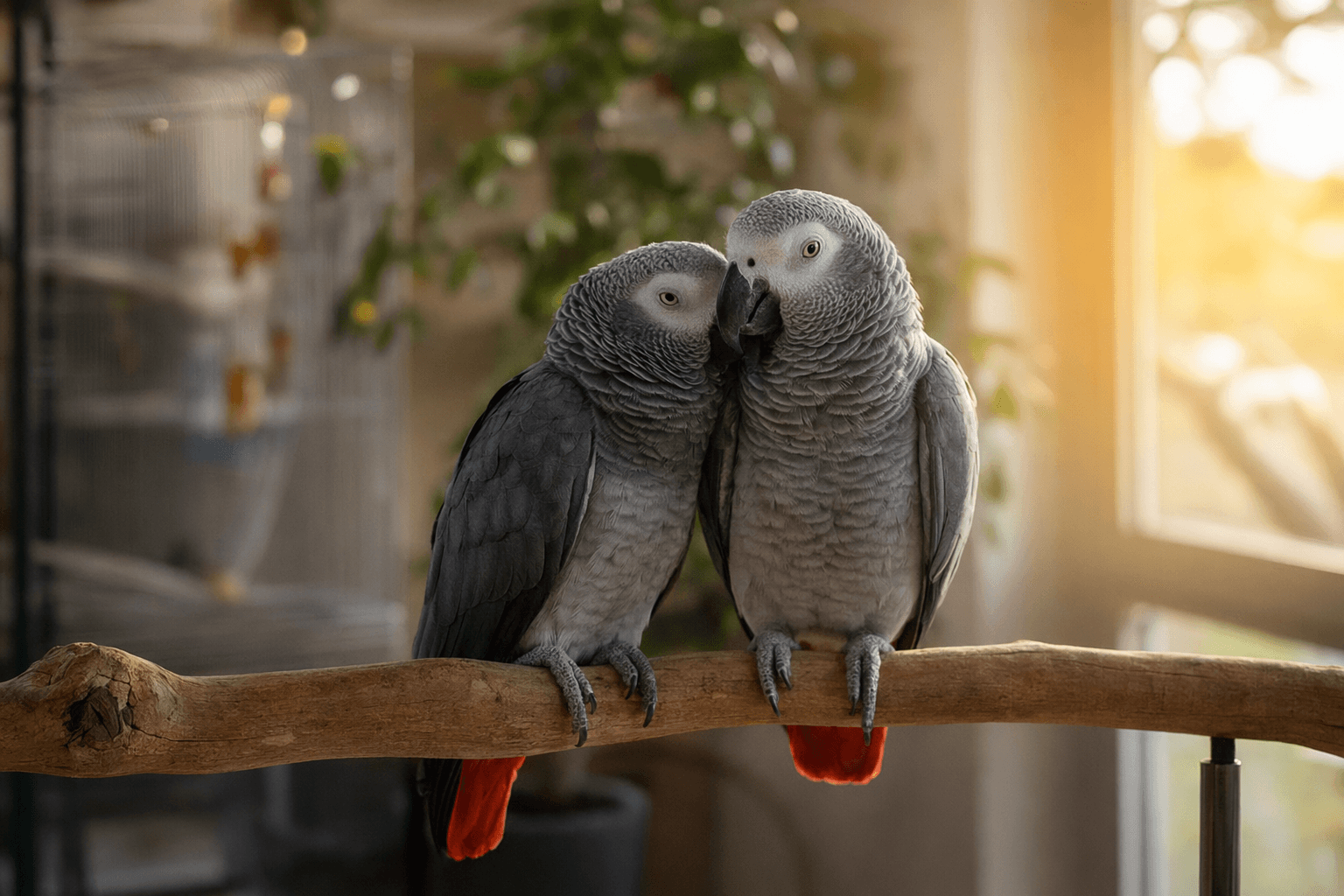
An African grey parrot getting a new companion after losing a lifelong mate is not just a sweet turnaround. It is a reminder that grief in parrots shows up in the daily details of care, from appetite and vocalization to feather condition, activity, and willingness to bond.
That matters because parrots are not short-term pets. The Association of Avian Veterinarians notes that many species have long lifespans and most people who bring home a companion bird are really committing to a long-term relationship, while a comparative study has found that some parrot species can reach maximum lifespans of more than 100 years. Research has also linked parrot longevity to brain size and life-history traits, which helps explain why loss can be a recurring part of captive care rather than a one-time event.
What grief can look like in a parrot
When a parrot loses a mate, the change is often visible before it is understandable. Birds may eat less, withdraw from handling, alter their vocal patterns, pluck feathers, become lethargic, or stop showing the usual curiosity that keeps them engaged with the room and with people.
That is why bereavement in birds has to be taken seriously. Parrots are skilled at hiding illness and distress until a problem is already advanced, so a bird that seems only “a little off” may be telling you something meaningful. A drop in screaming, a drop in preening, or a sudden refusal to interact can be as important as a physical symptom.
Why the new companion was a process, not a quick fix
The central lesson in this story is that replacement should never be rushed. The right response after a mate dies is not to force a new bird into the space immediately, but to keep the grieving bird occupied, protected from sinking too deeply into depression, and observed closely for signs that it is actually ready to form another bond.
That gradual approach lines up with avian welfare guidance. The RSPCA says most birds are social animals who do better with the company of other birds, but introductions must be managed carefully. History, flying ability, and housing all matter, because a bird that has lost one partner does not automatically accept another, and a poorly timed pairing can create more stress instead of relief.
What social enrichment can do while a bird grieves
The space between loss and a new bond is not empty time. It is the period when routine, enrichment, and predictable caregiving do the heavy lifting. The Association of Avian Veterinarians says foraging enrichment should encourage parrots to search for, procure, and process food, which gives captive birds the kind of mental work wild birds spend much of the day doing.
That is not a small detail. In one AAV example, young orange-winged Amazon parrots housed in pairs spent less time screaming and less time preening than singly housed birds, and they were more active. The message is clear: companionship can help, but social support works best when it is paired with a housing setup and daily routine that still meet the bird’s behavioral needs.
Why compatibility matters more than the idea of a second bird
A second bird is not a guaranteed cure for loneliness. A compatible match can improve welfare, but an incompatible one can add tension, noise, and even aggression. That is why avian-care decisions should be individualized rather than driven by the wish to “fill the gap” left by the previous mate.
A captive cockatiel study found that pair compatibility predicted lower intrapair aggression and better incubation coordination, a useful reminder that the chemistry between birds matters as much as the number of birds in the enclosure. In other words, success is not about simply adding another body to the cage. It is about whether the two birds can share space, pace, and social cues without constant friction.
What to watch before assuming the bird is ready
Before introducing another bird, watch for the practical signs that grief is easing and interest in social contact is returning. Appetite should stabilize. Vocalization should become more typical for that bird, not absent or frantic. Activity should return to normal patterns, and the bird should show some curiosity about nearby birds, people, toys, and food.
Owners should also pay close attention to feather condition, withdrawal, and lethargy, because these can signal either emotional strain or a medical problem. A bird that is eating poorly, hunching quietly, overpreening, or refusing interaction is not giving a green light for a new relationship. At that stage, the safer move is veterinary review, steady routine, and more time.
A wider lesson for long-lived, socially complex birds
This story lands because parrots are among the most socially complex birds people keep. Companion parrots are one of the rare animal taxa with life-long vocal learning, and African grey parrots have even been shown to voluntarily help flockmates obtain food rewards. Those traits make attachment meaningful, not theatrical.
That is also why loss should be handled with patience instead of sentiment. The best outcome is not simply that a bird gets another companion. It is that the bird is given enough time, enrichment, and observation for a new bond to form on its own terms, with welfare rather than urgency setting the pace.
This article was produced by Prism’s automated news system from verified source data, official records, and press releases, then run through automated quality and moderation checks before publishing. The system is built and supervised by the people who set the standards it runs under. Read our full AI policy.
Did this article answer your question?