How to prevent deadly lead poisoning in parrots at home
Lead can hide in paint chips, sinkers, weights and cage hardware, and parrots may not show danger until they start drinking, chewing or wobbling.
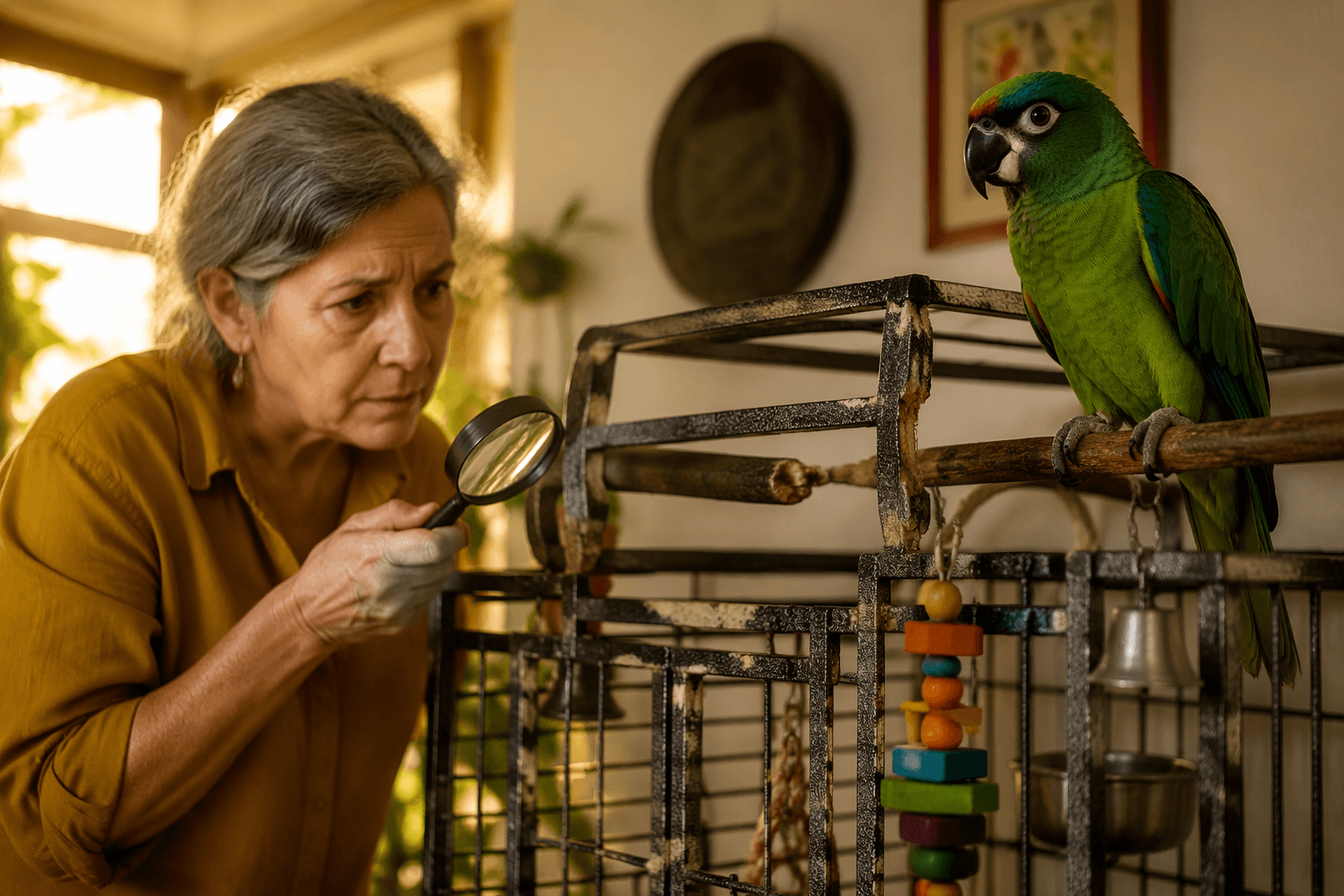
Tiny amounts of lead from paint chips, curtain weights, hardware, or a forgotten trinket can become a hidden emergency for parrots; they do not need to swallow a large object to be in danger because beaks are built for exploring, cracking and chewing. Lead is a heavy metal found in mineral deposits around the world.
Why parrots are uniquely exposed
Birds’ beaks grow continuously, chewing is natural, and household chewing can be unsafe and even deadly. That combination turns ordinary home items into risk points for cockatiels, conures, amazons, African greys, cockatoos and macaws, all of which tend to work objects with their beaks and feet. The Association of Avian Veterinarians’ household-dangers handout warns that the list of toxic materials is not exhaustive, so the safest rule is to assume any questionable metal could be a problem and offer bird-safe toys only.
Lead toxicity happens when lead is accidentally ingested, which is why parrots are so vulnerable compared with pets that do not mouth everything in reach. A small chip of old paint, a loose metal charm, or dust from renovation work may look harmless to a person and still be enough to matter to a bird that chips, chews and nibbles constantly.
Room-by-room hazard audit
Start with the places where birds are most likely to encounter hidden metal. In older rooms, old paint chips and renovation dust are classic hazards, especially around windows, trim and doors where flaking finishes can collect. Plumbing components can also carry lead, so any area near pipes, fixtures or repairs deserves a close look before a parrot is allowed to roam.
In living spaces, curtain or drapery weights, metallic charms, decorative hardware and imported trinkets are easy to overlook because they blend into the room. Stained glass materials, certain toy parts and shiny household accessories can also be risky if a bird can break off a piece or gnaw at an edge. The danger is not limited to visibly rusty or dirty metal, since lead can be present in objects that look ordinary on the outside.
The kitchen, garage and workshop deserve a harder pass. Fishing sinkers and ammunition are classic lead sources, and hardware scraps can end up in drawers, boxes or tool bins where a curious parrot can reach them during supervised time away from the cage. If your bird ever gets floor time, remember that dropped screws, beads, clips and craft supplies matter too, because the problem is accidental ingestion, not just obvious swallowing.
Do not forget cages, play stands and toys themselves. The Association of Avian Veterinarians’ household-dangers handout warns that questionable metal parts, chains, bells and charms can become chew targets, and it warns against assuming a short list covers every hazard. If a part is unclear, worn, painted, imported or difficult to identify, it does not belong in reach of a parrot.
Early signs to watch for
Lead toxicosis often starts with vague changes that are easy to mistake for a bad day or a mild stomach issue. Appetite loss, lethargy, weight loss, regurgitation, weakness, changes in droppings and reduced activity all fit the early picture. A 2021 AAV blog post also lists increased drinking and urination, and blood-tinged or very green urine or urates.
As exposure worsens, the signs become harder to ignore. Tremors, balance problems, abnormal vocalization, head tilt, blindness, circling, weakness, leg paresis or paralysis and seizures can appear once the nervous system is involved. Those signs overlap with many other illnesses, which is one reason lead poisoning can be confused with other diseases and why “wait and watch” is the wrong response.
Acute lead toxicosis can improve very quickly once treatment starts, even in birds with profound neurologic abnormalities. That does not make it safe to delay; it makes prompt action more important.
- Appetite drop or food refusal
- Lethargy or sudden quietness
- Weight loss
- Regurgitation
- Weakness or wobbling
- More drinking or more urine
- Blood-tinged or very green urine or urates
- Tremors, seizures or balance changes
Act immediately if exposure is possible
If your parrot may have chewed lead, treat it as a veterinary emergency, not a home-observation problem. Remove access to the suspected item at once, keep the bird calm and warm, and contact an avian veterinarian immediately. If a visible metal object is still in the digestive tract, urgent removal may be needed.
By 2009, metal intoxication was routinely diagnosed in companion birds and was a major challenge for avian practitioners. In 2009, Niles Animal Hospital and Bird Medical Center in Niles, Illinois, called lead toxicosis surprisingly common in pet birds and one of the most common toxicoses in avian medicine. Owners often do not know the source, so a negative history does not rule it out.
How veterinarians confirm and treat it
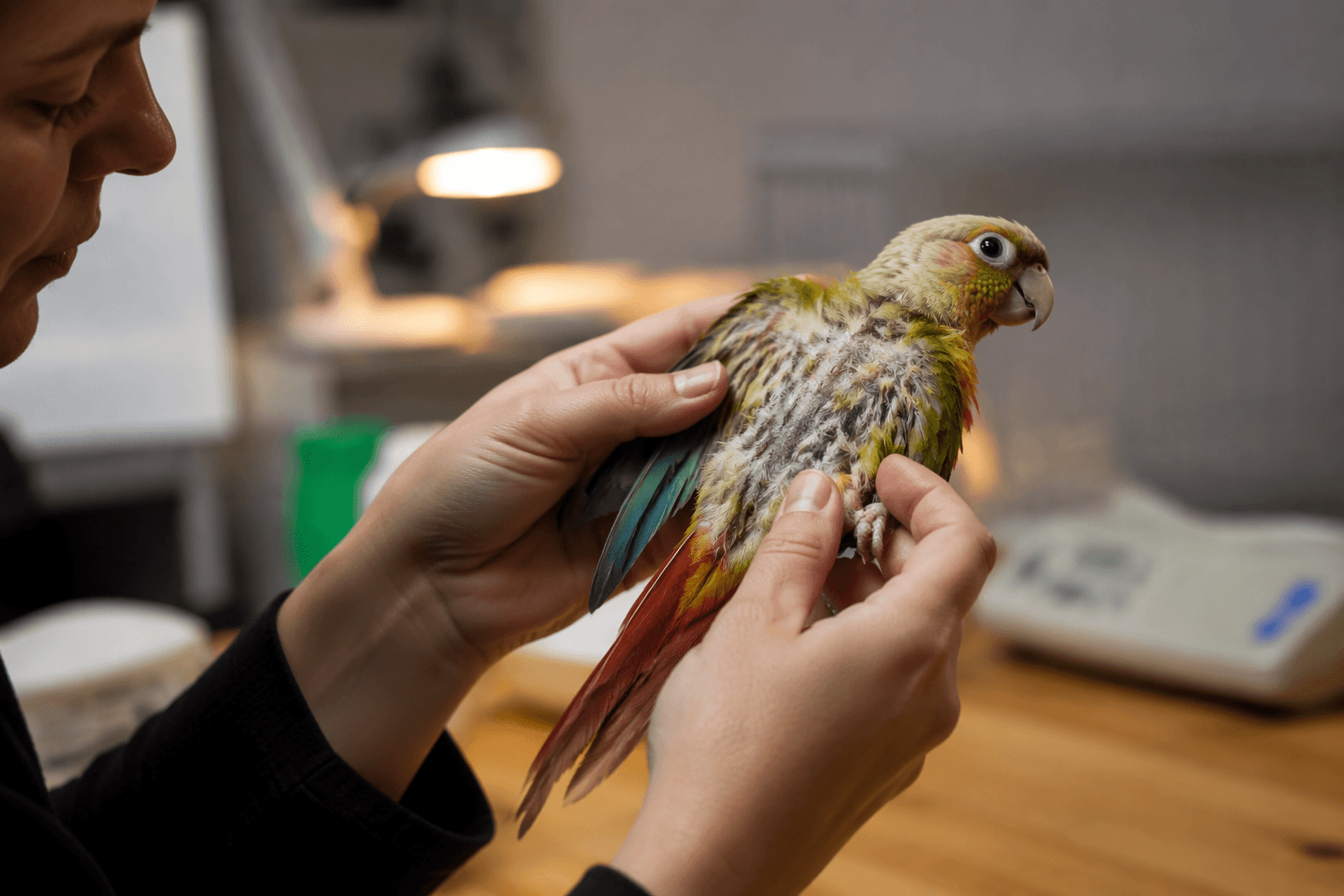
Avian veterinarians usually combine the bird’s history with radiographs and blood testing to confirm exposure. A 2009 University of Queensland review by Peter S. Sakas and B. Doneley examined 20 cases of lead toxicosis diagnosed at West Toowoomba Veterinary Surgery from 2006 to 2009. The core treatment plan was chelation therapy, preventing further absorption and supportive care.
Chelation is central because it helps remove lead from tissues and reduce the body burden. CaEDTA is an excellent chelator of lead and is best at removing lead from the bones, but it must be given by injection because it is not absorbed.
A 2025 Journal of the American Veterinary Medical Association study reviewed 95 cases of lead toxicosis in rehabilitated avian species from 2014 to 2023.
Prevention that actually works
The strongest prevention plan is boring in the best possible way: bird-proof the room before the bird ever gets a chance to test it. Keep parrots away from renovation zones, inspect cages and toys for questionable metal parts, and remove casual access to old fixtures, weights, charms, sinkers and ammunition. Use only bird-safe toys, and replace anything that is chipped, unknown, imported without clear materials information or too worn to trust.
Lead has been banned from gasoline and is no longer used in some common consumer contexts, but it still turns up in older homes and hidden objects.
This article was produced by Prism’s automated news system from verified source data, official records, and press releases, then run through automated quality and moderation checks before publishing. The system is built and supervised by the people who set the standards it runs under. Read our full AI policy.
Did this article answer your question?