How to tell normal parrot molting from illness and stress
A normal molt can look messy, but symmetry, pin feathers, and behavior tell the truth. Patchy bald spots, irritated skin, or a bird that feels off are vet clues.
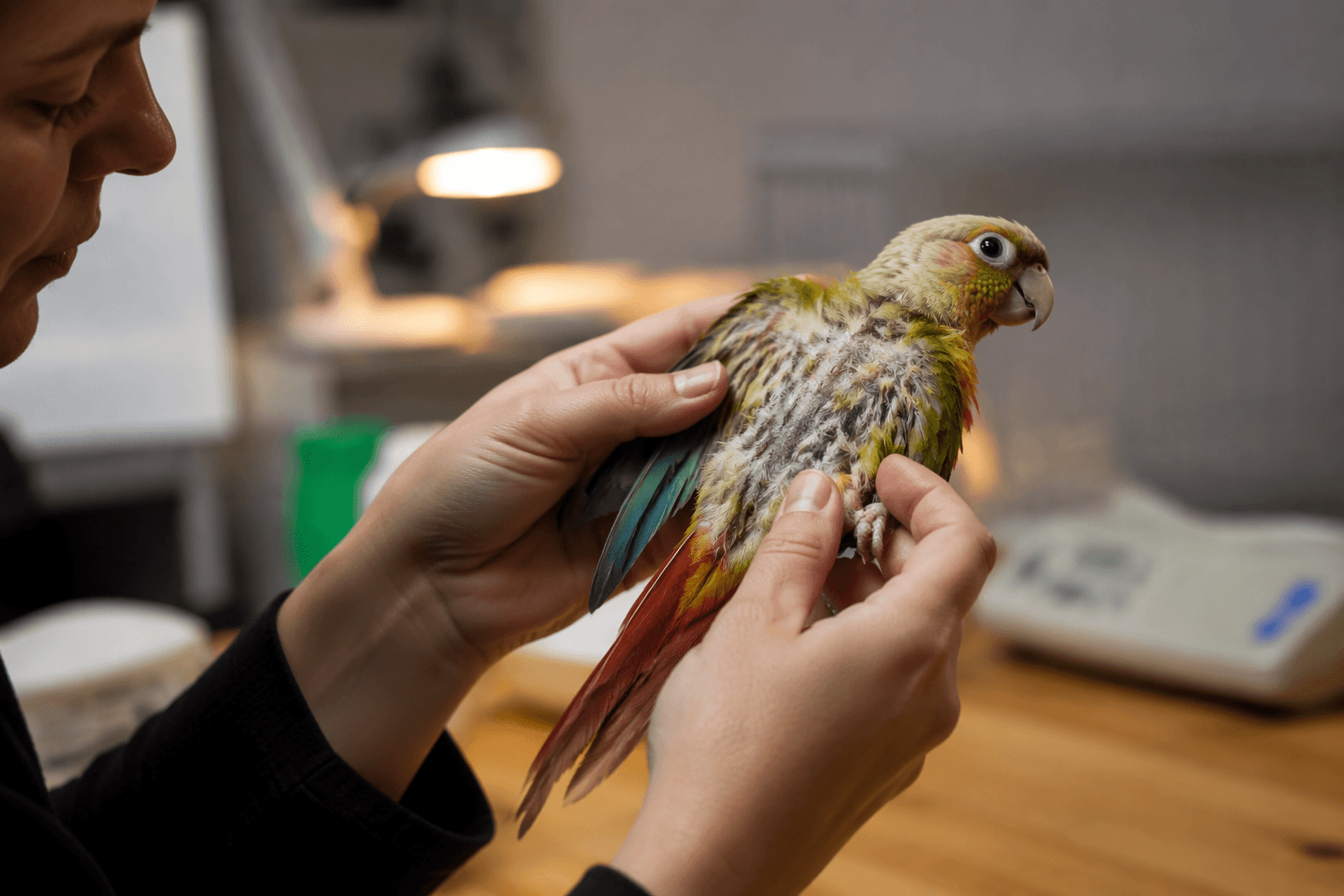
A parrot in molt can look like a tiny disaster zone: feathers on the cage floor, a scruffier outline, and pin feathers poking through on the head, neck, and body. That mess is often normal. The trick is knowing when you are looking at an orderly feather cycle and when you are seeing stress, parasites, infection, or self-plucking.
Start with the shape of the feather loss
Normal molt is usually symmetrical and orderly. You may see old feathers drop as new ones come in across both sides of the body, not a random patch of naked skin. That pattern helps separate routine molt from feather problems such as blood feathers, feather cysts, feather chewing, polyfolliculosis, and preening-gland issues.
Look closely at the skin under the missing feathers. A healthy molt should not leave raw, irritated, or inflamed skin behind. If the bird is losing feathers in patchy bald spots, has skin irritation, or just looks in poor condition overall, that is no longer the same thing as a normal molt.
What pin feathers tell you
Pin feathers are the giveaway most owners can spot right away. They are new feathers still protected by a waxy sheath, and they often show up on the head, neck, and body as the bird replaces old plumage. Because those feathers are tender, birds can become more sensitive to handling during molt, and rough preening around them can be uncomfortable.
That sensitivity is useful information. If your bird is simply less interested in being touched while pin feathers are coming in, that fits a normal molt. If the bird is frantic, obsessively scratching, or acting as if every touch hurts, start thinking beyond ordinary feather replacement.
What a normal molt usually looks like
Adult birds molt after the breeding season to replace feathers, and that timing can make the process feel seasonal rather than random. Molting is a cyclic process in birds, not a continuous shedding problem, and it can make a parrot look awkward or scruffy while the new plumage fills in.
Molt is a natural process essential for maintaining a parrot’s plumage health. That fits what owners see in real life: a bird may look uneven for a while, but it is still eating, active, and gradually filling in with new feathers rather than getting worse day by day.
- even feather replacement on both sides
- visible pin feathers
- no damaged skin
- normal appetite and energy
- temporary scruffiness without a general decline
A normal molt often comes with:
Red flags that point past molt
Feather loss is not automatically harmless. Feathers provide protection, insulation, flight, and visual signals to other birds, so feather problems matter even when the bird is not obviously sick.
- patchy bald spots instead of even replacement
- skin irritation or redness
- ongoing poor condition rather than a temporary scruffy look
- blood feathers, which are not routine molt feathers
- feather cysts or feather chewing
- obvious preening-gland problems
- behavior changes such as lethargy, poor appetite, or distress
The warning signs that push you out of the “wait and watch” category are practical and visual:
A bird that is losing feathers unevenly and also looks tired or off food does not belong in the same bucket as a bird with a normal seasonal molt.
The stress and self-plucking question
Stress can muddy the picture because feather loss from stress does not follow the tidy, symmetrical pattern of a healthy molt. Self-plucking and feather chewing are also separate concerns, not just “a bad molt.” Feather destruction is its own problem.
If your parrot is chewing feathers, barbering them, or removing them repeatedly from the same spot, that needs a closer look. A normal molt replaces feathers; it does not usually leave behind a pattern of destruction. When the bird seems irritated, overgroomed, or obsessed with one area, the likely cause is not just old feathers cycling out.
What to do today if you think it is a normal molt
The safest response is calm, supportive husbandry. Keep the bird well hydrated, offer a balanced diet instead of leaning on seed-heavy food, and avoid rough preening around delicate pin feathers. If the bird is active, eating, and the feather replacement looks even, monitoring at home is reasonable.
A simple decision checklist works well:
1. Check the pattern. If feather loss is symmetrical and orderly, that supports normal molt.
2. Check the skin. If the skin looks healthy, not red or irritated, that is reassuring.
3. Check the bird. If appetite and activity are normal, keep monitoring.
4. Check the feathers. If you see blood feathers, feather chewing, cysts, or patchy bald areas, escalate.
5. Check the timeline. If the bird is not improving or is sliding into poor condition, call an avian vet.
When to improve husbandry, and when to call the vet
If the bird is otherwise bright but the molt looks dramatic, focus first on support: water, good nutrition, and less handling on tender pin feathers. Molting can look much worse than it is, especially in species that replace many feathers at once.
Call an avian vet if the feather loss is patchy, the skin is irritated, the bird seems distressed, or the whole picture includes lethargy, poor appetite, or ongoing poor condition. Blood feathers, feather cysts, feather chewing, and preening-gland problems are not things to shrug off as normal shedding.
This article was produced by Prism’s automated news system from verified source data, official records, and press releases, then run through automated quality and moderation checks before publishing. The system is built and supervised by the people who set the standards it runs under. Read our full AI policy.
Did this article answer your question?