Teflon fumes can poison parrots, experts warn bird owners
Overheated nonstick cookware can kill a parrot within minutes, and self-cleaning ovens can be just as dangerous. Remove PTFE risks before the kitchen heats up.
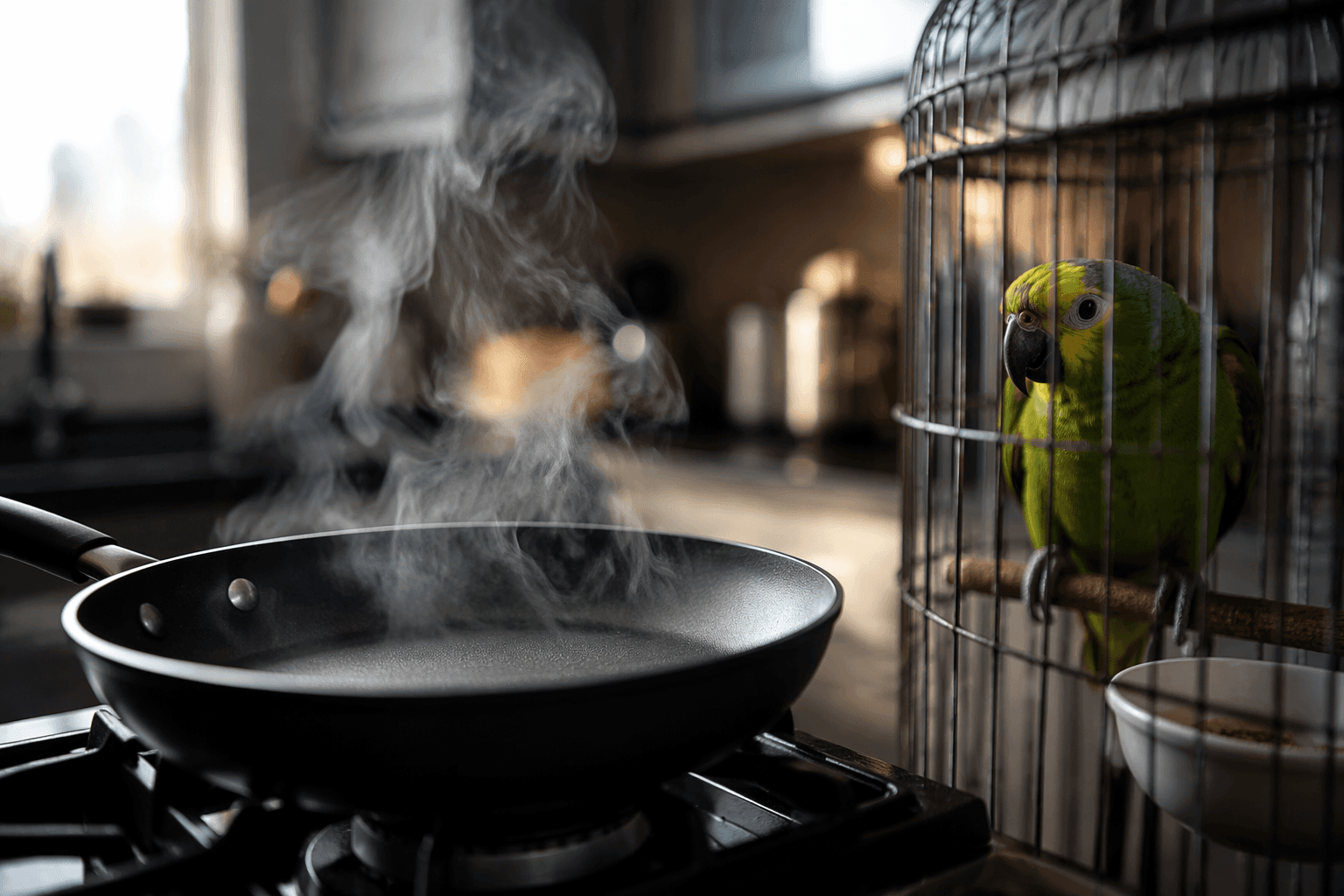
Overheated nonstick cookware can kill a parrot within minutes, and self-cleaning oven cycles can do the same kind of damage. PTFE, the chemical behind the Teflon brand, gives off fumes birds absorb far faster than humans do. In a bird home, that turns one ordinary kitchen mistake into a respiratory emergency.
Why PTFE keeps showing up in bird warnings
PTFE stands for polytetrafluoroethylene. EBSCO’s research starter dates its accidental discovery to 1938 and names chemist Roy J. Plunkett. PTFE-coated products are still everywhere, even though bird care circles have warned about them for years. Companion magazine warned on Feb. 23, 2023 that non-stick cookware can be very hazardous for bird species and that many bird parents are unaware of the danger.
The concern is not limited to parrots. Cornell University College of Veterinary Medicine published a March 8, 2021 discussion of PTFE toxicosis in ducks, and Texas A&M’s Veterinary Medical Diagnostic Laboratory maintains a case-study page on polytetrafluoroethylene toxicosis.
Where the danger starts in a normal kitchen
The risk point is overheating, not the simple presence of a pan in the cupboard. DuPont puts toxic particulate release from Teflon at 446°F and additional toxic gases at 680°F. That is why a pan left empty on a burner, preheated too long, or forgotten during cooking is so much more dangerous to birds than to people.
Self-cleaning ovens are another major hazard. A Feb. 8, 2010 Orange County Register column warned that self-cleaning oven fumes are deadly to birds. Fumes do not stay politely in one room, either, so a closed door is not a guarantee if the air is circulating through the home.
Prego Dalliance Sanctuary calls Teflon poisoning a "silent killer." Nothing about the kitchen may look dramatic while the heat is on, but the danger is the fumes. Bird is the Word advises getting rid of Teflon and other non-stick pans rather than treating them as occasional-use items if you keep birds.
What exposure can look like
PTFE fumes can move fast, and birds often show distress quickly. PTFE exposure can cause difficulty breathing, lethargy, sudden collapse, weakness, incoordination, coma, and death. In practice, that means the first clue may be a bird sitting fluffed, breathing hard, or suddenly dropping its usual alert posture after something was heated in the kitchen.
The problem can spread beyond a single bird. If more than one bird, or another pet, starts acting wrong after a cooking incident, treat the whole household as exposed and look for the source right away. Sudden unexplained death after kitchen fumes is also a classic red flag.
How to make the home safer before anything heats up
The simplest protection is removal. If you keep parrots, do not rely on a pan “only sometimes” being safe, because even occasional use can become a problem if it overheats. Replace PTFE-coated and other non-stick cookware with bird-safer materials, and make a habit of checking what is already in the kitchen before a heat source comes on.
The second protection is distance. Keep parrots out of the kitchen during cooking, and do not assume a shut door will protect them if fumes can travel through vents, hallways, or open rooms. Self-cleaning oven cycles should be avoided in bird homes, full stop, because the risk comes from the fumes themselves rather than from direct contact.
If a pan is left on too long, if an oven is started on self-clean, or if you smell overheated cookware, treat it as a bird-safety event immediately.
Prevention and response checklist
- Remove: Teflon and other PTFE-coated non-stick pans, especially any cookware that gets hot on a burner or in the oven.
- Avoid: Self-cleaning oven cycles, empty preheating of non-stick cookware, and any cooking setup that can overheat a coated surface in a bird-occupied home.
- Watch for: Difficulty breathing, wheezing, lethargy, weakness, incoordination, collapse, coma, or sudden death after kitchen fumes.
- Do immediately: Move the bird away from the kitchen and into fresh air, stop the heat source if you can do so safely, and contact an avian veterinarian or emergency clinic at once.
- Treat as urgent: Any exposure involving more than one bird or any symptom that starts soon after cooking or oven cleaning.
This article was produced by Prism’s automated news system from verified source data, official records, and press releases, then run through automated quality and moderation checks before publishing. The system is built and supervised by the people who set the standards it runs under. Read our full AI policy.
Did this article answer your question?