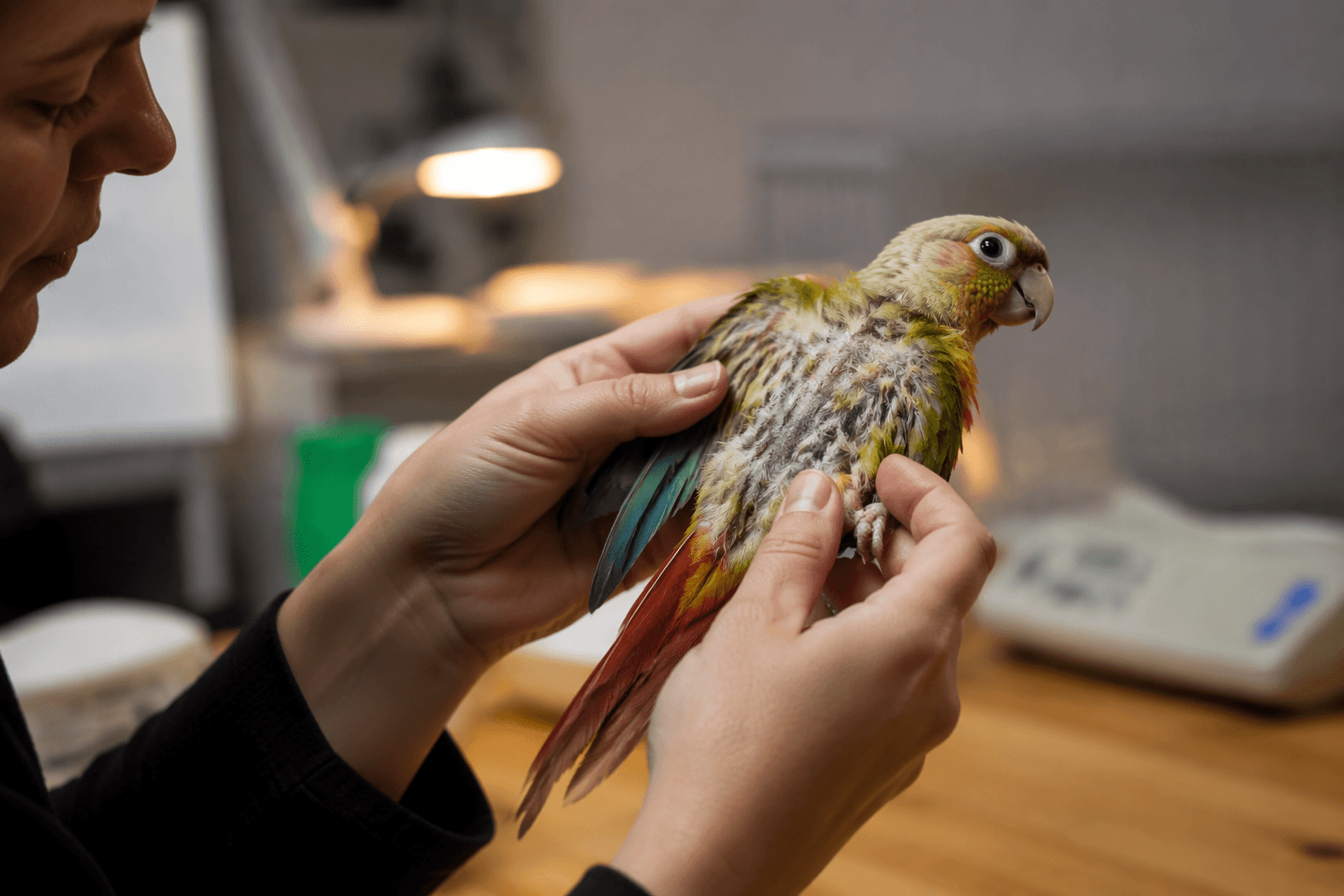
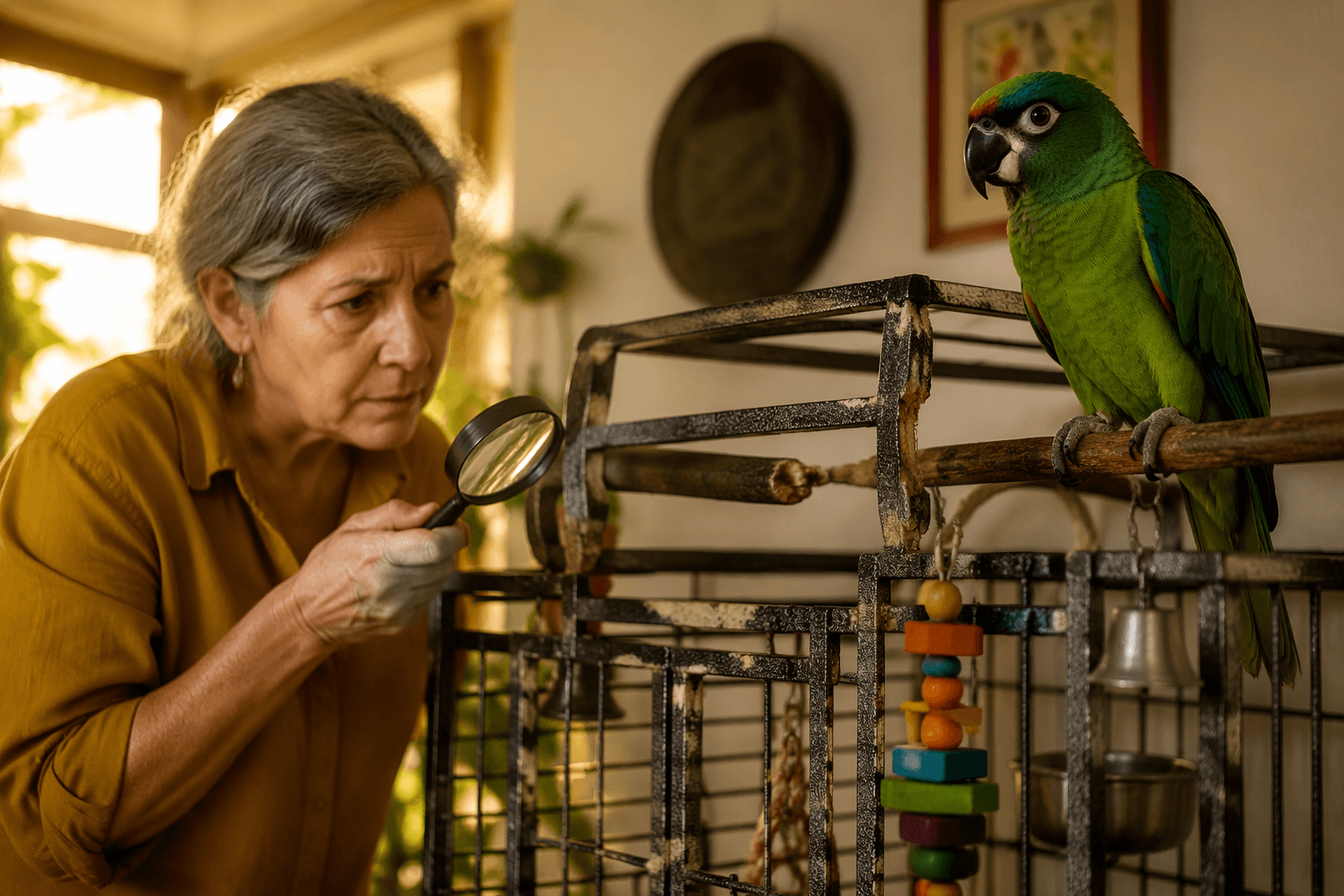
Wing clipping reduces lift, but not parrot safety risks
Clipping can reduce lift for a while, but it does not erase the biggest house risks. The hard part is matching flight, training and supervision to the bird in front of you.
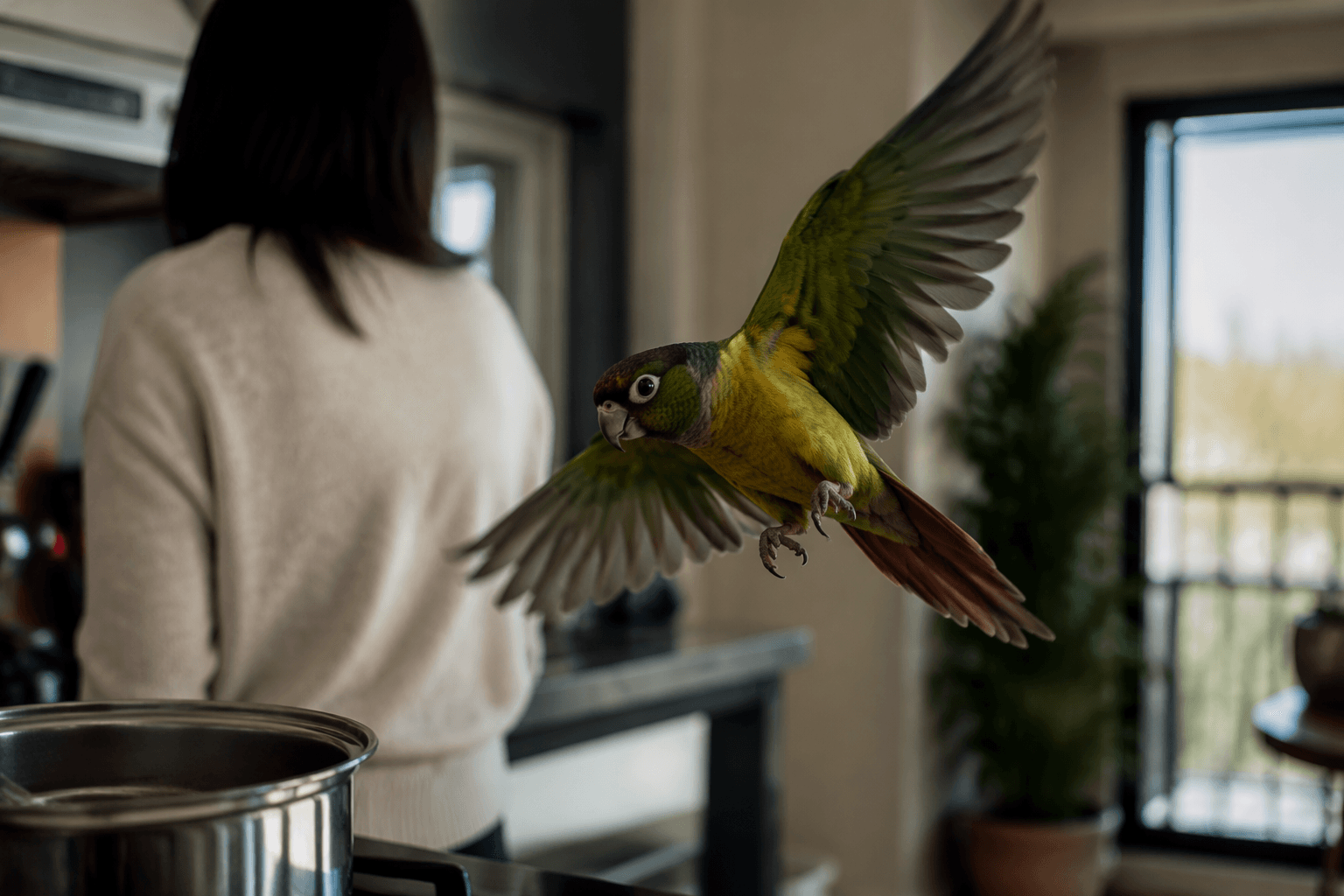
Wing clipping lowers a parrot’s ability to gain lift, but it does not make a bird automatically safe. It is a narrow tool, not a cure-all: an uncluttered room, recall training and close supervision still matter every time the bird is out.
What clipping actually changes
Clipping does not remove the bird’s need to manage descent. Kaytee identifies wing clipping as a temporary change because flight feathers grow back with each successive molt, and the goal is to limit lift while still allowing a glide downward. That means the bird may be less able to launch across a room, but it is still moving through space and still needs safe landings.
An over-clip can create its own problems. An improper trim can leave a bird unstable in the air, more likely to fall, and less able to control where it comes down. In practice, a bad clip can replace one risk with another, especially if the bird loses the ability to steer enough to reach a perch, cage top or soft landing spot.
When clipping enters the conversation
The situations that push people toward clipping are usually household hazards, not abstract philosophy. Ceiling fans, open doors, large windows, other pets, and children who forget to secure exits are the classic pressure points. If those risks are in your home, the first fix is still the room itself: fans off, windows covered, toxic rooms closed, and landing zones cleared before the bird ever comes out.
Wing clipping can be part of a safety plan, but it is not a substitute for bird-proofing, and it is not a replacement for recall work or supervision. Because feathers grow back during molt, a clip is not a one-time solution either; if you keep using that strategy, it has to be maintained as the bird cycles through new feather growth.
Why welfare makes this a bigger decision
The Association of Avian Veterinarians identifies wing trimming in pet parrots as a welfare issue, and the Parrot Society UK’s 2023 update, written by Alan K Jones BVetMed MRCVS, places wing clipping in the middle of a broader debate about parrot welfare. Flight is built into how birds function.
Avian physiology has developed around flight. Bone and muscle structure, gastrointestinal physiology and kidney function have all evolved around that activity, and birds use flight to forage, socialize or breed, and escape danger and predation. That is why some parrots become more nervous after a clip, losing a natural escape route, while others simply become more dependent on climbing and human supervision.
The AAV Avian Welfare Committee deals with welfare-related issues every day, including rehoming parrots, providing foraging opportunities, wing trims and diet recommendations. The committee’s 2023 article, “Resistant Attitudes Toward Avian Welfare: The Prehistory of Avian Abuse,” published on 2023-02-13, aims to educate and improve welfare conditions and standards for pet, companion, captive and dependent parrots.
How to clip responsibly if you decide to do it
If you are considering clipping, the decision should follow careful consultation with an avian veterinarian. The choice to clip or not clip wings should come after that consultation, and the bird professional doing the work needs to understand species differences, body size and how much feather should be removed for a balanced reduction. A one-size-fits-all approach is exactly what you want to avoid.
In Pets and Their People’s wing-clip information sheet, clipping both wings is best if clipping must be done, and 5 to 7 primary feathers are usually cut, below the coverts, on both wings. Feather length and the amount removed depend greatly on the bird’s species, age, weight and personality, which is why an experienced avian vet or bird professional should make the final call.
Balancing flight, training and home safety
The safest approach is to treat clipping as one option inside a larger plan, not the whole plan. For many birds, protected flight or harness training may be the better route, especially when the home can be made safer without removing flight completely. Even when a clip is chosen, recall training and supervision still have to stay in place, because a clipped bird can still fall, glide, or find a dangerous landing spot.
- secure ceiling fans before out-of-cage time
- cover or block large windows and mirrors
- shut toxic rooms and keep doors closed
- clear high landing spots and hard drop zones
- use recall cues and supervised out-of-cage time even if the bird is clipped
A practical checklist keeps the decision grounded:
A clip can reduce lift, but the same bird still faces fans, windows, falls and household mistakes if the room is not prepared.
This article was produced by Prism’s automated news system from verified source data, official records, and press releases, then run through automated quality and moderation checks before publishing. The system is built and supervised by the people who set the standards it runs under. Read our full AI policy.
Did this article answer your question?