How to Spot Hormonal Behavior in Parrots and Respond Wisely
A cranky parrot is not always a naughty one. Learn the body-language clues that point to hormones, then change the home setup before stress turns into egg-laying or aggression.
When a parrot’s “weird phase” may actually be hormones
A parrot that suddenly starts cooing, wing-flapping, nest-seeking, or snapping at familiar hands is not always being difficult. Pet birds can breed at any time when the environment, day length, nutrition, and the presence or perceived presence of a mate or nest box line up in the right way, which means the home itself can accidentally signal breeding season year-round.
That is what makes hormonal behavior so confusing. Owners often read it as defiance, moodiness, or a personality shift, when it may be a normal reproductive state showing up as a change in sound, posture, and tolerance. If those signals are ignored or mistaken for bad behavior, the bird can end up living under chronic stress, and that stress can drag down overall well-being.
Read the behavior, not the label
The most useful clue is the pattern. Hormonal parrots often become louder, more territorial, or more possessive of people, corners of the cage, or favorite perches. VCA Animal Hospitals lists territorial aggression, screaming, feather destructive behavior, nesting, biting, chasing, increased vocalization, wing and tail fanning, and egg-laying without a male present among the common sexual behavior changes seen in birds.
That spread matters because hormonal behavior does not always look dramatic at first. Sometimes it starts with persistent cooing, a bird crouching low, or a sudden interest in dark spaces and enclosed spots. Other times the first warning is a parrot that seems fine one day and then becomes irritable, reactive, or unusually focused on a person who has become the bird’s preferred mate surrogate.
One detail many owners miss: many pet birds are not sexually dimorphic, so appearance alone may not tell you whether you are dealing with a male or female. If sex matters for the case, a veterinarian may need to confirm it with DNA sexing or an endoscopic exam instead of relying on visual guesswork.
What at home can accidentally say “mate”
The environment often feeds the behavior more than people realize. MSD Veterinary Manual notes that certain forms of handling can send a sexual message: petting the bird’s body, cuddling the bird close, and offering warm foods that resemble a cagemate’s courtship regurgitation. Those gestures can feel affectionate to us while landing very differently for the bird.
This is why management beats punishment every time. Hormonal behavior is a biological state, not a character flaw, and the goal is to remove the cues that are keeping the bird switched on. The stronger and more consistent the home signals become, the less likely the bird is to keep treating everyday interactions like breeding cues.
What to change first:
- Stop petting anywhere below the head unless your avian vet has advised otherwise.
- Keep cuddling and close-body contact to a minimum if it tends to rev the bird up.
- Avoid warm foods that may resemble regurgitation-style courtship feeding.
- Review sleep and daily routines, because photoperiod and routine can both influence breeding behavior.
- Remove or limit access to anything in the environment that is acting like a nest invitation.
The key is consistency. If one family member treats the bird like a chick and another tries to set boundaries, the bird gets mixed messages and the cycle can intensify.
What not to reinforce
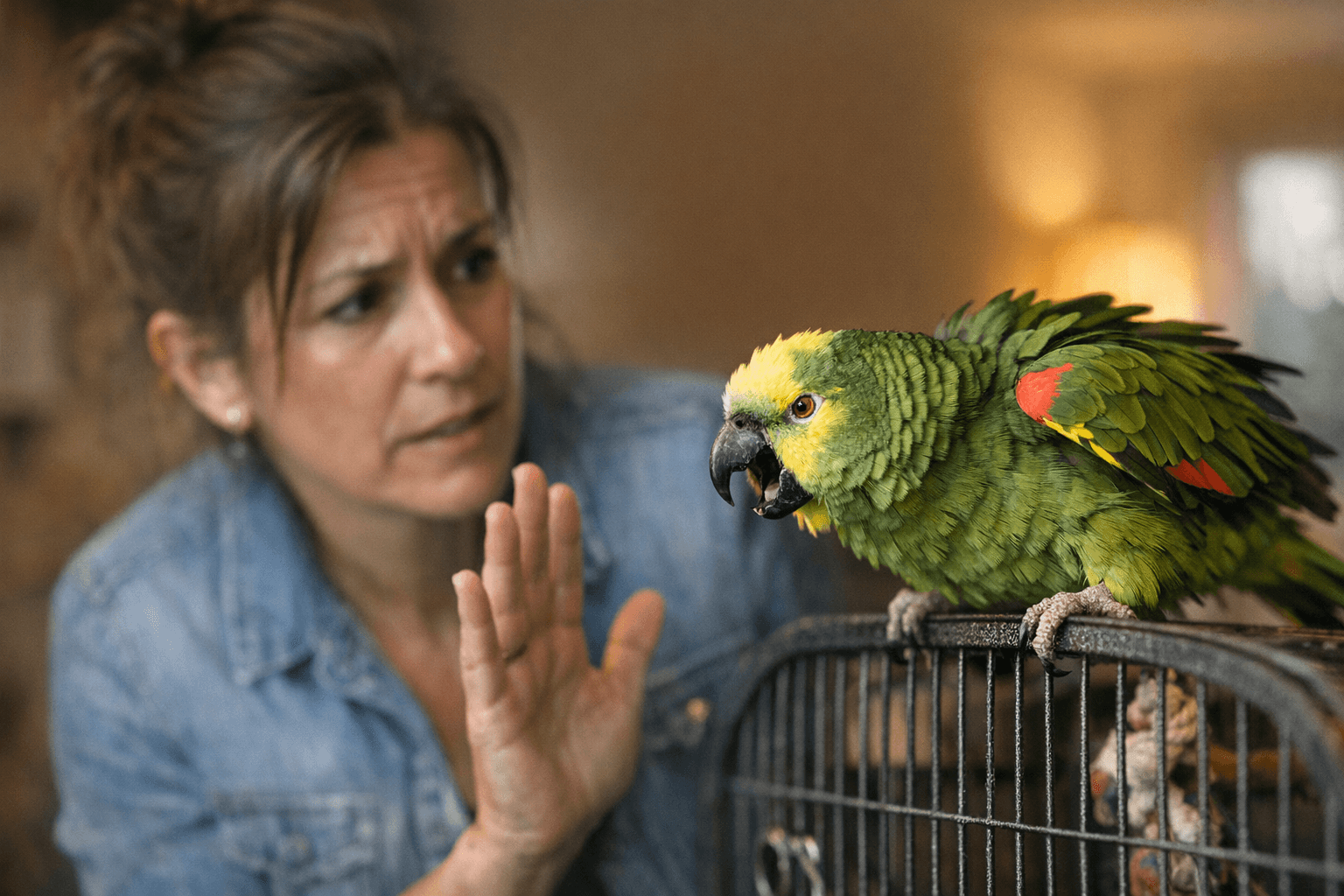
When a parrot is hormonally charged, the wrong response can accidentally reward the exact behavior you want to fade. Yelling may turn into attention, chasing may feel like a game, and repeated handling may be interpreted as invitation rather than correction. Management means changing the setup and your responses, not escalating the bird’s frustration.
MSD Veterinary Manual also says that if you are serious about changing sexual behavior, the help of a behavioral consultant will likely be necessary. That is not a sign you have failed; it is a sign the issue has moved beyond simple everyday handling. Birds learn patterns quickly, and once a hormonal routine is established, it can take deliberate retraining to unwind it.
When “hormonal” is not the whole story
Not every strange behavior is reproductive, and this is where the stakes get higher. Feather destructive behavior can be tied to sexual frustration, boredom, territoriality, compulsive behavior, predator stress from household pets, and even a lack of parental training for preening. In other words, plucking, screaming, or sudden aggression may sit at the intersection of hormones and stress rather than being caused by hormones alone.
That distinction matters because some problems can snowball fast. MSD Veterinary Manual notes that some over-stimulated birds begin laying eggs or masturbating early, which can lead to egg binding or cloacal prolapse, along with feather destructive behavior or screaming. VCA adds that chronic egg laying can deplete calcium, contribute to malnutrition, and lead to infection or inflammation of the oviduct, as well as egg binding.
Amazon parrots deserve extra attention here. VCA says they are especially prone to feather destructive behavior and mating-season aggression, and some birds become so aggressive that they are surrendered to shelters. When the behavior turns this intense, it is no longer a small household nuisance; it is a serious welfare problem.
When the vet visit is the smarter move
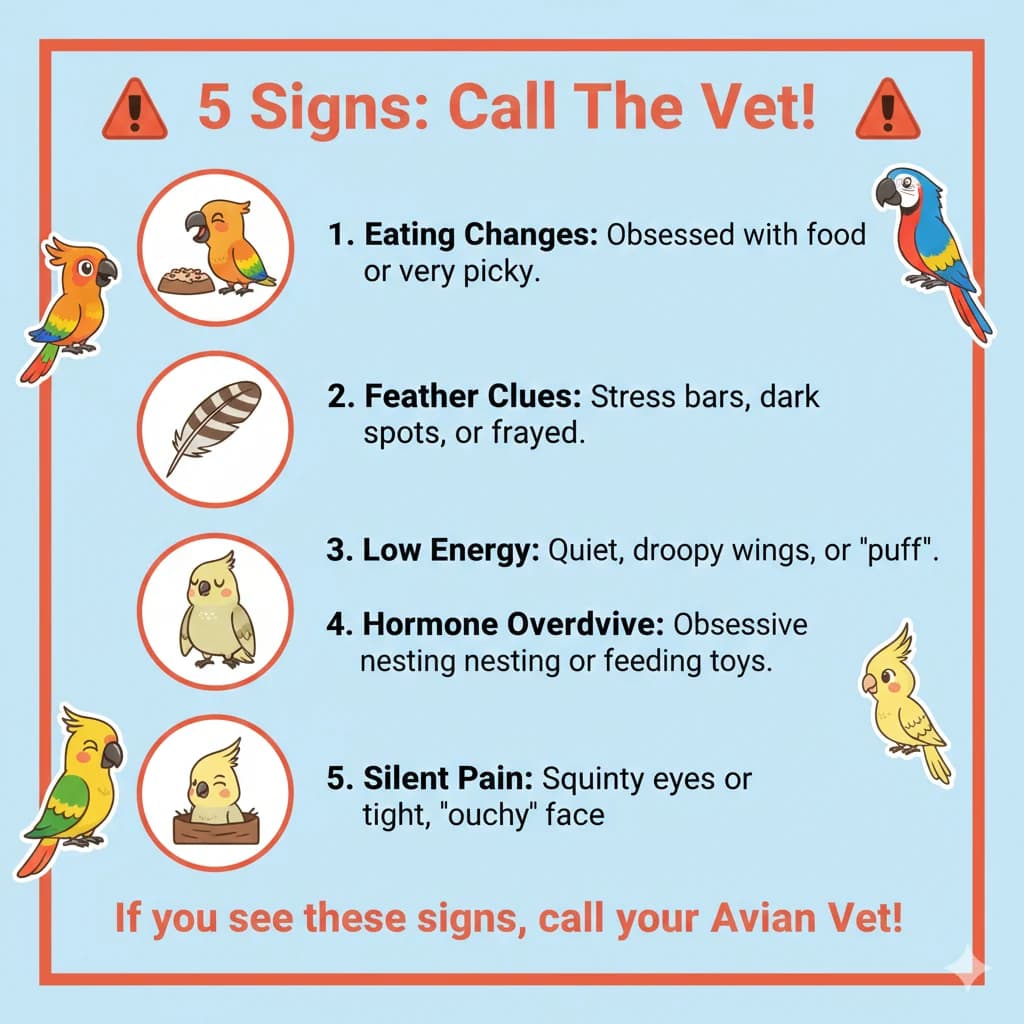
A vet visit becomes the right move when the behavior escalates, repeats, or starts to carry health risk. Egg laying, bleeding, straining, prolapse concerns, feather destruction, persistent screaming, biting that changes sharply from baseline, or a bird that seems locked into a reproductive pattern all justify a professional look. If sex has never been confirmed and the bird’s behavior is confusing the picture, DNA sexing or an endoscopic exam may help bring clarity.
The good news is that avian medicine is paying close attention to this issue. The Association of Avian Veterinarians offered a March 14, 2025 webinar titled Avian Vet Insider: Parrot Hormones - Case Studies & Medical Issues, and it continues to provide bird-owner resources and a Find-a-Vet tool. That kind of support reflects what experienced parrot people already know: hormonal behavior is common, complicated, and best handled with informed, calm intervention.
The safest approach is simple even when the behavior is not. Read the bird’s body language, stop sending sexual signals from the home, and get help early when the changes look more like a health or welfare issue than a bad mood.
This article was produced by Prism’s automated news system from verified source data, official records, and press releases, then run through automated quality and moderation checks before publishing. The system is built and supervised by the people who set the standards it runs under. Read our full AI policy.
Did this article answer your question?