Understanding Pin Feathers, Why Molting Makes Parrots Sensitive and Fussy
Pin feathers can make a parrot crabby, but bleeding, uneven loss, or broken growth is the line between normal molt and vet trouble.
Pin feathers are part of the job, not a problem by themselves
The messy, itchy-looking stage of molt is usually just a bird growing in a fresh set of feathers. Merck Veterinary Manual notes that birds replace most of their feathers at least once a year, and some species have a partial molt about six months later, so a parrot that suddenly seems fussy is often right on schedule rather than in trouble. In North America, many species start their major molt around mid-February and finish about a month later; South American parrots usually skip the fall molt, while some Old World parrots, especially cockatiels, may drop feathers in early September.
That timing matters because molting is not a cosmetic event. It is metabolically demanding and shaped by hormones plus environmental cues such as day length, so the bird’s body is working hard while new feathers push through the skin. Larger parrots may molt more slowly or partially throughout the year, which is why some birds seem to stay in that awkward, scratchy phase for longer than you expect.
What a pin feather actually is
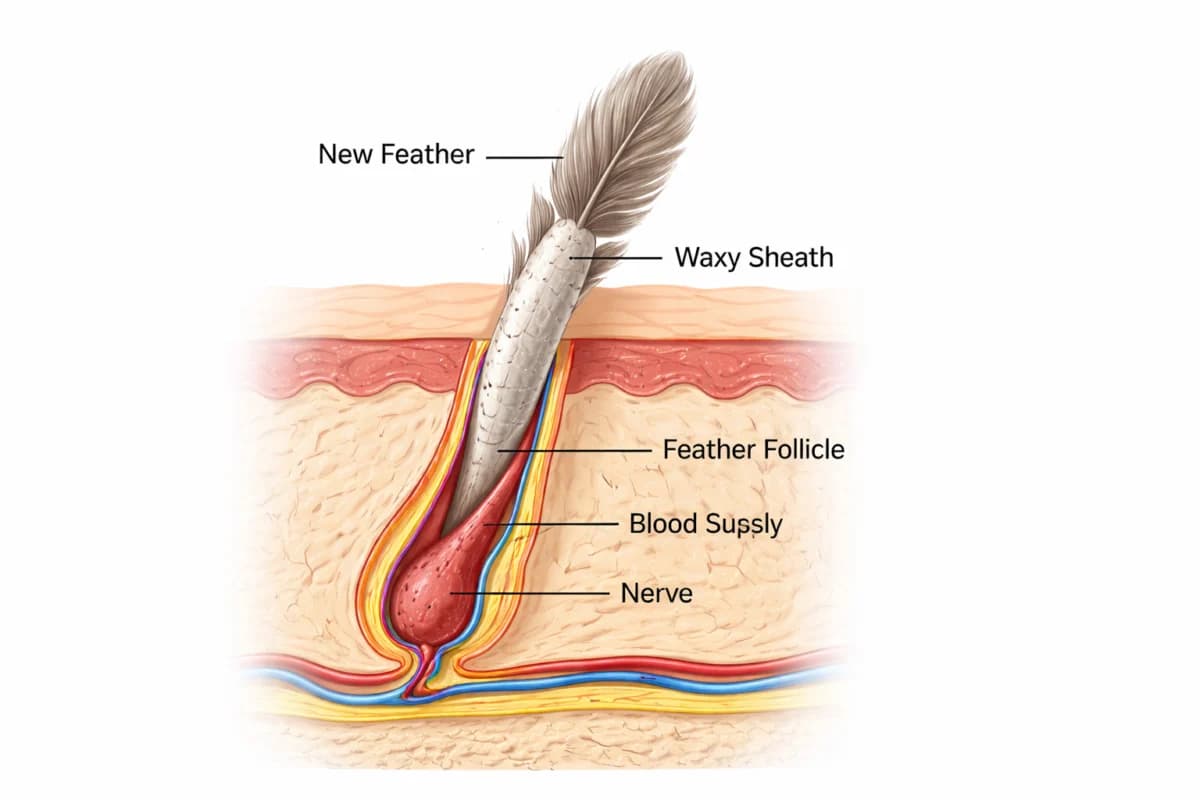
A pin feather is a new feather growing from a follicle. At first, it is wrapped in a keratin sheath and blood is still flowing through it, which is why it can look like a tiny quill and feel tender when you touch it. VCA Animal Hospitals points out that some pin feathers are sensitive, and birds may dislike being handled during molt for exactly that reason.
That sensitivity is normal. A bird may preen more, scratch more, or guard certain spots, especially if a feather is emerging in a place the bird cannot easily reach. What you are seeing is not automatically irritation from disease, it is often just the mechanics of feather replacement.
How to help without making the feather hurt more
This is where many owners overcorrect. A molting parrot does not need every weird-looking pin feather handled, picked at, or tested with your fingers. The safest default is to observe closely, keep the bird comfortable, and let the feather mature on its own.
Some birds enjoy a gentle “preening buddy” to help loosen the sheath as the feather finishes growing, but that only works when the bird is relaxed and inviting the contact. The rule is simple: do not pull at the feather at home. If the feather is still encased, the bird is not only protecting it, the body is still feeding it.
A good molt routine looks like this:
- Watch for normal signs such as extra preening, mild crankiness, and temporary sensitivity.
- Keep handling light if the bird flinches, pins the eyes, or moves away from touch.
- Let the sheath come off naturally unless your avian veterinarian has told you otherwise.
- Treat a damaged or bleeding feather as a real problem, not a DIY grooming task.
When normal molt turns into a vet issue
The clearest emergency is a damaged blood feather. If it bleeds and the bleeding does not stop within 2 to 3 minutes, avian-veterinary care is recommended. VCA Animal Hospitals warns that pulling a blood feather at home is not the answer, because it can cause more bleeding and permanent follicle damage. If you see a constant drip of fresh blood, that is the moment to act quickly, not wait and hope it settles.
Do not assume feather loss is always seasonal, either. Feather damage can come from parasites, bacteria, fungi, malnutrition, barbering by cage mates, cage trauma, irritants, or feather-destructive behavior. If the loss is uneven, the bird cannot seem to settle, or the new growth looks abnormal, the pattern stops looking like ordinary molt and starts looking like a health or behavior problem.
Why feather changes matter beyond appearance
Modern pet birds are mostly captive-bred parrots, after mass importation of wild-caught psittacines was curtailed in the mid-1980s. That shift changed the job description for owners: nutrition, behavior, enrichment, cage size, social interaction, and owner education are now central parts of routine care, not extras. Feather condition sits right in the middle of that picture because it reflects both physical health and daily management.
UC Davis Veterinary Medicine notes that feather-picking does more than ruin a bird’s look. It reduces the bird’s ability to keep warm and dry, and it can lead to skin infections or more serious complications. Merck Veterinary Manual also describes feather-plucking, now commonly called feather destructive behavior, as a range that can run from mild overpreening to self-mutilation, with medical causes, psychological causes, and malnutrition all in the mix, and malnutrition described as a likely common contributing factor.
That is why a fussy molting parrot deserves a careful eye, not panic. Normal pin feathers are tender, temporary, and part of the cycle; trouble signs are bleeding that keeps going, uneven loss, abnormal growth, and behavior that turns from mildly annoyed into persistently unwell. If you learn that line, molt stops being a scare and becomes what it should be: a predictable, manageable stretch in a parrot’s year.
This article was produced by Prism’s automated news system from verified source data, official records, and press releases, then run through automated quality and moderation checks before publishing. The system is built and supervised by the people who set the standards it runs under. Read our full AI policy.
Did this article answer your question?