New Zealand's Kākāpō Breeding Season Breaks Records with 100 Chicks Hatched
A kākāpō chick named Huhu-A3-2026 needed CPR to survive; it's one of 100+ hatched this season, the biggest breeding boom since records began.
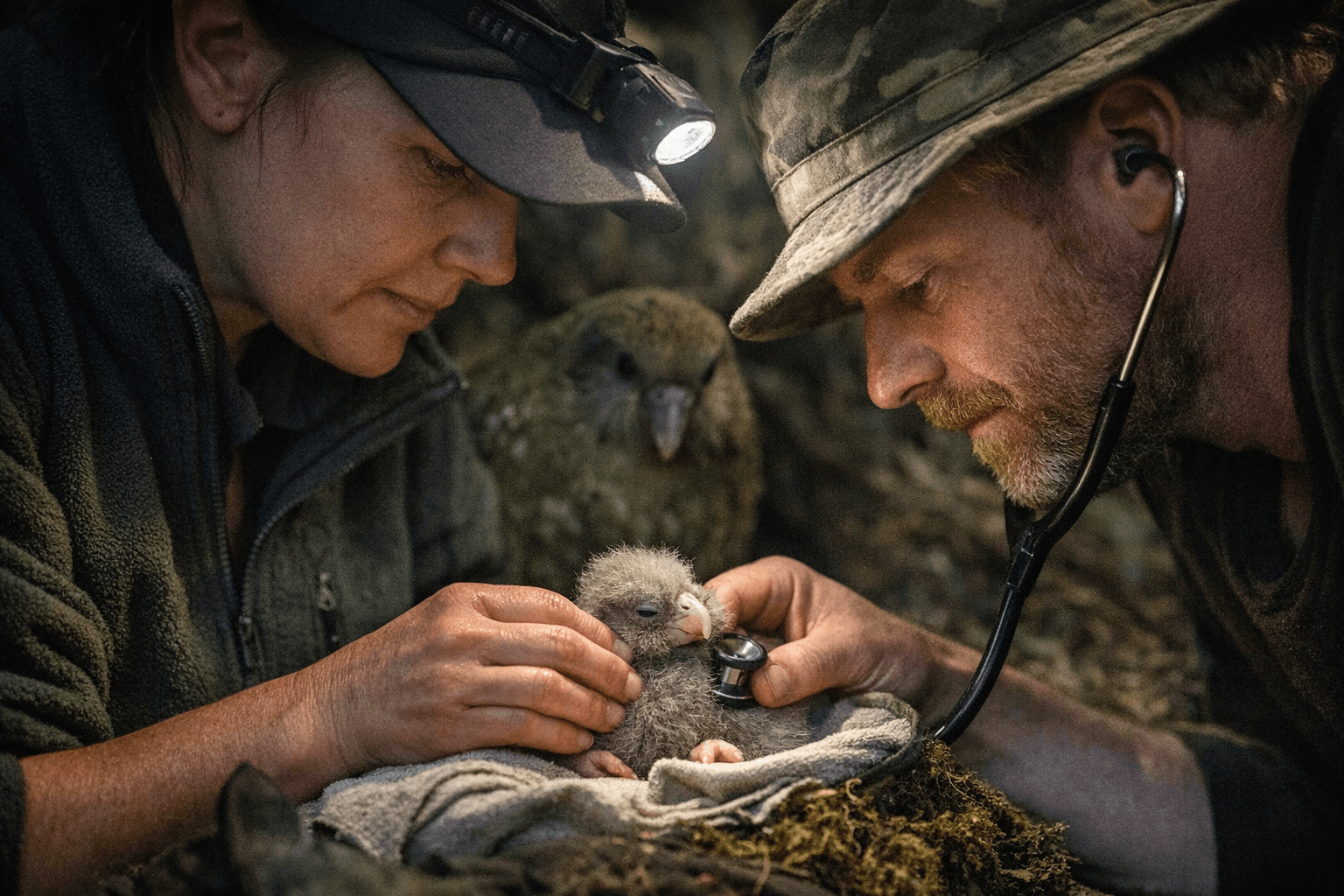
The 100th kākāpō chick of New Zealand's 2026 breeding season hatched last week, shattering the previous record and delivering the species its most productive season since the recovery programme began. Behind that number is a season that looked more like a wildlife emergency room than a wildlife reserve.
Auckland Zoo vet Adam Naylor was on Whenua Hou / Codfish Island when he arrived at a nest to find a newly hatched chick, named Huhu-A3-2026, lying floppy and an unsettling shade of purple. "My vet training kicked in, and I started doing some very tiny CPR," he told the Kākāpō Files podcast. "I just blew gently into its mouth, to try and get some air into it and get it breathing again. And after a minute or so it suddenly took a breath." He called it "a scary moment for all of us, including the DOC ranger" and confirmed that by the following day, Huhu-A3-2026 had "bounced back remarkably well."
Naylor's work on the island involved more than one close call. Timely sutures saved the life of another chick whose condition deteriorated after hatching, with both patients eventually returned to their mothers or foster mothers.
Not every drama unfolded in crisis. One chick, Rakiura-A2-2026, became a minor public figure when the Kākāpō Cam live feed captured its egg being laid in real time. The footage drew broad attention and reinforced public support for the recovery programme in a way that conservation reports rarely manage.
The kākāpō's adult population stands at just 235 individuals. With 78 females nesting across three predator-free islands, Whenua Hou, Pukenui/Anchor Island, and Te Kākahu-o-Tamatea, this was already the most active nesting season on record before the Department of Conservation confirmed the 100-chick threshold on March 26. The previous benchmark had been set in 2019.
Kākāpō only breed during rimu mast years, episodic events when the native rimu produces a heavy fruit crop, occurring roughly every two to four years. This was the first breeding season since 2022. The first chick of the season, Tiwhiri-A1-2026, hatched in foster mother Yasmine's nest on Pukenui/Anchor Island on Valentine's Day.
More chicks has meant more logistical complexity. Foster-rearing decisions, supplemental feeding rotations, and real-time calls about which chicks stay with their mothers and which are transferred have all multiplied alongside the hatch count. Every naming code reflects the mother, clutch, and year, a system tracking not just the individual bird but its lineage in a species where 100 chicks represents nearly half the living adult population.
What pet parrot owners can take from this season: the interventions that saved Huhu-A3-2026 are a direct lesson in how fast a bird's condition can turn. Watch for floppiness, abnormal color around the skin and beak, labored breathing, or a chick that has stopped vocalizing or begging at the expected developmental stage. The kākāpō programme runs 24-hour nest surveillance precisely because the window to intervene is measured in minutes, not hours. If a bird in your care shows any of those signs, same-day contact with an avian vet is the call, not a wait-and-see overnight.
Know something we missed? Have a correction or additional information?
Submit a Tip