Overgrown parrot beaks, when to worry and when not to trim
A long parrot beak is not always a crisis. If eating, climbing, and preening still look normal, the real clue is function, not appearance.

When a beak looks dramatic, start with function
The first question is not whether your parrot’s beak looks long. It is whether the bird can eat, climb, chew, forage, and preen without stumbling over that beak every day. A curved, oversized, or oddly shaped beak can still be normal if it is working the way it should. The dangerous mistake is treating appearance alone like an emergency and reaching for a trim when the real story may be nothing more than natural anatomy.
That functional test is the heart of smart beak care. If your bird is cracking food, picking up pellets, working through fresh foods, and grooming normally, the beak may simply be unusual, not unhealthy. Once the beak starts interfering with daily life, though, it stops being cosmetic and starts being a health problem.
What an overgrown beak actually is
A true overgrown beak is one that is not wearing down through normal use. Eating, chewing, and foraging are what keep a beak in balance, so when that wear breaks down, the beak can lengthen, curve, or layer unevenly. That change can happen gradually or appear more suddenly, depending on the cause.
The important distinction is this: an overgrown beak is not just a bird with a big-looking bill. It is a beak that no longer functions well enough to support daily life. That is why a bird that still handles food, moves confidently, and keeps itself clean may need only observation, while a bird that struggles with those tasks needs veterinary attention.
Signs that mean monitor at home
Some birds look a little odd and still do everything they need to do. In those cases, the right move is careful watching, not home trimming. If the bird is active, eating normally, and able to preen and climb, the beak may be long-looking but still functional.
Watch for stability, not just shape. If the beak has looked unusual for a while without any change in appetite, energy, or grooming, that is very different from a beak that is rapidly changing or starting to interfere with routine behaviors. A healthy bird with appropriate items to chew on usually does not need beak trimming at all.
Warning signs that mean book an avian vet now
Once the beak starts affecting how the bird lives, it is time for a veterinarian, not a file or clip at home. The clearest red flags include difficulty picking up or chewing food, dropping pellets or fresh foods, or a shift toward soft foods only. Weight loss is another major warning sign, especially when it appears alongside a beak that is visibly changing.
Also watch for misalignment between the upper and lower beak, cracks or splits that run deep, and uneven or rapid regrowth after a previous trim. Behavior matters too. Irritability, lethargy, and reduced activity can all be the first clues that the beak is causing pain or that a bigger medical problem is hiding underneath.
Why not to trim it yourself
Home trimming is where a cosmetic concern can become an emergency. The beak is not a dead shell. It contains living tissue, nerves, and blood vessels, which means aggressive trimming can cause pain, bleeding, and nerve injury. It can also make eating harder, which is the exact opposite of what any good correction should do.
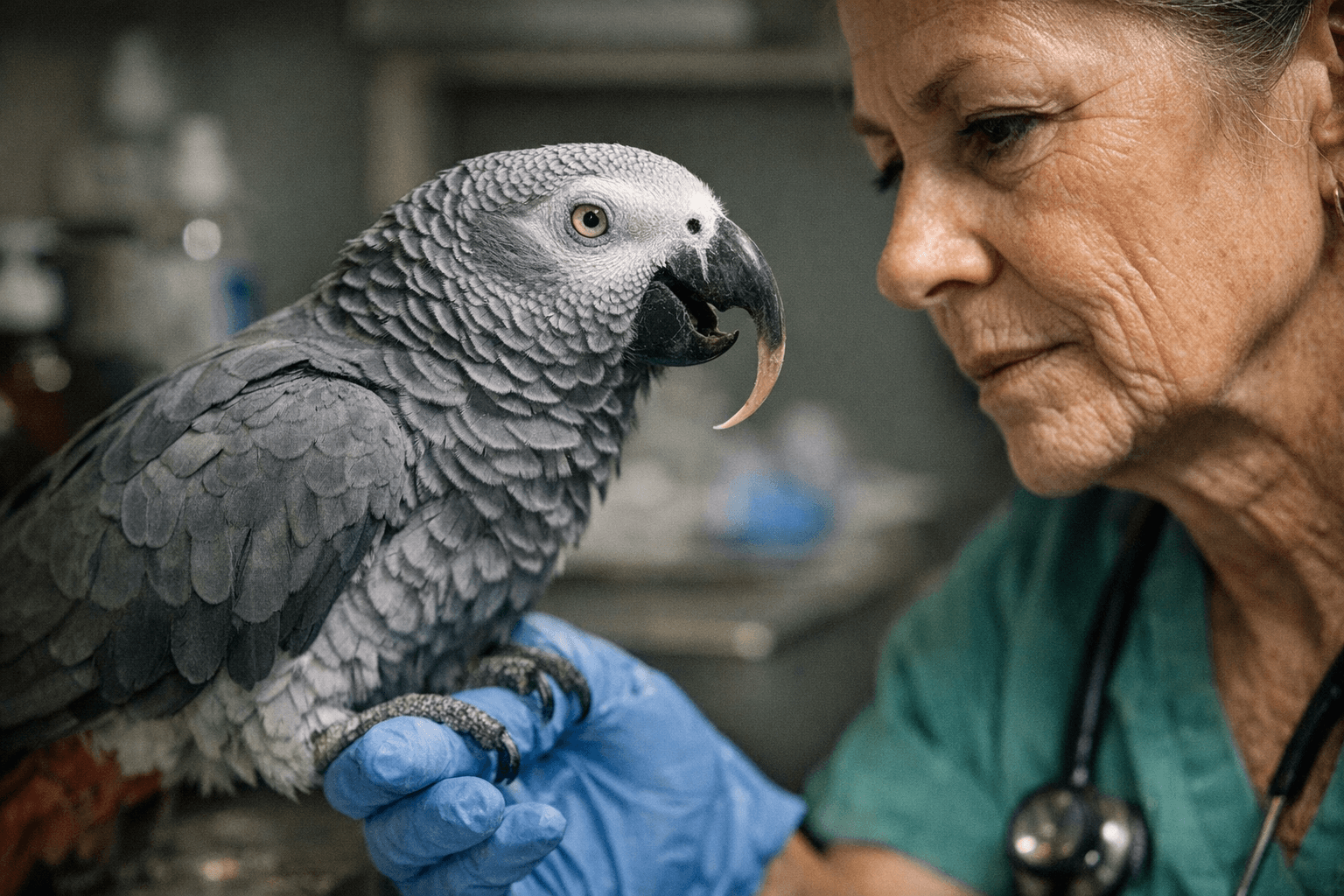
VCA Animal Hospitals specifically warns against home beak trimming because a large blood vessel runs down the center of the beak and can bleed heavily if nicked. That is why even a bird that looks obviously overgrown should be handled with restraint. Merck Veterinary Manual also advises that if a beak looks overgrown, the bird should be taken to a veterinarian.
What can be hiding behind beak overgrowth
A long or misshapen beak is often not caused by a simple lack of chewing. VCA notes that overgrown beaks are frequently a sign of an underlying medical problem. Common causes include liver disease, scaly beak and leg mites, fungal infection in the beak layers, prior trauma, and cancer of the beak.
That is the part many owners miss. The beak is sometimes the symptom, not the disease. If the beak is changing because of illness, trimming the tip does nothing to fix the reason it grew that way in the first place. A proper exam is the only way to sort out whether the problem is injury, infection, parasites, or something more serious.
Why avian specialists take beak changes seriously
Wild bird research has shown that abnormal beak growth can be more than a grooming issue. Avian keratin disorder, or AKD, was first documented in black-capped chickadees in Alaska in the late 1990s. Since then, similar deformities have been recorded in dozens of bird species across multiple continents.
A 2018 study reported an association between AKD and Poecivirus in Alaska black-capped chickadees, and a U.S. Geological Survey publication says poecivirus has been found in beak-deformity cases in seven North American bird species. That history is a reminder that beak changes can signal disease at both the individual and population level. A strange beak is not always a trimming problem. Sometimes it is a clue.
How to keep a beak healthy in the first place
Healthy beaks are maintained through use. Chewing, foraging, and enrichment help wear the beak naturally, which is why birds with good chewing opportunities usually do not need routine trimming. Think about the beak as part of daily husbandry, not a cosmetic feature to correct on a schedule.
Practical care means giving your bird safe items to destroy, chew, and explore. It also means paying attention to appetite, food handling, and grooming habits so you can catch changes early. The Association of Avian Veterinarians recommends regular checkups for companion birds, and that advice fits the beak perfectly: routine exams make it easier to spot small changes before they become big ones.
The bottom line
A beak that looks long is not automatically a beak that needs cutting. If your parrot is eating well, climbing well, and preening normally, the shape may be unusual but harmless. The moment food handling, weight, behavior, or beak alignment starts to change, the safer move is an avian veterinary exam.
Beak care is not about making a bird look neat. It is about protecting the tool that lets the bird eat, explore, and stay alive.
This article was produced by Prism’s automated news system from verified source data, official records, and press releases, then run through automated quality and moderation checks before publishing. The system is built and supervised by the people who set the standards it runs under. Read our full AI policy.
Did this article answer your question?