Plan Now for Parrot Care, Protect Birds Through Lifelong Changes
Your parrot’s safety plan starts with one hard question: who takes over tomorrow? A backup caregiver, written routine, vet records, and a pet trust can keep that answer ready.
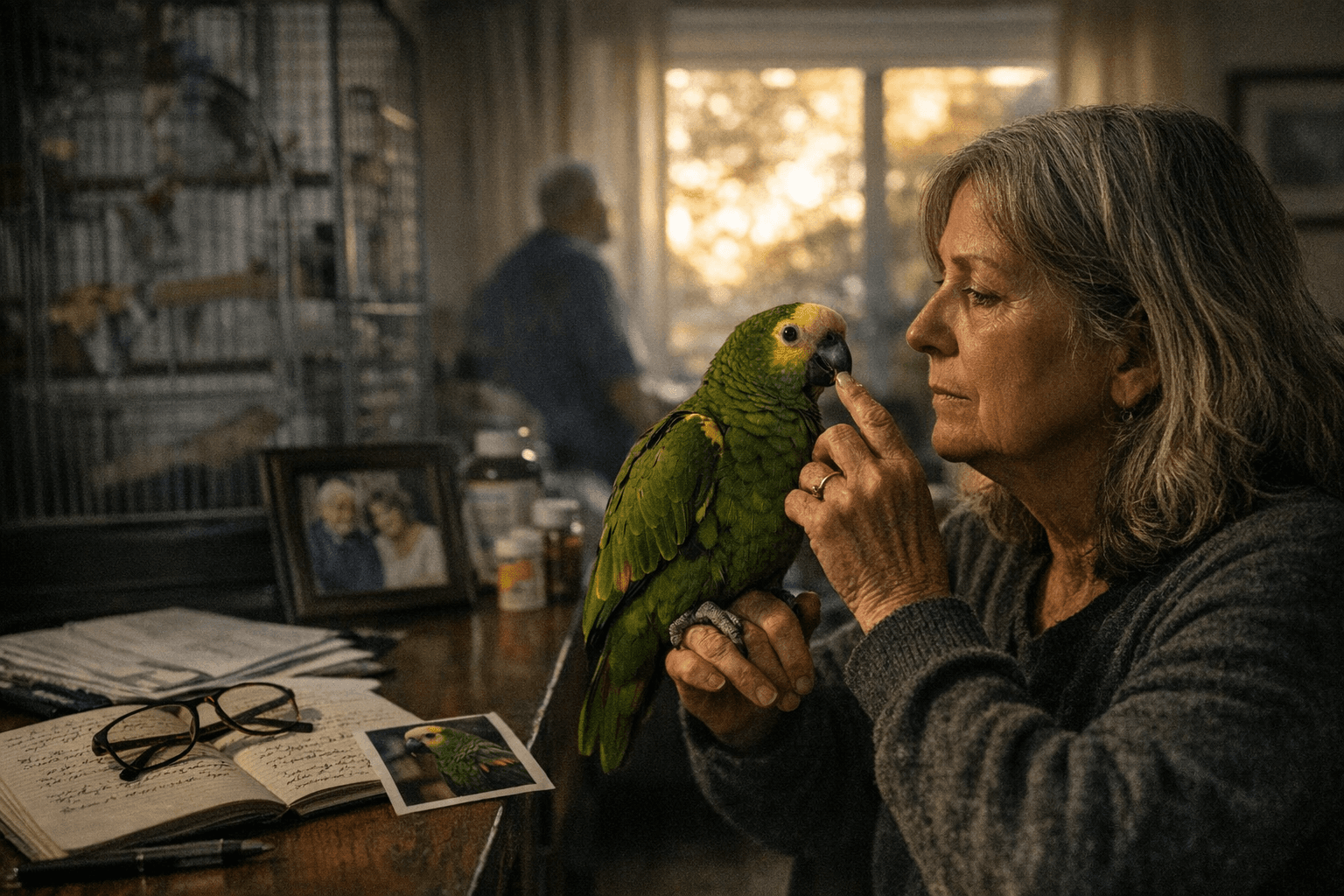
Kiwi, Sunny, and Sage may feel like constants in the house, but parrots make life fragile in a way many owners do not say out loud. If tomorrow brings illness, a move, a divorce, or a hospital stay, the real test is whether someone else can step in without guessing.
Name the next caregiver before you need one
The American Veterinary Medical Association says pet owners should plan for the full potential lifespan of their pet, and that matters even more when large parrots can live for more than 100 years. The AVMA also says pet ownership takes time, effort, money, food, shelter, veterinary care, training, exercise, and companionship, and it recommends planning for emergencies, disasters, and any period when you are temporarily unable to care for your bird.
That means the backup caregiver cannot be a vague promise. Put one person first, a second person behind them, and make sure both know the bird, the cage, the feeding routine, and the handling style that keeps the bird calm. A parrot that is comfortable with one household rhythm can unravel quickly if the next person has to guess at basics like morning feeding, sleep schedule, out-of-cage time, or the kind of interaction the bird expects each day.
The most useful plan is the one another person can follow without calling you. Write down who gets the bird, where the bird goes first, and what must happen in the first 24 hours. That simple step turns an abstract worry into a workable handoff.
Write the daily life down in plain language
A good long-term plan is not just about who owns the bird. It is about preserving the bird’s ordinary life. If your parrot eats specific foods, refuses others, needs a certain bedtime, or only steps up for familiar hands, that information belongs in writing now, not later. The AVMA’s checklist of what ownership requires, food, shelter, veterinary care, training, exercise, and companionship, is a reminder that your bird’s routine is the actual support system.
- the bird’s diet, including foods that are regular staples and foods that are off-limits
- housing details, such as cage location, preferred perches, and how the bird sleeps
- training cues, handling preferences, and known stress triggers
- daily exercise and out-of-cage routines
- emergency contacts, including the avian veterinarian and an alternate caregiver
Think of the file as a care map. Include:
That kind of record helps a new caregiver keep continuity instead of starting from zero. It also reduces the chance of rushed decisions, which is exactly when parrots lose stability.
Keep veterinary records and senior planning current
The Association of Avian Veterinarians recommends regular checkups for companion birds, and that advice becomes more important as the bird ages. Its senior-parrot guidance warns that many pet psittacine birds will not reach 50 years of age, which is a sharp corrective to the common assumption that every parrot is headed for a half-century or more. The AAV’s table puts median captivity life expectancy at 9 years for African grey parrots, 12 years for white cockatoos, 20 years for blue-fronted amazons, and 21 years for blue-and-gold macaws.
Those numbers matter because they show how differently age can look from species to species. A bird that seems “young” in human terms may already need a senior-aware plan, while a larger species may still be expected to live far beyond the period when an owner first bought the bird. Keep vaccine, exam, and treatment records together so the next caregiver does not have to piece together the bird’s history from memory.
Regular checkups also give you a better handoff point if circumstances change. A current medical file, paired with a written routine, makes it much easier for a caregiver, rescue, or family member to maintain the same standard of care from day one.
Put the legal and financial pieces on paper
The law can help, but only if you use it deliberately. The ASPCA says all 50 states plus the District of Columbia now have pet trust laws, and Minnesota was the last state to enact one, in 2016. Pet trusts can include successor trustees, caregiver instructions, regular inspections, funding limits, and a remainder beneficiary, which gives you much more control than a verbal promise ever could.
A will can also name a pet’s new owner, but the ASPCA recommends pairing a will with an informal arrangement because probate can take time. That delay matters for parrots, especially birds that need a specific diet, medication, or daily interaction to stay settled. If money is set aside for food, shelter, veterinary care, training, exercise, and companionship, the bird is far less likely to become an emergency problem for the person who steps in.
For many owners, the strongest plan uses both tools. A trust handles day-to-day protection and funding; a will reinforces the broader transfer plan. Together, they give the bird a path instead of a scramble.
Why this planning matters in real life
Parrots did not become long-term responsibility overnight. The Wild Bird Conservation Act of 1992 halted the importation of most parrots into the United States, after years when birds were imported in large numbers from the early 1970s through 1992. As ownership shifted and captive breeding grew, the long lifespan of parrots made a new problem impossible to ignore: birds outlived the people, homes, and finances that first surrounded them.
Susan Clubb and Michelle Goodman noted that many parrots lost homes because of deaths, divorces, financial difficulties, moves to non-pet housing, boredom, and behavioral problems. That list reads less like a rare crisis than a familiar life story. Parrot Hope Rescue said it accepted the surrender of more than 400 parrots in 2024 and permanently placed more than 230 for adoption, a reminder of how often these transitions still happen.
That is why the uncomfortable question is the practical one: who gets your parrot if you cannot care for it tomorrow? When the answer is named, written, funded, and shared, the bird is protected through the kind of life changes that usually catch people off guard. That is not just responsible ownership; it is continuity for a bird that may be part of the family far longer than anyone first imagined.
This article was produced by Prism’s automated news system from verified source data, official records, and press releases, then run through automated quality and moderation checks before publishing. The system is built and supervised by the people who set the standards it runs under. Read our full AI policy.
Did this article answer your question?