Parakeet species declared extinct twice gets breeding boost
Nacho and Trixie have raised 55 orange-fronted parakeet chicks, and 33 came this season alone, for a species still hanging by a thread.
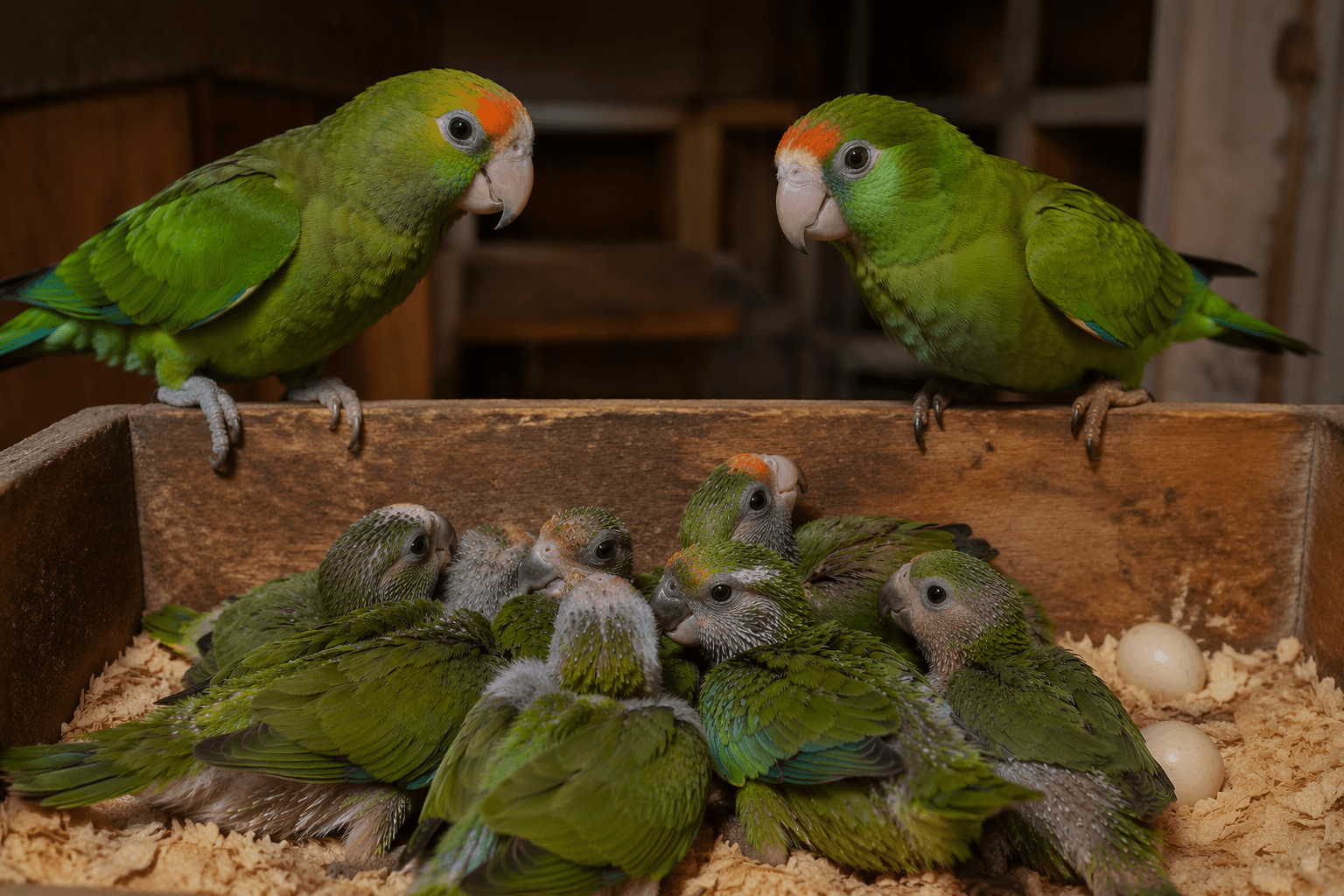
A single breeding pair in Christchurch has become the orange-fronted parakeet’s best short-term insurance policy. Nacho and Trixie, housed at The Isaac Conservation and Wildlife Trust, have produced 55 chicks since they were paired in 2024, including 33 this breeding season alone, which puts them at more than 10 percent of the species’ remaining population.
That matters because the kākāriki karaka, Cyanoramphus malherbi, has already been declared extinct twice, in 1919 and 1965, before being rediscovered. Even now, only about 450 birds are left, scattered through predator-free sanctuaries, offshore islands, and a handful of wild pockets. The two remaining wild populations in Canterbury sit in the Hawdon Valley near Arthur’s Pass and the South Branch of the Hurunui River, with current estimates of about 50 and 60 birds respectively.
The comeback still depends on whether those chicks become breeding birds in their own right, not just a headline. Wayne Beggs, who leads the Department of Conservation’s kākāriki karaka recovery programme, said the species relies on captive breeding to build backup populations because the wild birds are extremely vulnerable to predators. DOC and Te Rūnanga o Ngāi Tahu are running the recovery work, which includes monitoring known sites, breeding birds in captivity for release, research, and finding safe new locations where the species can be introduced.

That next step was already underway on the ground. DOC staff transferred 43 kākāriki karaka from The Isaac Conservation and Wildlife Trust and Orana Park to Pukenui/Anchor Island, where the team is now surveying the population to get accurate numbers. Some of Nacho and Trixie’s offspring were among those birds, which is exactly how a fragile breeding boom is supposed to work: not as a feel-good finish, but as the start of a wider, safer genetic network.
Nacho and Trixie have done the hard part that keeps a species in the game, but the orange-fronted parakeet is still one setback away from sliding backward. Until those chicks keep hatching, survive, and keep moving into protected sites, this remains a rescue operation, not a recovery triumph.
This article was produced by Prism’s automated news system from verified source data, official records, and press releases, then run through automated quality and moderation checks before publishing. The system is built and supervised by the people who set the standards it runs under. Read our full AI policy.
Did this article answer your question?