Parrot diets need pellets, not seeds, vet update warns
Seed bowls can hide disease for years, and vets say pellets, vegetables, legumes, and limited grains are the simplest way to head off liver, bone, and reproductive trouble.
A parrot can look bright, vocal, and active while diet damage builds quietly underneath. That is the blunt warning in a June 2, 2026 practitioner update from University of Illinois Veterinary Medicine: diet-related disease remains one of the most common problems avian veterinarians see, and many pet birds are still living on seed-based diets that are nutritionally incomplete and inappropriate.
Why the seed bowl is still a problem
The issue is not just that seeds are familiar or convenient. The problem is that a seed-heavy menu can leave parrots short on the vitamins and minerals they need while pushing them toward conditions that do not always announce themselves early. The Illinois update links poor nutrition to nutritional deficiencies, reproductive disease, obesity, and hepatic lipidosis, which means the bird may first appear with advanced illness instead of a simple feeding problem.
That pattern is exactly why the update pushes nutrition as preventive medicine, not an afterthought. The message is practical: if the diet is wrong, the disease risk is already being built into daily life.
What the foundation should look like
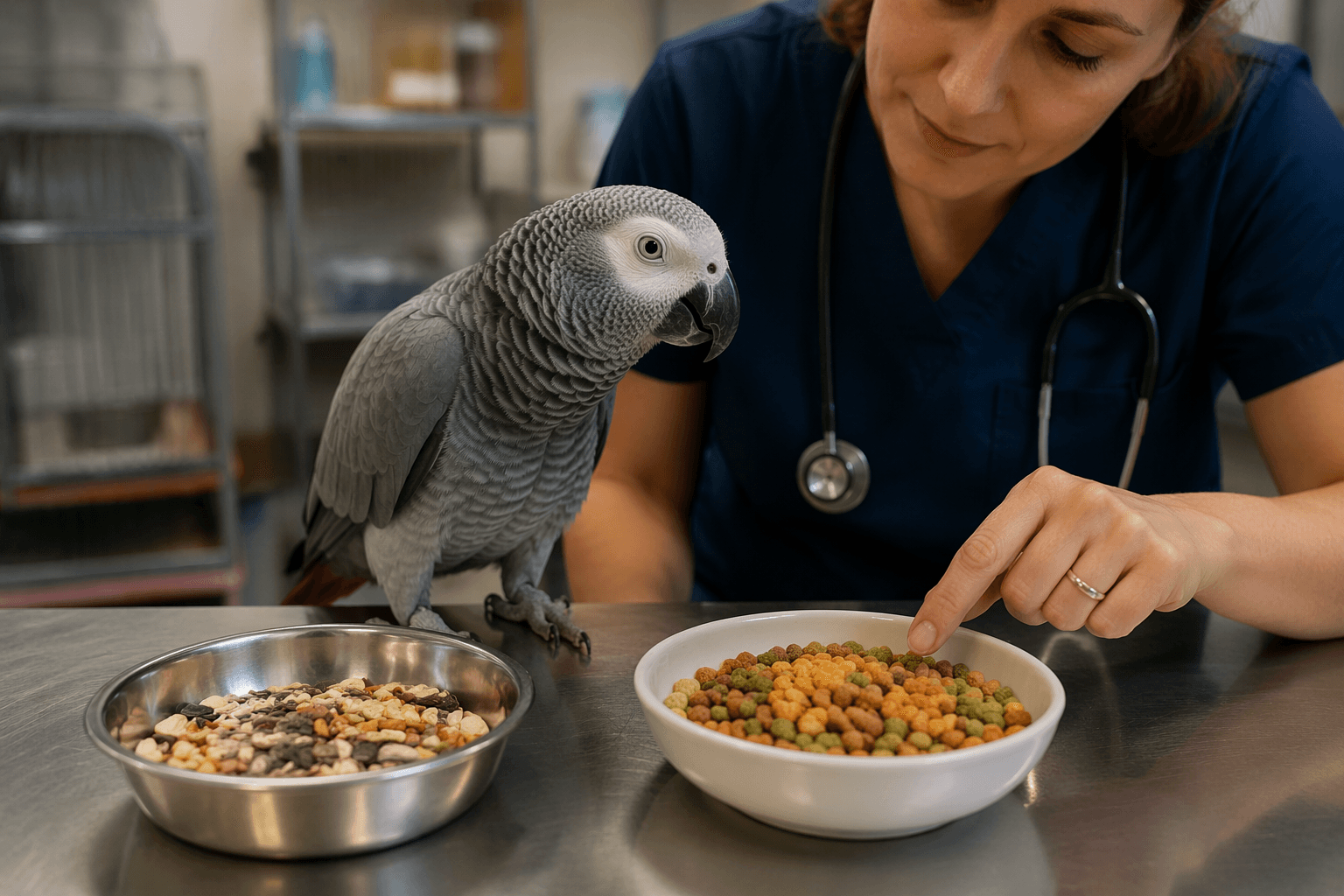
For psittacine birds, the recommended base is pellets, not seeds. The Illinois update says pellets should form the dietary foundation, while vegetables, legumes, and limited grains belong on top of that base as supplements rather than replacements. That approach lines up with broader avian guidance. The MSD Veterinary Manual notes that psittacine birds eat mainly a plant-based diet in the wild and that pelleted and extruded diets have greatly improved captive birds’ nutritional intake and quality of life.
This matters because a mixed, structured diet gives owners a way to reduce the nutritional gaps that show up in clinic. Pellets are not a cure-all, but they are a far more reliable anchor than a dish built around high-fat seeds and nuts. The goal is consistency first, then variety through healthy additions that do not dilute the main diet.
What to limit, and why fruit alone is not enough
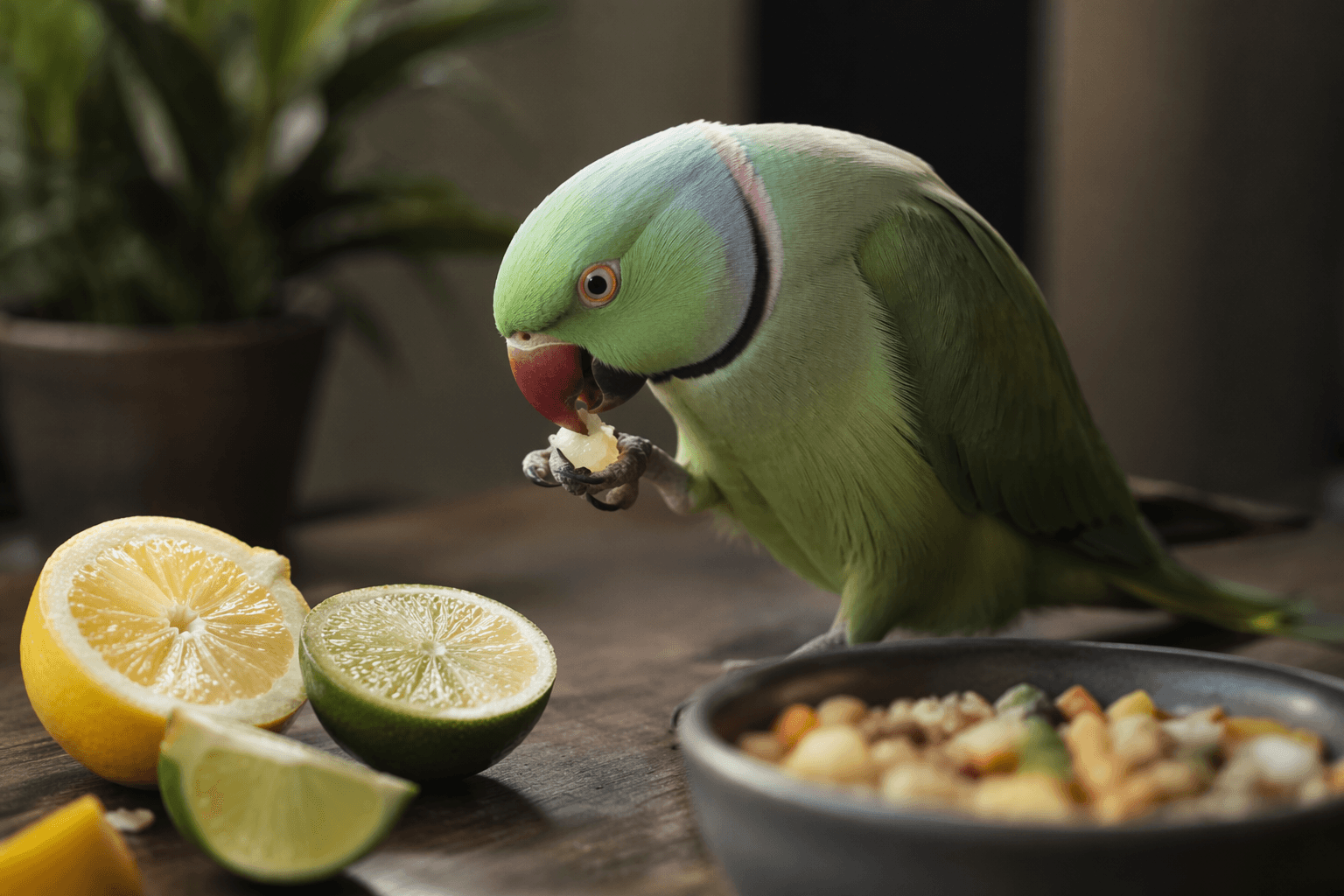
Fruit is often one of the easiest foods to win over a reluctant parrot, but the Illinois update warns against letting it take over the menu. Fruit-heavy diets can be too sugary and too low in protein and calcium for routine use. That makes fruit a treat or training aid, not a backbone.
This is where many feeding mistakes become expensive. A bird that gets plenty of palatable produce but not enough protein, calcium, and balanced nutrients can drift into trouble without obvious drama. The cage may still look tidy, appetite may still seem normal, and yet the bird is moving toward a diet that cannot support long-term health.
The early warning signs owners miss
The biggest danger in bad feeding is how slowly it can speak. The Illinois update says vitamin A deficiency can show up in the mouth, the respiratory tract, and feather quality. That means changes in the beak or oral tissue, repeated respiratory issues, or poor plumage can all be part of the same feeding problem.
Calcium deficiency is another high-risk issue, especially in African grey parrots and cockatiels. In those birds, low calcium can move beyond general weakness and into more serious neurologic or reproductive concerns. The update also connects obesity to high-fat seed diets combined with too little exercise, which is especially important because a bird can be overweight long before the problem looks obvious in the mirror of day-to-day care.
Merck Veterinary Manual adds another layer of urgency by noting that many pet-bird illnesses are rooted in malnutrition and that obesity is common in companion birds. Merck defines obesity in pet birds as about 20% over ideal weight, with a body condition or keel score of 4 out of 5. That kind of detail gives owners and veterinarians a concrete benchmark, not just a vague warning.
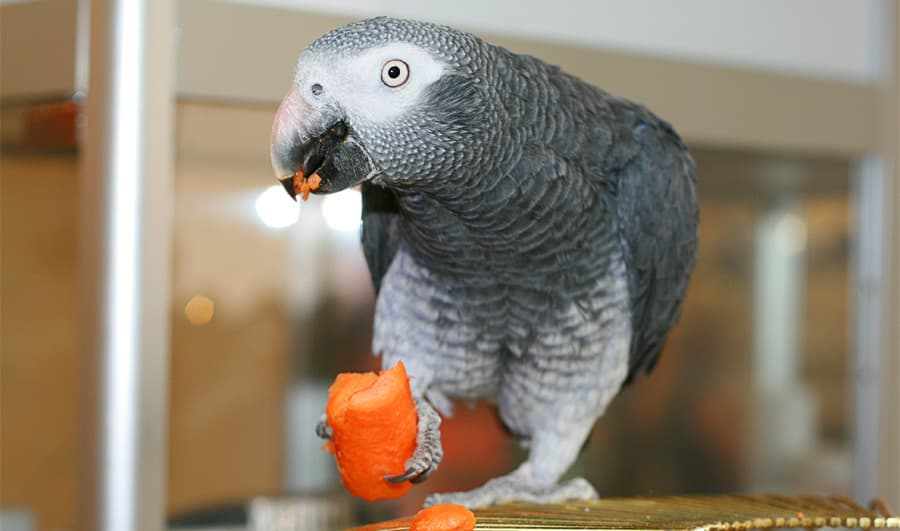
Why primary-care veterinarians matter here
The Illinois update stands out because it puts this work in the hands of the primary-care veterinarian, not only specialists. That is the right framing for a problem that often starts at home, with a bowl, a shopping habit, and a bird that may live for decades. The job is not just to diagnose disease after it appears. It is to spot feeding patterns, read the subtle signs, and explain what needs to change before the bird becomes critically ill.
That counseling role is reinforced by recent veterinary review literature saying that educating owners about nutrition and obesity prevention is one of the avian veterinary team’s most important jobs. With birds that may live for decades, the feeding decisions made now can shape liver health, bone strength, reproductive function, and body condition for years.
The deeper warning behind the diet advice
The University of Illinois message fits a larger veterinary consensus, and the evidence behind it is hard to ignore. A 2012 study of captive Amazon parrots found that seed-based diets are high in fat and have poor calcium-to-phosphorus ratios, which helps explain why avian vets keep steering owners away from all-seed feeding. The MSD Veterinary Manual, Merck Veterinary Manual, and the Illinois update all point in the same direction: captive parrots do best when their food supports the biology of a plant-eating bird without relying on seeds as the main event.
That is the real owner problem in this story. The bird in the cage may still seem fine today, but a seed bowl can quietly set up liver disease, bone disease, reproductive trouble, or obesity that becomes much harder and more expensive to reverse later. Pellets, plus vegetables, legumes, and limited grains, are not just a cleaner feeding plan. They are the simplest way to stop a hidden disease process before it ever has a chance to announce itself.
This article was produced by Prism’s automated news system from verified source data, official records, and press releases, then run through automated quality and moderation checks before publishing. The system is built and supervised by the people who set the standards it runs under. Read our full AI policy.
Know something we missed? Have a correction or additional information?
Submit a Tip