Parrot podcast spotlights hidden home dangers and safer routines
A Green-Cheeked Conure spotlight turns this podcast episode into a room-by-room safety audit, with the biggest parrot risks hiding in plain sight.
The ordinary things are the ones that bite
The Parrot Stars Podcast makes a sharp point with its Green-Cheeked Conure spotlight: the most dangerous moments in a parrot home usually do not look dramatic until they are. On May 18, 2026, Alexis and Avery framed most emergencies as the result of routines people stop noticing, and that is exactly why this episode lands as more than a recap, it works like a usable home audit.
Start with the house, not the bird
What makes the episode useful is its refusal to treat safety like a one-time overhaul. Alexis and Avery push a simpler idea: make the house safer one adjustment at a time by bird-proofing rooms, creating better flight spaces, and thinking ahead about emergencies before they happen. That matters because parrots are curious, active, and fast-moving, which means a loose habit in the kitchen, a forgotten fan, or an open door can go from background noise to crisis in seconds.
The episode’s bigger lesson is practical, not alarmist. A safer home usually gets built through repeated small moves, not a massive weekend project. Remove one hazard. Change one routine. Watch one corner of the room more carefully than you did yesterday.
Walk each room like a bird would
A real parrot safety check starts with the obvious flight paths and the places people ignore because they seem harmless. The MSD Veterinary Manual flags open windows and doors, rotating ceiling fans, glass windows, and mirrors as common household hazards for pet birds, and that list should be taped to your brain before a bird ever gets free-flight time. Birds flying freely in the house can also hit walls, windows, and ceiling fans, or get hurt falling from shoulders, play gyms, and cage tops.
That is why bird-proofing is not just about blocking one doorway. It is about looking at a room from the bird’s height and speed, then asking what will happen when a parrot launches, glides, brakes late, or lands badly. The same room that feels calm to you can be full of collision points to a bird that moves like a dart.
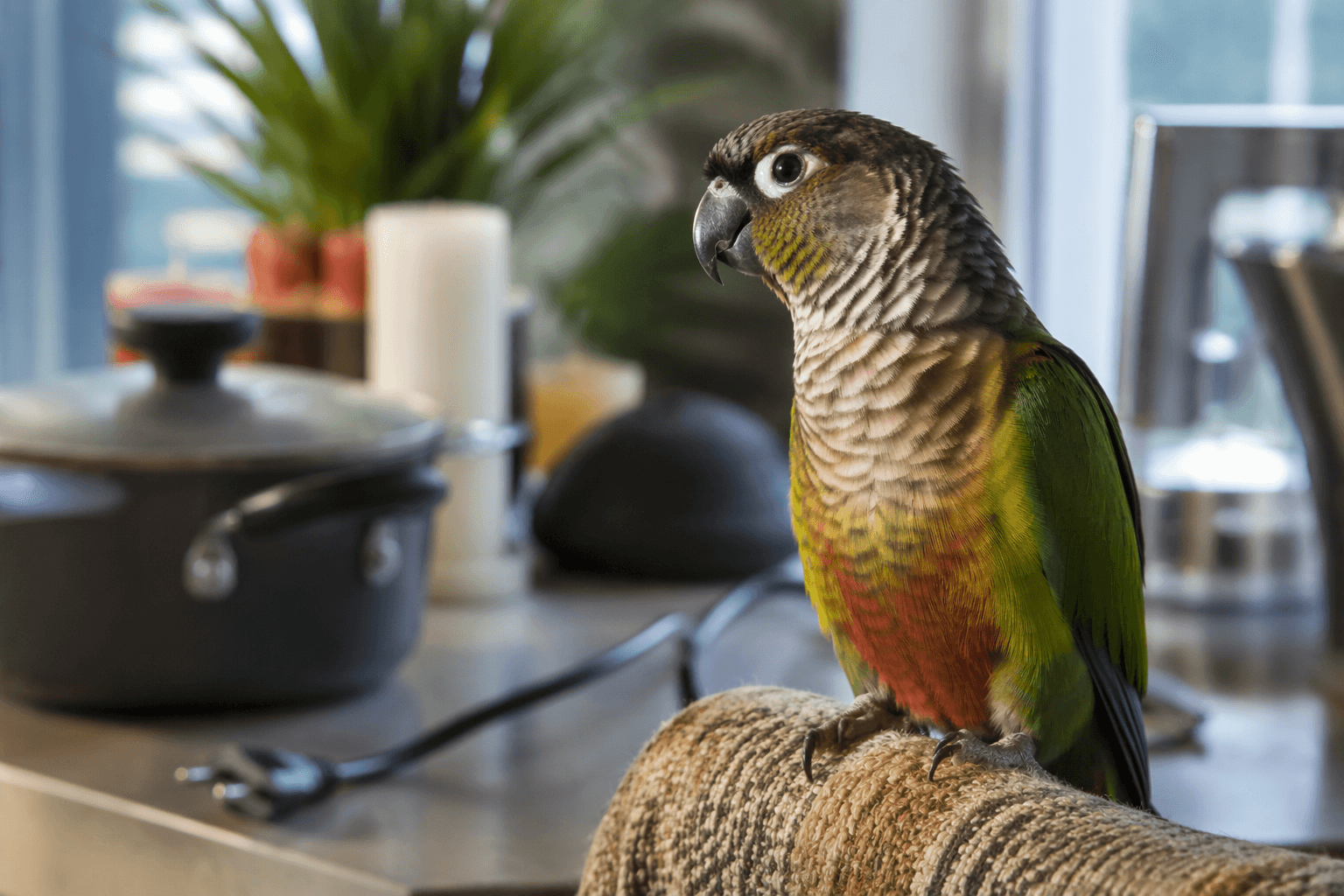
A quick room-by-room audit should focus on these repeat offenders:
- Open windows and doors that invite escapes or collisions
- Ceiling fans, especially anything rotating overhead
- Glass and mirrors that birds do not read as barriers
- High perch points like shoulders, play gyms, and cage tops where falls happen
- Other pets that can turn a bad landing into a bite or strike
The kitchen is where “just for a second” becomes a problem
The kitchen gets special attention for good reason. The Association of Avian Veterinarians says bird owners should be educated about household toxins and safe environments, and the kitchen is packed with them: nonstick cookware, cleaners, boiling food, and hot surfaces. If you cook with birds nearby, the danger is not just obvious heat, it is what gets into the air and what gets left on surfaces birds may investigate later.
Texas A&M Veterinary Medicine and Biomedical Sciences notes that birds can get sick from poor ventilation, mold in the air, and fumes like Teflon. That is the part people underestimate most, because a kitchen does not have to look smoky to be unsafe. A pan too hot, a coating overheated, or a bottle of cleaner left out can be enough to turn an ordinary meal prep into a respiratory emergency.
Fire safety belongs in this same conversation. Texas A&M says about 750 home fires each year are caused by pets or wildlife, which is a blunt reminder that a bird household needs smoke and carbon monoxide detectors working properly, not just good intentions. Their fire-safety tip is simple and worth using: ask your local fire department for a sticker that can go on an outside window and tell firefighters how many pets are inside.
Other pets, falls, and fast-moving chaos
The episode also gets at a risk people sometimes downplay: ordinary household movement. Birds do not need a huge event to get hurt, because the wrong turn, a startled takeoff, or a dog or cat getting too close can be enough. Avian veterinary references note that cat or dog bites, falls, and collisions are common traumatic injuries in flighted birds, and that is exactly why supervised flight time matters.

Best Friends Animal Society has made the same point in more vivid terms, warning that ceiling fan tangles can be fatal and describing a Senegal parrot injured after crashing into a fan. That kind of story sticks because it shows how quickly a normal room becomes dangerous when the fan is on and the bird is free. If the bird is out, the fan should not be an afterthought.
Why the Green-Cheeked Conure spotlight fits the message
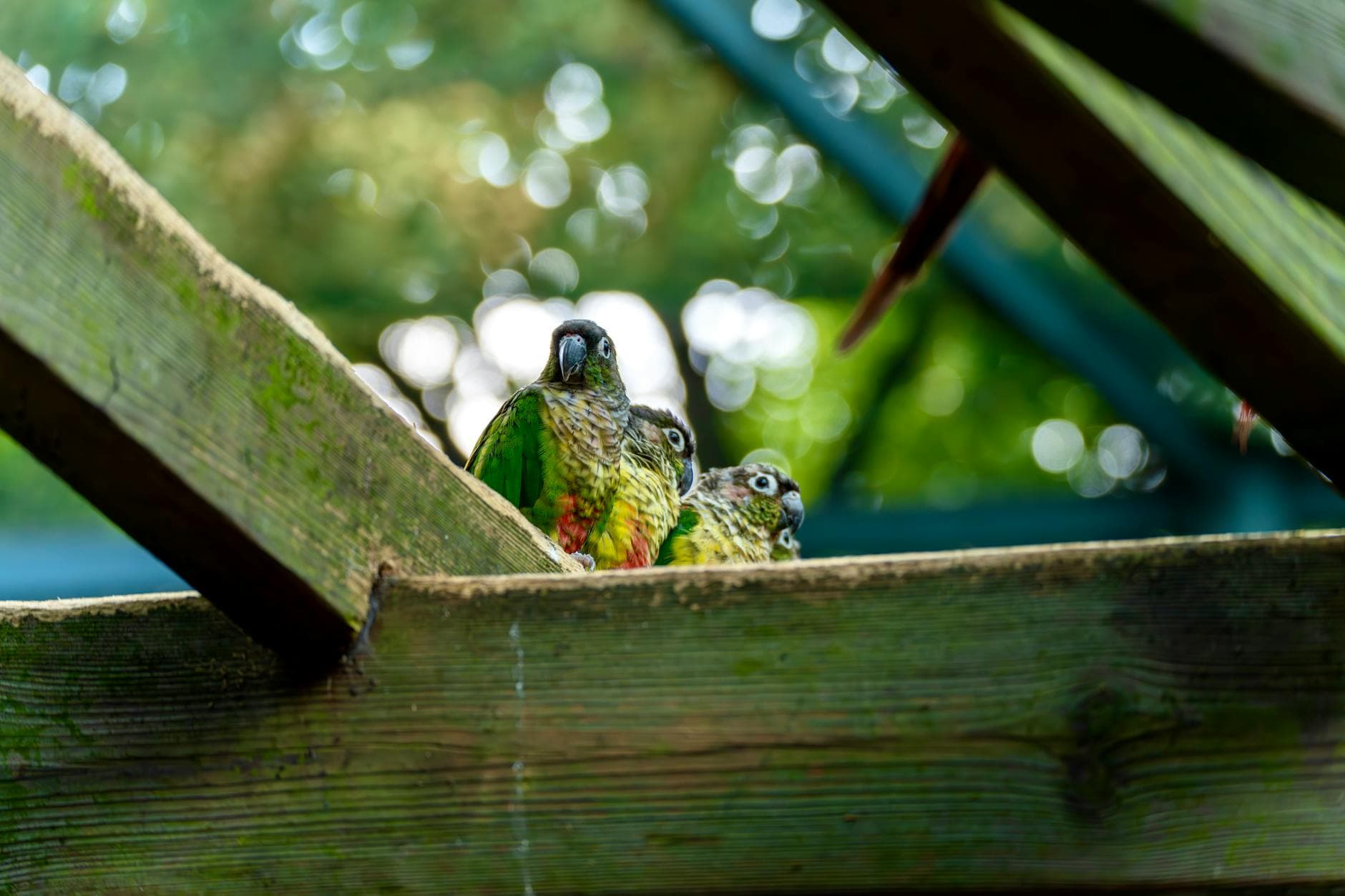
The Green-Cheeked Conure spotlight is not just a cute segment tucked into the episode, it is the perfect species anchor for the whole safety conversation. The World Parrot Trust describes green-cheeked conures as small parrots from South America, and World Wildlife Fund notes that they need hours of stimulation and social time outside the cage each day, plus space to fly. That combination, small body, big activity, daily motion, makes the household hazard list feel very real.
In other words, this is not abstract theory about bird care. It is what happens when a bird that wants to climb, chew, fly, and inspect everything meets a home full of corners, heat sources, reflective surfaces, and moving objects. The safer the room looks through that lens, the better the bird does.
Turn the episode into a checklist, not just a listen
The smartest takeaway from Alexis and Avery is that prevention works best when it becomes routine. Bird-proof the room before out-of-cage time. Shut down the ceiling fan. Check windows, doors, mirrors, and glass. Keep kitchen fumes, hot pans, and cleaners away from bird airspace. Separate birds from other pets during flight and play. Then keep watching for the small oversights that turn into the big emergencies everyone swears they never saw coming.
That is the point this podcast keeps driving home: the dangerous parts of parrot keeping are often the parts that look completely ordinary, right up until the moment they are not.
This article was produced by Prism’s automated news system from verified source data, official records, and press releases, then run through automated quality and moderation checks before publishing. The system is built and supervised by the people who set the standards it runs under. Read our full AI policy.
Did this article answer your question?