Parrot repeatedly chooses owner’s shoulder over sunflower in Shanghai
A Shanghai parrot kept ditching a sunflower to climb back to its owner’s shoulder, then flew off when offered a hand. The clip looks like trust with a stubborn streak.
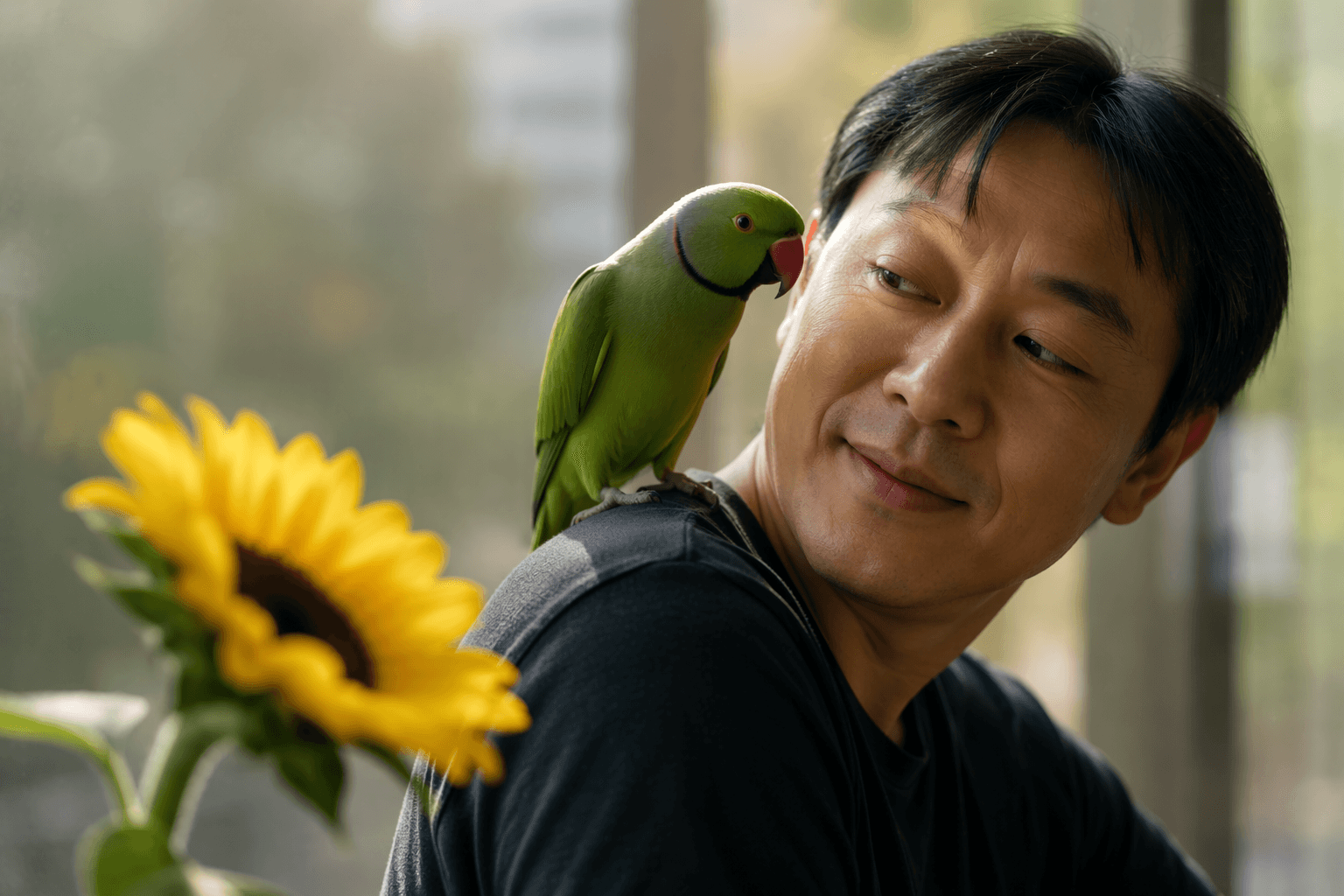
A parrot in Shanghai turned a sunflower into a dead end and kept choosing its owner’s shoulder instead. In a short clip dated June 18, 2026, and shared by @Cháyèjījijī, the bird repeatedly let itself be set near a sunflower on a table, then immediately flew back up to the owner’s shoulder.
The pattern was what made it memorable. Each time the owner tried a new angle and moved the bird away from the shoulder, the parrot made the same call: back to the shoulder, again and again. The final beat sealed the bird’s preference. When a hand was offered later, the parrot did not settle onto it. It flew away instead.
That kind of behavior reads less like a rejection of the sunflower than a clear statement about comfort. The shoulder is close, elevated, and tied directly to a familiar person, which makes it an easy place for a parrot to feel anchored. For companion birds, that can signal trust and attachment, but it can also hint at dependence if the bird refuses to settle anywhere else. A shoulder-clinging bird is not automatically being difficult. It may simply be telling you where it feels safest.
The bond matters because parrots are long-lived, social animals. The MSD Veterinary Manual says larger parrots can live 20 to 50 years and often form strong bonds with their owners. It also notes that birds can develop behavior problems if they do not get enough attention and stimulation, with issues that can include biting, screaming, or feather-pulling. In other words, the same closeness that makes shoulder time adorable can become a habit that crowds out independence if owners never ask for anything else.
That is why many avian experts steer people toward a steadier hand target instead of free shoulder access. PetMD says most experts do not recommend shoulder training for birds unless they are exceptionally well-behaved and bonded, because they may “play keep-away” when asked to step down. The safer habit is a reliable step-up onto a hand, which gives the bird a clear job and the owner more control. PetMD also notes that parrots are highly intelligent and can learn basic commands, while individual birds still vary widely in how much handling they want.
In the Shanghai clip, the sunflower never really had a chance. The parrot had already picked the better perch, and it kept making the same choice until the owner was left with the same answer: shoulder first, everything else second.
This article was produced by Prism’s automated news system from verified source data, official records, and press releases, then run through automated quality and moderation checks before publishing. The system is built and supervised by the people who set the standards it runs under. Read our full AI policy.
Did this article answer your question?