ParrotCrush webinar spotlights avian cancer, warning signs, and diagnosis
A lump is not the first clue in many bird cancers. Dr. Stephanie Lamb’s April 10 webinar showed why subtle changes can matter more than a visible mass.
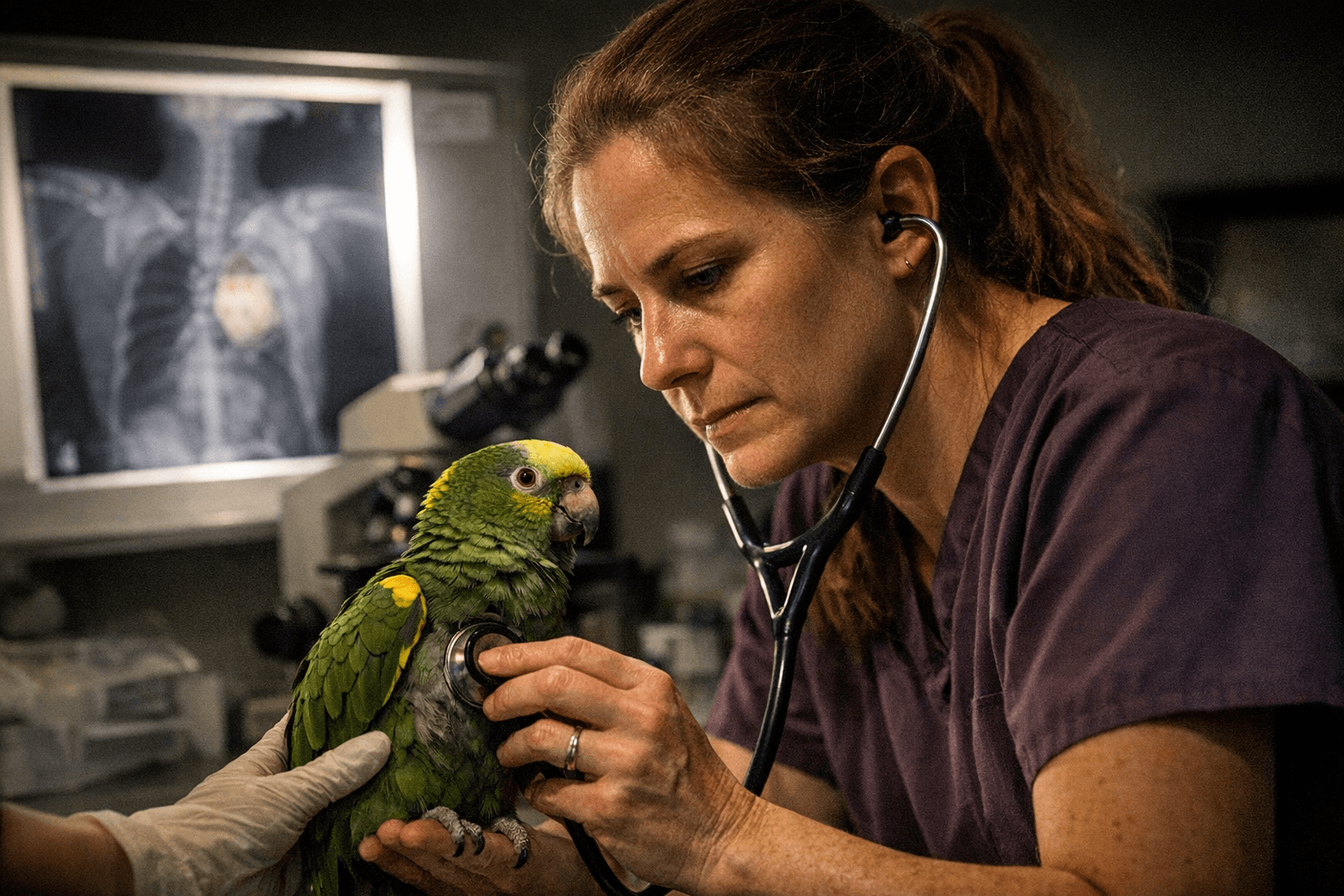
A lump is often the wrong place to start looking when a parrot goes quiet, stops eating normally, or loses function in a wing, leg, or beak. That warning sits at the center of ParrotCrush’s April 10 webinar, Avian Vet Insider - Avian Neoplasia, Part 1, a two-part session led by Dr. Stephanie Lamb at 12:00 p.m. PST.
The focus was avian cancer, but the lesson was broader than tumors alone. Lafeber’s listing said the session would cover common benign masses as well as rare, serious cancers, which matters because owners tend to notice only what they can see. In birds, neoplasia can show up in the skin, sinuses, oral cavity, GI tract, lungs, air sacs, liver, spleen, kidneys, reproductive tract, bone, vascular and connective tissue, and brain. That spread makes the disease hard to recognize early, especially when the first changes are quieter than a lump.
That is the information gap many bird homes run into. Birds hide illness well, so cancer can first look like a small drop in appetite, a change in activity, or a vague decline in how the bird uses its body. The MSD Veterinary Manual says neoplasia occurs with some frequency in pet birds of all ages, and that the incidence of cancer is likely to rise as birds age. It also notes that internal tumors often need radiographs, ultrasound, CT, endoscopy, or exploratory surgery to diagnose, because they may not be visible on a physical exam.
That diagnostic reality is what owners need to understand before the emergency visit. If a bird develops a mass, changes in eating or movement, or a subtle shift in energy, the next questions should be about whether the problem could be internal, what imaging is needed, and whether tissue sampling or surgery is required to tell a benign mass from a malignant one. The veterinary manual also notes that treatment protocols are still often extrapolated from other species and may have been used in only one or two birds, which helps explain why these conversations can be slow, careful, and emotionally difficult.
Dr. Stephanie K. Lamb’s credentials gave the webinar added weight. The Association of Avian Veterinarians identifies her as DVM, DABVP in avian practice, and Arizona Exotic Animal Hospital lists her as DVM, DABVP in avian and exotic companion mammal medicine. The Association of Avian Veterinarians says research into neoplasia and treatment methods has been improving, and that diagnosis is becoming more common as nutrition and husbandry improve and infectious disease declines.
That is part of the larger shift in bird care: parrots are living longer, many into the 20-to-80-year range depending on species size, and geriatric diseases are coming into view more often. In that setting, a webinar on avian neoplasia is not just a lecture. It is a reminder that in birds, the first clue can be the smallest change.
This article was produced by Prism’s automated news system from verified source data, official records, and press releases, then run through automated quality and moderation checks before publishing. The system is built and supervised by the people who set the standards it runs under. Read our full AI policy.
Did this article answer your question?