Poor socialisation can shape parrot behavior and trigger aggression
Poor socialisation can leave a parrot fearful, overbonded, or aggressive, but calm, positive exposure can change that long before behavior hardens.
Socialisation is not a bonus, it is prevention
Poor socialisation does not stay a baby-bird problem. Bird Vet Melbourne in Melbourne, Australia treats social development as a core part of companion parrot care, because hand-reared birds that miss those early experiences may never learn how to interact properly. When that learning gap grows, it can show up later as neophobia, the fear of new things in the environment, along with the kind of daily friction that makes life harder for both bird and owner.
That is why socialisation has to be understood as preventative care. It is not about making a parrot endlessly friendly to everyone. It is about giving the bird enough safe exposure to people, birds, sounds, and routine change that novelty does not automatically read as danger.
What poor socialisation can turn into
A parrot that bonds strongly to one caretaker can look sweet and devoted at first, but that same tight bond can become a problem if the bird starts treating everyone else as a threat. Bird Vet Melbourne warns that socialisation failures can shape adult behavior in exactly that way: a bird may attach to one family member and become aggressive toward other people. In a home with visitors, multiple caregivers, or regular travel, that kind of single-person attachment can make the bird hard to manage and stressful to live with.
The pattern is not just about friendliness or manners. It is about whether the bird has learned how to cope. A well-socialised parrot should be able to handle new people, other birds, and unfamiliar situations with flexibility. The goal is confidence, not indiscriminate sociability, and the difference matters when you are trying to prevent biting, screaming, and fear-based outbursts later on.
The science behind the warning signs
The concern around early social learning is not coming out of nowhere. A 2004 study on juvenile orange-winged Amazon parrots looked at how different rearing conditions affected neophobia, showing that early environment can shape how a young parrot reacts to novelty. That fits neatly with the clinic message: what happens early can echo through the rest of the bird’s life.
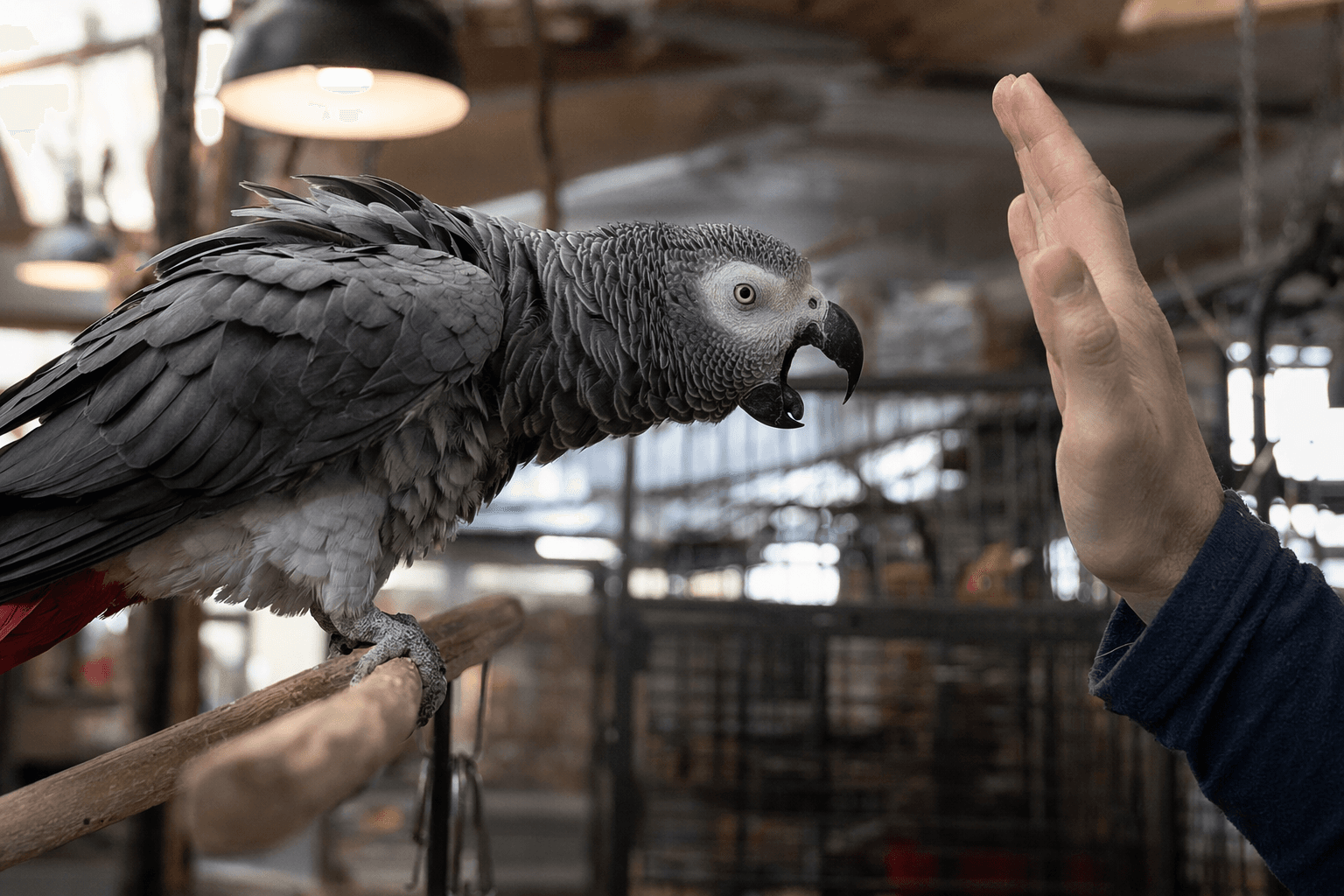
Other research points to the same welfare cost. A 2013 study found that hand-reared birds showed dramatically increased stereotypic behavior and interacted less with enrichment than parent-reared birds. In African grey parrots, hand-reared birds may also develop feather damaging behavior, and chronic stress has been linked to behavioral disorders in captive parrots. Taken together, those findings show that a bird’s developmental history can affect not only how it behaves, but how well it uses the environment you give it.
A newer companion-parrot study, surveying owners of 2,200 parrots, described personality in four dimensions: confidence, prosociality, neuroticism, and playfulness. Variation in those traits depended partly on rearing history and wing clip status. That does not mean personality is fixed, but it does reinforce a familiar truth in parrot homes: the bird you live with is shaped by both biology and experience.
World Parrot Trust adds another layer to the picture. In its June 11, 2024 guidance on parrot aggression, it identifies fear, territorial behavior, hormones, and lack of socialisation as common triggers. That matters because it keeps socialisation in context. It is one piece of the behavior puzzle, but it is a major one, and it works best when paired with positive reinforcement, which the organization calls the most effective training method for parrots.
How to widen a parrot’s comfort zone without forcing it
The safest socialisation plan is slow, predictable, and positive. You are not trying to flood the bird with every possible experience at once. You are building a bigger comfort zone one low-stress success at a time.
- Start early and keep going throughout life, especially if the bird will meet visitors, travel, or live with multiple people.
- Keep exposures small and controlled. A new person in the room, a different perch, a carrier that appears only for calm practice, or a few quiet minutes near a mild novelty can teach more than a rushed interaction.
- Pair unfamiliar things with rewards. Positive reinforcement works because the bird learns that good things follow calm behavior, such as stepping up or staying relaxed near a feared object.
- Use bird-safe settings. New experiences should happen in a place where the bird can observe, retreat, and recover without feeling trapped.
- Build handling around choice. A parrot that can opt in and opt out is more likely to trust the process than one that is cornered into contact.
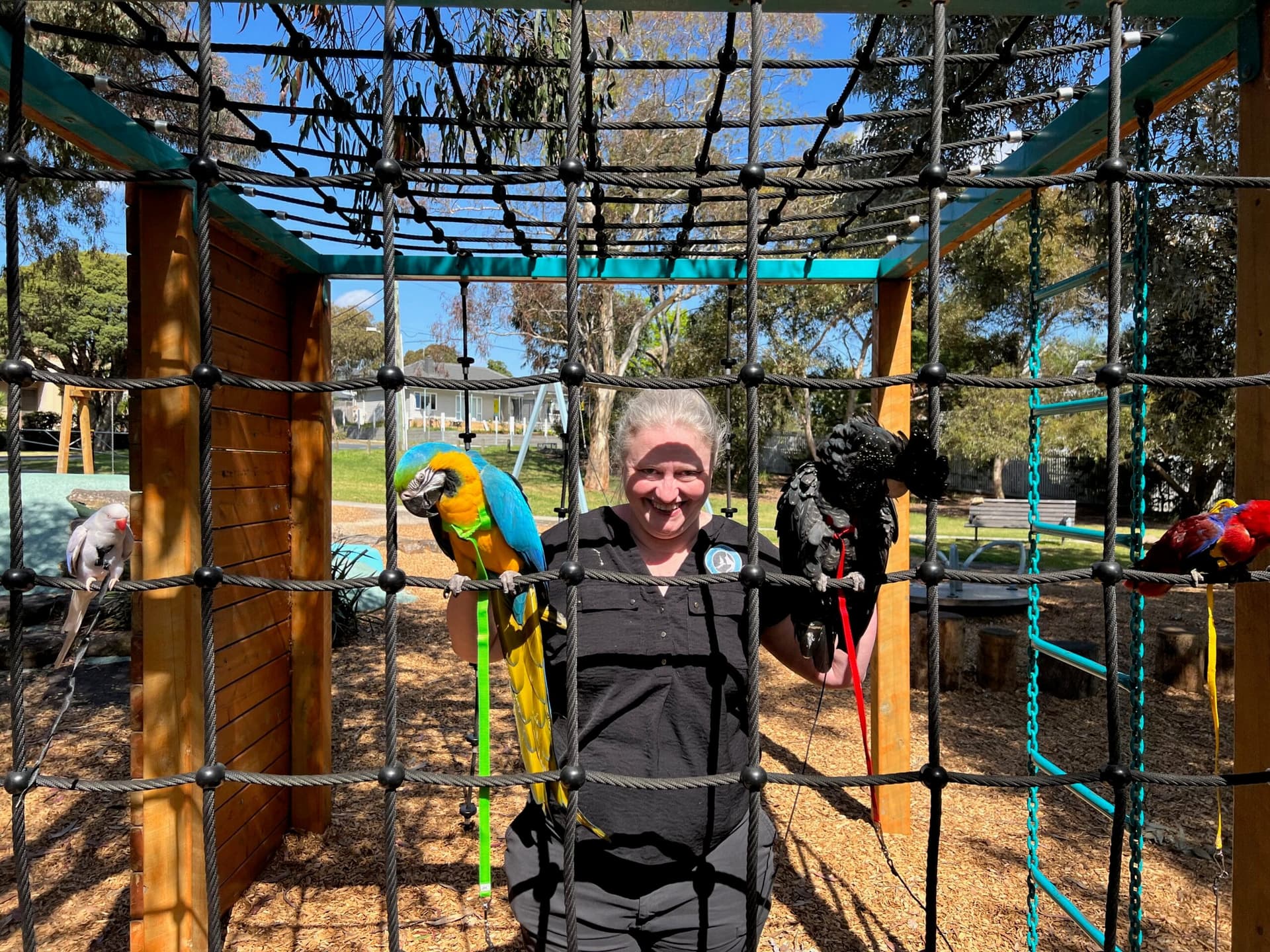
Bird Vet Melbourne also notes that parrot socialisation classes are becoming more common, and that professional training and behavior modification can help companion parrots in a friendly, bird-safe environment. For birds already showing fearfulness or a strong single-person bond, that kind of guided work can be a practical next step rather than a last resort.
Read the relationship, not just the behavior
The human side of parrot care matters as much as the bird side. A 2020 owner-bird relationship study found that more than one quarter of the German bird owners sampled showed an impersonal relationship with their bird. Another 2020 study on the human-avian bond found that parrot-owner relationships can be profound, but also complicated by anthropomorphism and misinterpretation of behavior. In plain terms, people can love parrots deeply and still miss what the bird is actually saying.
That is where the broader avian welfare world is useful. The Association of Avian Veterinarians maintains publications and client education materials, along with conference proceedings going back to 1982, giving owners and professionals a place to learn from years of accumulated experience. The message running through that work is consistent: behavior problems are not random character flaws. They are often the visible result of missed learning, poor social exposure, or a relationship that never taught the bird how to feel safe.
When you look at socialisation that way, the opening warning becomes impossible to ignore. The bird that is not gently introduced to the world may grow into the bird that bites it, screams at it, or fears every new thing in it. The bird that gets calm, positive exposure early, and keeps getting it, is the one most likely to meet novelty with curiosity instead of panic.
This article was produced by Prism’s automated news system from verified source data, official records, and press releases, then run through automated quality and moderation checks before publishing. The system is built and supervised by the people who set the standards it runs under. Read our full AI policy.
Did this article answer your question?