Parrot care guide warns of long lifespans and daily attention needs
Parrots are charming, but the real test is whether you can handle years of noise, enrichment, cleaning, and avian vet care without burning out.

The reality check before adoption
Parrots win people over fast. They are bright, social, and full of personality, but that charm comes with a catch: this is not a low-maintenance pet, and it is not a short-term decision. Some species live for decades, and macaws can live 50 years or more, which means you are not “getting a bird,” you are signing up for a long relationship that can stretch across moves, job changes, and major life transitions.
That is why the first self-audit is brutally simple: does your home, schedule, and budget actually fit a parrot, not just a photo of one? The American Veterinary Medical Association says pet birds have special veterinary needs and should be chosen with your household’s lifestyle and available care in mind. The Association of Avian Veterinarians makes the same point in plainer language: many pet birds have long lifespans, and most people who bring one home should expect a long-term, rewarding relationship.
Before you buy, ask yourself these questions
- Can you spend several hours a day talking to, training, and interacting with the bird?
- Can you live with noise that may be constant, sudden, and not always convenient?
- Can you afford ongoing avian veterinary care, not just a one-time checkup?
- Do you have room for a large enough cage, plus safe supervised time outside it?
- Can your household tolerate the mess, chewing, and routine cleaning that come with a parrot?
If any of those answers is shaky, the wrong species can turn a dream bird into a daily stressor. A parrot that fits your life is a joy; a parrot that does not can become a noise complaint, a bite risk, and a neglected animal all at once.
Social needs are not optional
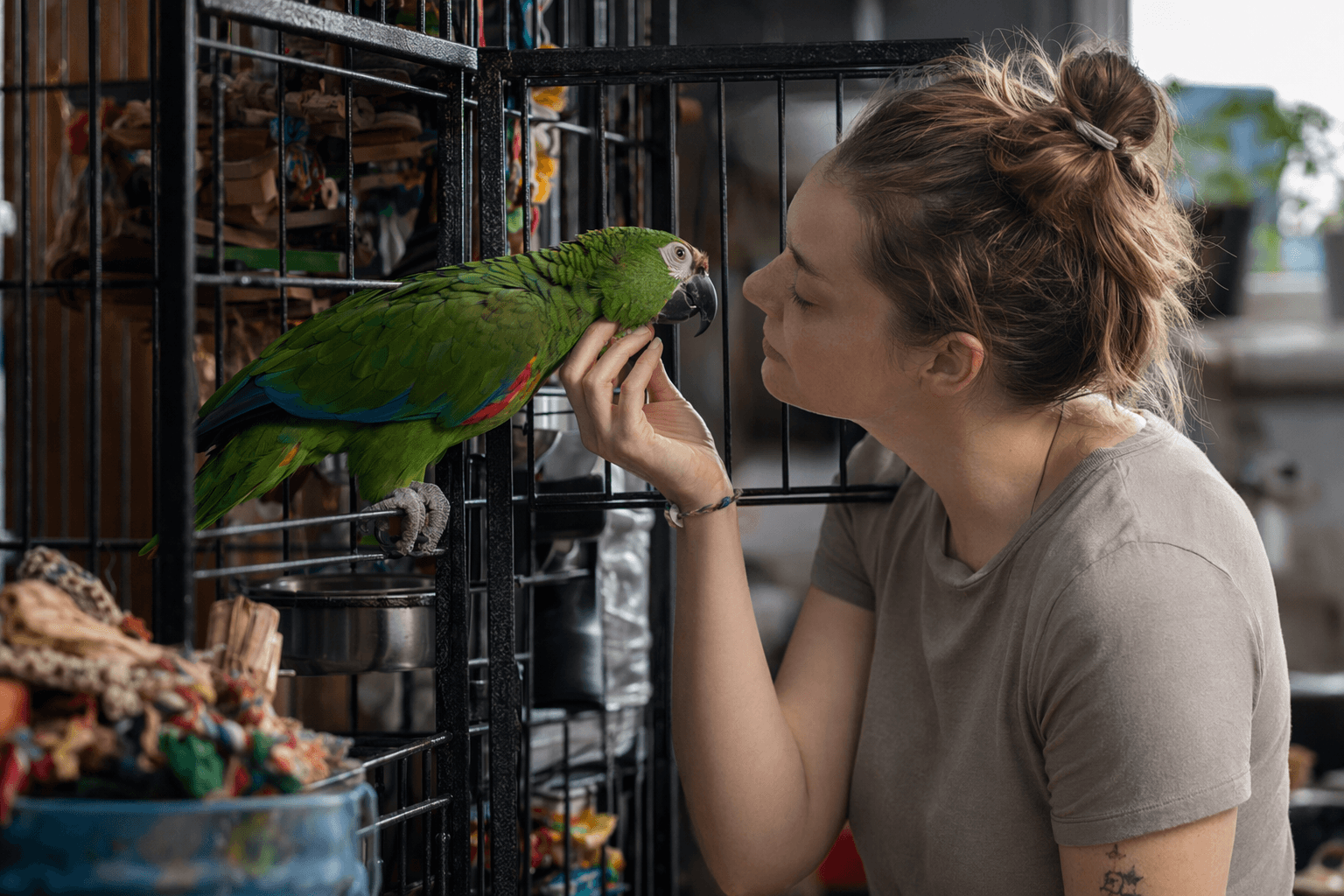
Parrots are highly social animals, and the biggest mistake new owners make is treating attention like a bonus rather than basic care. When birds do not get enough interaction, they can become lonely, stressed, or depressed, and that often shows up as screaming, biting, or feather plucking. In other words, the behavior problem is usually the symptom, not the root cause.
Merck Veterinary Manual is clear about this: birds are social and can get lonely if they do not get enough attention. It also notes that feather-damaging behavior in captive parrots can be driven by boredom, sexual frustration, territoriality, compulsive behavior, predator stress from household pets, and lack of parental training for preening. That is a reminder to look at the whole environment, not just the bird, when something starts going wrong.
The practical takeaway is that a parrot needs daily interaction baked into your routine. Several hours a day talking, playing, and training is not indulgent with this species. It is part of the health plan.
Enrichment is part of the job, not a luxury
A parrot that sits in a cage with nothing to do will invent its own entertainment, and that usually means trouble. The basics are not complicated, but they are non-negotiable: puzzle toys, training sessions, new objects to explore, and chances to learn words and tricks. The point is not to keep the bird busy for one afternoon, but to give the bird a life that changes enough to stay interesting.
The Association of Avian Veterinarians breaks enrichment into five categories: sensory, nutritional, manipulative, environmental, and behavioral. That framework matters because it keeps owners from thinking enrichment is just “buy more toys.” Variety itself is enrichment, and a bird that has to solve problems, chew, climb, forage, and interact is far less likely to drift into boredom-driven behavior.
Food, cage space, and exercise all connect
Nutrition is another place where shortcuts backfire. A seed-only diet is not healthy for parrots, and the better model is built around pellets, fresh vegetables and fruit, healthy grains, edible flowers, and only limited nuts and seeds as treats. The ASPCA also flags several foods as off-limits for pets, including avocado, chocolate, alcohol, coffee or caffeine, onion, and garlic, with avocado especially dangerous for birds.
The cage matters just as much as the bowl. Merck recommends a cage at least one and a half times the bird’s wingspan in all directions so the bird can stretch properly, and small cages can create stress. The enclosure should include natural wood perches, food and water bowls, toys, and climbing areas, not just a perch and a dish.
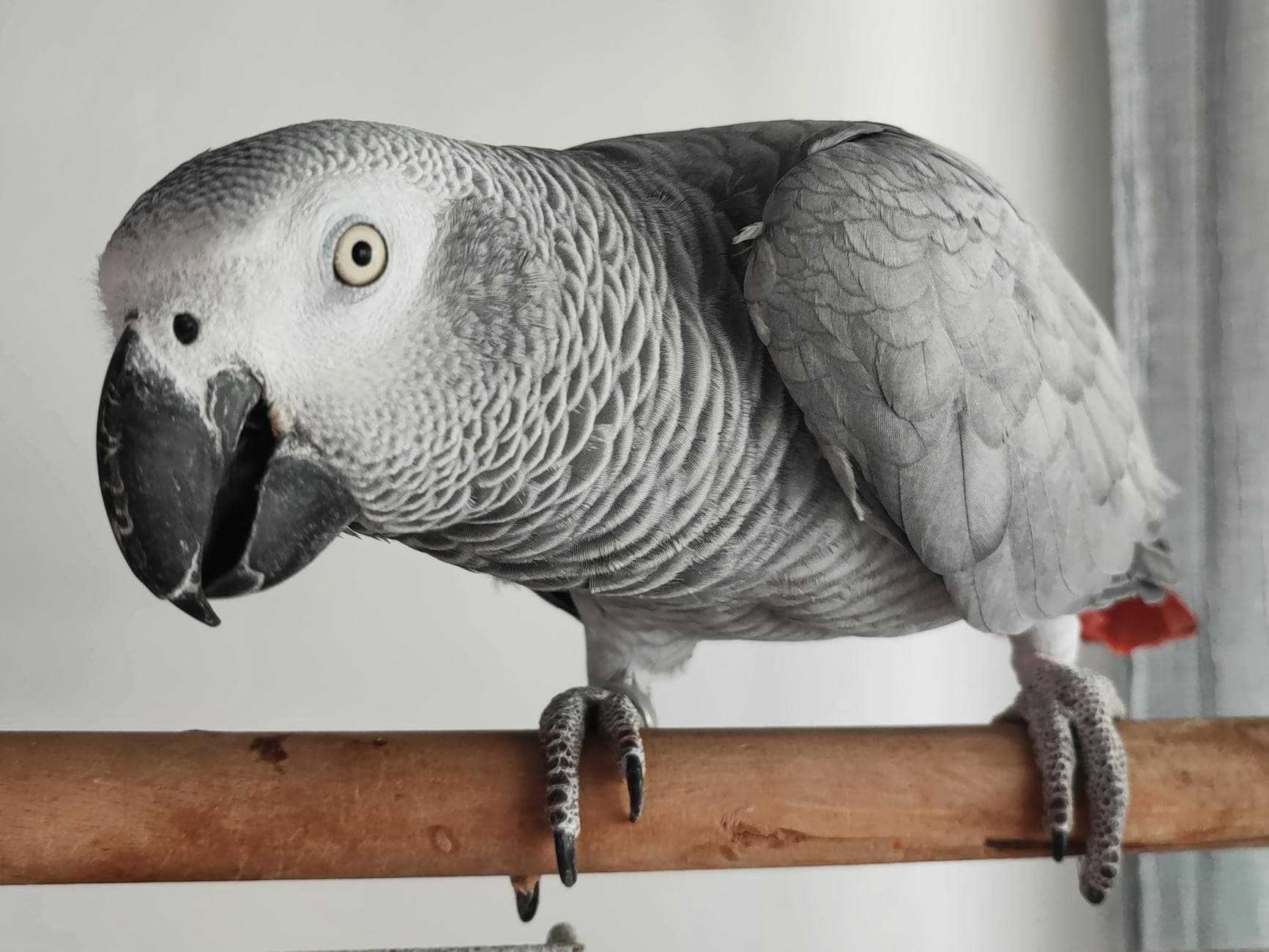
Even the best cage is not enough on its own. AVMA and Merck both stress that birds need exercise outside the cage, but only in a safe and supervised setting. That outside-cage time is where a parrot stretches, climbs, and burns off the restlessness that turns into noise or feather damage when it gets bottled up.
Cleaning and disease prevention are part of care
Parrot care is also a hygiene routine. Regular cleaning helps reduce bacteria, and that is not a cosmetic detail when you are dealing with food bowls, droppings, feathers, and shredded toys every day. A bird’s environment should be managed like a living system, not a decorative setup you wipe down once in a while.
There is also a wider biosecurity reality now. The CDC says avian influenza A(H5) is widespread in wild birds and is causing outbreaks in poultry and U.S. dairy cows, with sporadic human cases linked to animal exposure. Its guidance also notes that avian influenza viruses can infect pets, including birds, even though human infection from direct contact with an infected pet is unlikely. For parrot owners, that means being smart about wild-bird exposure and contaminated environments is part of everyday responsibility.
Avian veterinary care is the right care
This is one of the easiest places to get lazy and one of the most expensive places to be wrong. AVMA and the Association of Avian Veterinarians both say bird owners should work with an avian veterinarian, and AAV recommends annual or more frequent wellness visits. A general practice vet may be fine for a cat or dog, but parrots are a different medical category with their own risks and normal ranges.
That specialty-care mindset has become more important over time. Merck notes that mass importation of wild-caught psittacine birds was curtailed in the mid-1980s, and most pet parrots today are captive-bred. That shift changed the modern pet-bird landscape and helped make enrichment, behavior management, and specialized wellness care central to responsible ownership.
The part most people underestimate
The appeal of parrots is obvious: the intelligence, the speech, the spark of a bird that seems to notice everything. But the reality is less romantic and more demanding, because a parrot asks for time, space, quiet tolerance, and real money for years on end. If your answer to that self-audit is yes, the reward can be extraordinary; if it is no, the smartest bird decision is the one you do not rush into.
This article was produced by Prism’s automated news system from verified source data, official records, and press releases, then run through automated quality and moderation checks before publishing. The system is built and supervised by the people who set the standards it runs under. Read our full AI policy.
Did this article answer your question?