Rescue cockatoo Sweet Pea enjoys outdoor walks with harness and leash
Sweet Pea still gets fresh air in a harness and leash, turning permanent wing damage into a lesson in enrichment for non-flighted parrots.
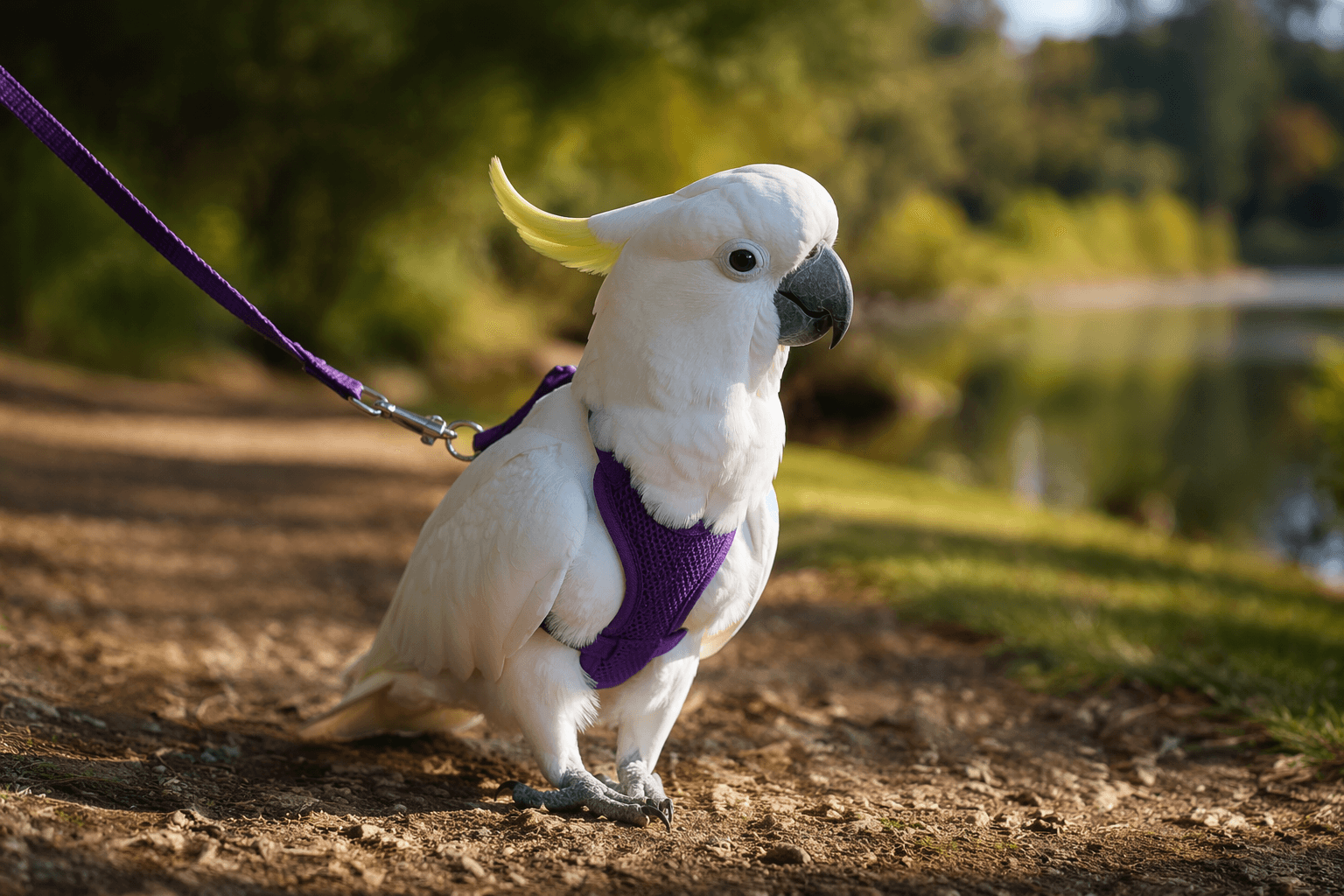
Sweet Pea, a rescue cockatoo who cannot fly, still gets outside with Wendy Albright by her side, a harness and leash turning a hard limit into real enrichment. The bird, adopted off Craigslist in 2020, arrived with almost no feathers and clear plucking damage, and the injury to her wing follicles left her permanently grounded.
That does not mean Sweet Pea lives a smaller life. Albright takes her outdoors on supervised walks so she can feel the sun, move around safely, and even mimic flight from the ground or from Albright’s arm. The setup is simple, but for a bird with permanent wing damage it is the difference between isolation and choice. Sweet Pea’s feathers have regrown over time, and the change has been visible enough to match the brighter, more playful version of the bird fans came to love online.
Brody, an African grey parrot, sometimes comes along in a backpack, adding another layer of social time to the outing. That detail matters in parrot care because enrichment is not only about physical access to the outside world. It is also about companionship, novelty, and giving a bird something to watch, hear, and react to. Sweet Pea’s outdoor routine shows how rescue care can be individualized instead of built around what a bird cannot do.
The broader husbandry lesson is familiar to avian vets and behavior specialists. Feather-damaging behavior is one of the most common and frustrating problems seen in captive parrots, and the first step is to rule out medical causes before treating it as a behavior issue. Birds are social animals, and when they do not get enough attention or stimulation, they can develop problems such as biting, screaming, or pulling out feathers. Larger parrots such as cockatoos and African grey parrots need daily human interaction, and UC Davis’s parrot welfare work emphasizes that socialization itself is a form of environmental enrichment.
That is why Sweet Pea resonates so strongly. Her story is not about pretending she is whole again. It is about meeting her exactly where she is, then building a life around safety, movement, and contact. A cockatoo that once arrived nearly featherless now steps outside in the harness and leash, and that careful walk says as much about good rescue care as any full set of feathers ever could.
This article was produced by Prism’s automated news system from verified source data, official records, and press releases, then run through automated quality and moderation checks before publishing. The system is built and supervised by the people who set the standards it runs under. Read our full AI policy.
Know something we missed? Have a correction or additional information?
Submit a Tip