Small Habits, Big Safety: How Parrot Homes Prevent Emergencies
Tiny changes in droppings, appetite, posture, breathing, voice, and energy often come first, and a few repeatable habits can stop a household emergency before it starts.
The first warning is usually small
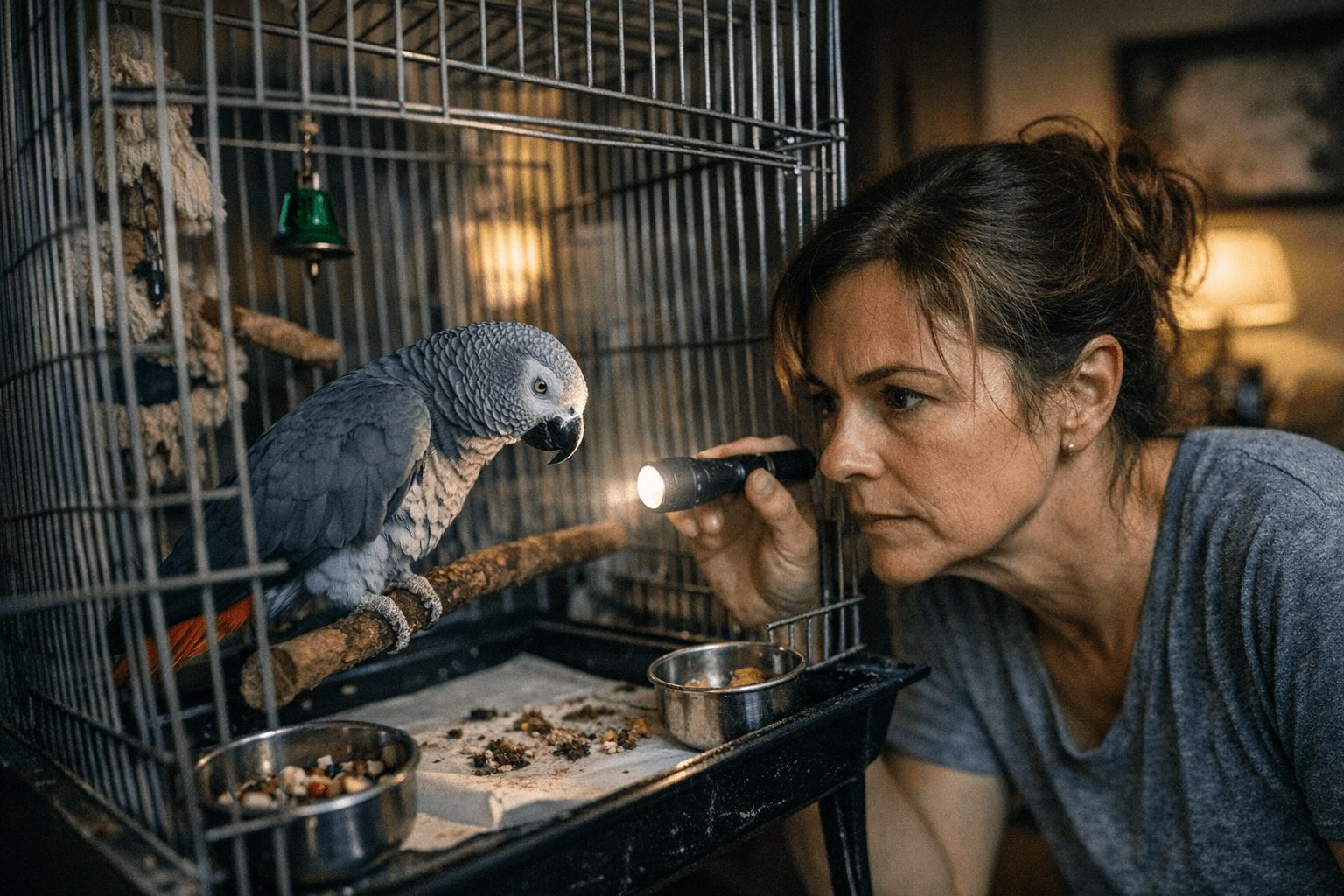
A parrot that sits a little lower on the perch, picks at breakfast, or sounds just slightly different is often giving the first warning long before a true emergency hits. That is the hard lesson behind safer bird homes: the crisis usually grows out of tiny daily slips, not one dramatic accident. A cleaner left open, a pan that overheated for just a moment, a draft after a room rearrangement, or a rushed morning routine can stack up into trouble if nobody notices the early signs.
That is why the smartest parrot homes are built around repeatable systems, not perfect people. Birds read the household the way they read their flock, and they notice routine drift fast. When the kitchen changes, when cleaning products move, when the cage gets shifted near a vent, or when everyone assumes someone else checked the basics, the bird often feels it first.
What the earliest red flags look like
The warning signs owners tend to overlook are the ones that look ordinary at first. Droppings may change in color, amount, or texture. Appetite may dip so slightly that a busy person can miss it. A parrot may sit fluffed, lean forward, breathe harder than usual, talk less, or lose the bright, reactive energy that usually defines the bird.
Those changes matter because parrots hide illness well. By the time a bird looks obviously sick, the problem can already be advanced. The Association of Avian Veterinarians points bird owners toward resources on signs of illness and when to take a bird to a veterinarian for exactly that reason: early recognition is not a luxury, it is the difference between a manageable issue and a full-blown emergency.
A practical daily check does not need to be elaborate. It just needs to be consistent:
- Look at droppings before you clean the cage
- Watch whether breakfast disappears normally
- Notice whether posture is upright, tense, fluffed, or unusually still
- Listen for any change in voice, volume, or responsiveness
- Pay attention to breathing, energy, and how quickly the bird engages with the room
The home hazards hiding in plain sight
Many of the most dangerous threats are already in the house. The MSD Veterinary Manual lists household hazards for pet birds that include bleach, ammonia, detergents, oven cleaner, paint, pesticides, perfume, mothballs, and drugs. Those are not exotic poisons tucked away in rare corners of a home. They are everyday products that can be reachable during cleaning, cooking, or a quick household reset.
That is why the safest parrot homes treat storage as a safety system. Cleaning products belong out of reach and out of routine traffic. A counter left cluttered for just one afternoon can become a risk if a bird flies, climbs, or is transferred nearby. The goal is not to banish normal life from the house. The goal is to make the dangerous parts predictable and controlled.
Kitchen habits matter more than heroic rescues
The kitchen is one of the clearest places where a small mistake becomes a bird emergency. University of Illinois Veterinary Medicine warns that overheated nonstick cookware can release gas that is fatal to avian species. That means the difference between a safe meal and a dangerous one can be a distracted minute, a forgotten pan, or a change in cooking routine.
This is also where a parrot-friendly home depends on repetition. Morning setup, kitchen use, and cleanup routines should be consistent enough that nobody has to improvise. If a bird is out, the kitchen needs a rule. If a pan is heating, the bird needs distance. If the room layout changes, airflow and access need to be checked again before the day moves on.
The safest households do not wait for a near miss to learn this lesson. They build around it in advance, because birds often pay for improvisation long before humans notice the cost.
Temperature and airflow are not minor details
The University of Florida College of Veterinary Medicine gives bird owners a concrete target: the ideal temperature range for a pet bird is between 70 and 80 degrees Fahrenheit. It also warns that a cage should be kept away from drafts, including the direct line of an air conditioner or heating vent. That matters because a bird does not need a dramatic weather event to get stressed. A room that feels comfortable to people can still be wrong for a bird if the airflow is sharp or the temperature swings too much.
This is where rearranging furniture can turn into a safety issue. Move a cage a few feet, and the bird may suddenly sit in a draft path. Shift a fan, and the daily environment changes. Stable layout is part of care, not interior design, because parrots live by pattern and react to household drift quickly.
When every minute counts
If toxin exposure is even a possibility, waiting is the wrong move. VCA Hospitals advises owners to call a veterinarian immediately, or Pet Poison Helpline, if a bird may have been exposed to toxins. The American Veterinary Medical Association says time is critical in poisoning cases and recommends calling a veterinarian, the ASPCA Animal Poison Control Center, or Pet Poison Helpline right away. If possible, keep the product container or a plant sample for identification.
That urgency is exactly why the earliest signs matter so much. Fast recognition is not about dramatic last-second heroics. It is about catching the problem while the bird still looks only mildly off, before weakness, collapse, or respiratory distress turn a fixable situation into a desperate one.
The routine that protects the flock
The best prevention is not a one-time deep clean. It is a home that runs on habits. Standardize the moments that create the most risk: morning setup, kitchen time, cleaning product storage, and any change in the bird room’s layout. Keep the avian veterinarian contact handy. Make sure routine veterinary care is part of the year, not something reserved for a crisis.
The Centers for Disease Control and Prevention adds another reason to keep the routine tight: pet birds can sometimes carry germs that make people sick, and handwashing after handling birds or cage items is part of basic protection. The CDC also notes that highly pathogenic avian influenza A(H5) remains widespread in wild birds and has caused outbreaks in poultry and U.S. dairy cows, even though the public health risk is currently low. That wider backdrop makes steady hygiene, good airflow, and regular veterinary attention even more important.
A safer parrot home is not built by luck. It is built by small habits that hold steady when life gets busy. When owners learn to catch the tiny changes first, they give the bird the best chance to stay well long before any emergency has room to grow.
This article was produced by Prism’s automated news system from verified source data, official records, and press releases, then run through automated quality and moderation checks before publishing. The system is built and supervised by the people who set the standards it runs under. Read our full AI policy.
Did this article answer your question?